


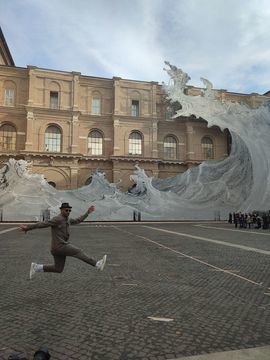
Today are the feasts of Saint Cornelius and Saint Cyprian, the pope and the bishop who debated how to readmit those who had fallen into betrayal of the Faith and under what conditions. Good reading.
A cut to the cuts
Stipendi, Leone XIV dà un taglio ai tagli di Francesco, on Monday’s motu proprio. With the document in hand, it is worth clarifying what Il Sole 24 Ore summarizes: the repeal of Un futuro sostenibile takes effect from 1 September, yet the effects produced during its five years of validity remain “definitively” protected, including the suspension of the biennial seniority increases under article 5, which “remains definitively acquired.” We correct here our own figure from yesterday: they are biennia, not triennia, and the difference is not minor. Leggo puts it precisely: normality returns, but without rewinding the tape. And the Pope does not disavow his predecessor; he acknowledges that the measure was necessary then and simply is no longer needed now.
What employees will not recover
The other half of the story is published by the Association of Lay Vatican Employees: Vaticano: è possibile recuperare il biennio perduto dai dipendenti?. The frozen biennium is not a suspended payment: it forms part of remuneration and enters the calculation base for pensions and severance, so reducing it reduces both. In the union’s own calculation, a level-IV employee with thirty years of service ahead loses about €14,430 in salary, €1,400 in severance and €6,734 in pension: €22,564 in total. Recovering it by working two more years is practically impossible, because in the Vatican people start working well past thirty and the seniority cap is forty years. Add to this that the pension fund remains under a single administrator and that the same union has been asking to see its accounts for two years. Curia cardinals recover 10 %. Employees do not recover the biennium.
Undoing without saying so
La Verità devotes its piece Leone XIV e Bergoglio to the overall reading, which is the one that matters. Let us order the facts, several of which point in the same direction. In September 2025, Coniuncta cura dismantled the IOR’s monopoly on investments imposed by Francis in 2022. In December, a chirograph abolished the Commission for Donations created by his predecessor. On Monday the salary cuts and the Lateran project fell. All this without a single top-level appointment: sixteen months after the election, the Curia is still waiting for a consistory and replacements. Discontinuity is being carried out through administrative channels—the route that does not make headlines and needs no explanation.
The wave over the Library
Leone XIV alla Biblioteca Vaticana and the Repubblica interview with the artist JR. On Monday, the same day he signed the chirograph on the new deposits, the Pope entered the Apostolic Library for the first time to inaugurate AQVA. Catastrofe e meraviglia, the first chapter of a five-year cycle that will continue with fire, light, insects and man. In the Cortile del Belvedere, JR has unfurled across the Renaissance façade a seventy-metre black-and-white wave taken from a Gustave Doré engraving for the 1866 French Bible. Vice-prefect Don Giacomo Cardinali explains it without metaphors: the library has decided to look its own fears in the face, and for a librarian water is absolute panic, because it cannot be controlled or stopped. JR adds his own: the wave also speaks of an artificial intelligence that is absorbing all those books without anyone fully controlling it. Visiting the deposit, the Pope recalled that his mother was a librarian. Two points of precision, because the press has not agreed: the work is titled Diluvium, although some agencies called it Onda, and it measures thirty metres high, not thirteen according to the project’s own data sheet. It opens to the public on 25 September—our image today.
Germany: the bishops who leave early
Sui vescovi che si dimettono in Germania. The phenomenon has numbers. On 19 August the Pope accepted the resignation of Karl-Heinz Wiesemann, Bishop of Speyer, 66 years old, nine years before the ordinary age; the bishop himself spoke of physical and above all emotional exhaustion and of no longer having the strength “to reach the full implementation of the pending structural reforms”. On 2 September he was followed by Heinrich Timmerevers of Dresden-Meissen, 74 years old, one year ahead of schedule and three days before the celebration of his twenty-five years as a bishop; there the new 48-million-euro curia and the stalled abuse investigation weighed heavily. Settimana News has devoted an interview on episcopal burnout to the matter. Two bishops leaving early—one from exhaustion, the other with accounts and abuses in the background: the German Church is not running out of bishops for lack of synodality.
Wilmer: Europe “absolutely” needs a synodal Church
Bischof Wilmer: Europa braucht «unbedingt eine synodale Kirche». Heiner Wilmer, Bishop of Münster since June and president of the German Episcopal Conference, is taking part until tomorrow in the international workshop Shaping Synodality in Europe at Puchberg Castle near Wels: some 180 participants from more than thirty countries working on a roadmap to implement the Synod. His argument is not doctrinal but geopolitical: Europe is fragmenting, threatening to dissolve into small states and skirmishes, and needs evangelical guidance, which only reaches it if the Church walks together. The phrase worth keeping is the other one, the one he gave to Vatican Radio: what matters is not to push ahead alone. Coming from the man who presides over the episcopate of the Synodal Way, it sounds less like a programme than a commitment.
An accountant for Metuchen
Pope Leo appoints new bishop for Metuchen. The appointee is Michael Saporito, 64 years old, born in Newark, auxiliary bishop of that archdiocese since 2020 under Cardinal Joseph Tobin. The New Jersey diocese has been without a bishop since November 2025, when James Checchio moved to New Orleans; it has 670,000 Catholics, 192 priests and 196 deacons. The detail that interests us: Saporito worked three years as an accountant before entering the seminary and was ordained at thirty. The same day, the Pope accepted the resignation of Francis Malone, Bishop of Shreveport, who is 76. His superior for the last six years, incidentally, is the cardinal who coordinates Study Group No. 6 that we mentioned yesterday.
The trip to France does not start well
Il viaggio in Francia del Papa non comincia benissimo, nine days before departure. The inventory of clouds is long and none of them is new. In July the National Assembly passed the law on the end of life and the episcopate responded with a scathing communiqué signed by Cardinal Aveline and his two vice-presidents: “a grave rupture in the history of our country.” The historic collective of Bétharram victims, more than two hundred people, noted “with consternation” that they will not be received, because the Pope will see seven victims individually and no collective. Rupnik’s mosaics are still there. And the €27-million budget has yet to be raised with a million attendees expected. A trip that began as one of reconciliation with the Élysée therefore arrives with its agenda occupied by other matters.
Aparecida keeps them, Lourdes removes them
Aparecida li lascia, Lourdes li toglie: i diversi destini dei mosaici legati a Rupnik draws a parallel with what we reported on Monday: the Brazilian shrine discovered on Saturday four thousand square metres of façade at the Centro Aletti dedicated to the Last Judgement, while the Bishop of Tarbes and Lourdes keeps his covered during the papal visit and afterwards. The comparison is pertinent and the conclusion uncomfortable for everyone: there is no universal criterion, only local decisions. What on one continent is God’s victory over evil, on another is a plywood panel.
London repeals the 1829 veto
Regno Unito, verso l’abolizione di una norma anticattolica. The first bill of Andy Burnham’s government, the first Catholic to reach the office of British prime minister in five centuries, will repeal the exception in the Roman Catholic Relief Act of 1829 and the Jews Relief Act of 1858 that prevents Catholics and Jews from advising the sovereign on the appointment of bishops, archbishops and deans of the Church of England. Burnham delegated that function to Lord Chancellor Alex Norris upon arriving at Downing Street and announced the reform in a written statement to Parliament on 10 September. The veto did not affect either Sunak, a Hindu, or Starmer, an atheist: it only reaches Catholics and Jews. Before popping any corks, it is worth reading Crux, which recalls the obvious: the fall of the last legal discrimination does not mean that British Catholicism is reviving.
The Pope, among the best dressed
Papa Leone XIV, lo stile, in Vanity Fair, which revives its best-dressed list seven years after the last. Leo XIV appears sixth in the Originals category, behind Spike Lee and an Olympic skater, and the reason is the cream-coloured cassock with Nike trainers from his Father Bob years, plus the White Sox baseball caps. The magazine speaks of “ironic informality”. We note the contradiction, which is the only interesting thing about the matter: while Vanity Fair rewards him for the trainers, Vogue attributes exactly the opposite to him—the return to luxurious ornaments in contrast to Francis’s sobriety. One of the two compliments is superfluous.
“To what shall I compare the men of this generation?”