


The monks of Melrose eventually grew accustomed to a scene that would have seemed like madness to anyone. In the dead of winter, an elderly brother would go down to the banks of the Tweed, break the ice if necessary, and wade into the river up to his waist or even his neck, reciting psalms. When he came out, he did not change his clothes: he let them dry on him. When asked how he could endure such cold, he would reply that he had seen worse. And when reproached for such harsh penance, he would answer the same in other words: he had seen harder things.
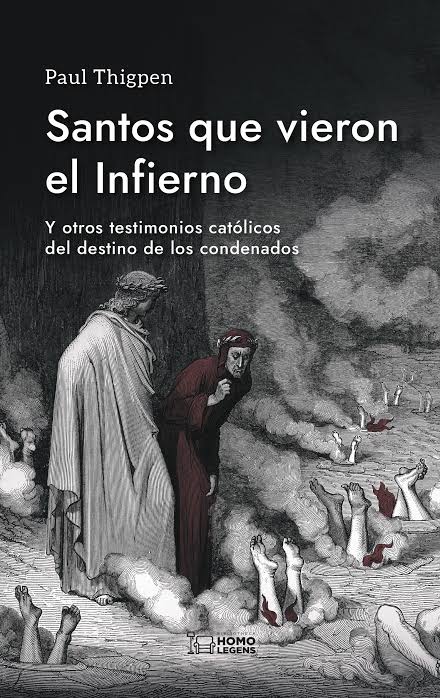
That monk was called Drythelm and, according to Saint Bede the Venerable, he had been dead. The story appears in Book V of the Ecclesiastical History of the English People, dated around the year 696, when Bede was still young. Paul Thigpen includes it in Saints Who Saw Hell, an anthology of visions of the afterlife that Homo Legens published in Spanish, and few readings fit better with the week ahead, that of All Saints and All Souls.
Drythelm was a pious family man from the district of Cunningham in Northumbria, probably in what is now Scottish Ayrshire. He fell ill and died at nightfall. At dawn he sat up. Those keeping vigil over the body fled in terror; only his wife remained at his side, trembling. He calmed her and told her that from then on he would not live as before. He spent the day praying in the village oratory, divided his goods into three parts—one for his wife, another for his children, and the third for the poor—and went to the monastery of Melrose.
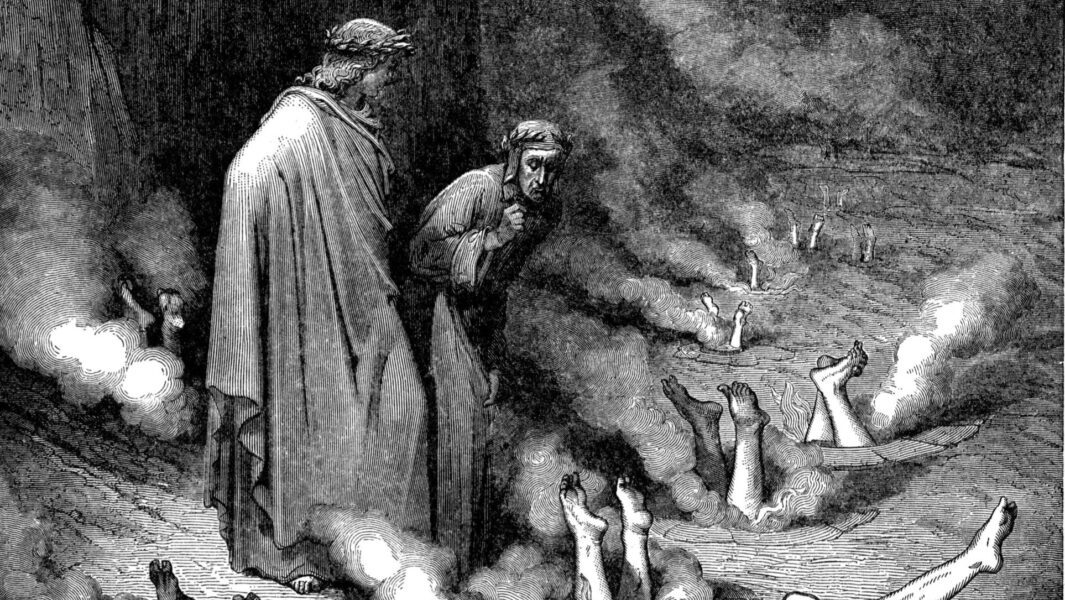
What he claimed to have seen is one of the oldest and most precise geographies of the afterlife in Western Christian literature. A guide with a luminous face led him to an immense valley. On one side burned raging flames; on the other fell hail and snow. The souls leapt from one bank to the other, finding rest in neither. Drythelm thought he was in Hell. The guide corrected him: that was not Hell.
Further on, the darkness thickened until it blotted out everything except the silhouette of his companion, who suddenly vanished. Ahead, from an enormous pit, waves of fire rose and fell, laden with souls like sparks in smoke, with a stench the visitor could compare to nothing. Behind him he heard laments mingled with laughter: a mob of demons was dragging five souls toward the pit, among whom he recognized a cleric, a layman, and a woman. Some of those spirits came at him with burning tongs, but they did not dare touch him. He was saved by a light like a star: it was his guide again, who led him out toward a brightness where the souls destined for Heaven awaited.
The final explanation is what gives the account its doctrinal weight. The valley of fire and ice, according to the guide, was the place where the souls of those who had postponed confession and amendment of their sins and only repented at the hour of death were tested and punished. They will enter the Kingdom on the day of judgment, and many of them are helped beforehand by the prayers of the living, their almsgiving and their fasts, and above all the celebration of Masses. The pit, by contrast, was the mouth of Hell, and from it no one escapes. It is one of the earliest descriptions of what the Church would call purgatory, with the boundary between purifying punishment and that which never ends drawn with clarity. It is no wonder that some historians have seen in this Northumbrian monk a distant precursor of Dante.
Bede did not hear the story firsthand, and he says so. He owes it to Haemgils, a monk-priest who lived near Drythelm’s cell, had him recount what he had seen again and again, and ended up as a hermit in Ireland, living on bread and water. The visionary also told his experience to Aldfrith, the king of Northumbria, a very learned man who listened to him with pleasure. But he did not tell it to just anyone: he reserved it for those who would draw spiritual fruit from it and kept silent before the lukewarm.
Thigpen does not present these pages as a report on the other world. In the first chapter he warns that all the visions in the book are private revelations, that not even the canonization of a visionary guarantees the authenticity of what he recounted, and that none of it can be placed on the level of Scripture. His purpose is different: to bring back into conversation a doctrine that is scarcely spoken of today. Hell, he writes in the introduction, is “the ultimate guarantee that what we do here and now matters.”
Drythelm shares the volume with John Bosco, Teresa of Jesus, Catherine of Siena, Faustina Kowalska, and the shepherd children of Fatima, with the accounts of Gregory the Great and Alphonsus Liguori, with medieval visions such as that of Tundal, and with Dante’s Inferno. Perhaps none sums up as well as the monk of the Tweed the question the book leaves on the table at the gates of November: what each of us would do with our life if we truly believed we had seen what he saw.
 |
Homo Legens Saints Who Saw Hell Paul Thigpen · Bibliotheca Homo Legens · 16,90 € |
Read also