


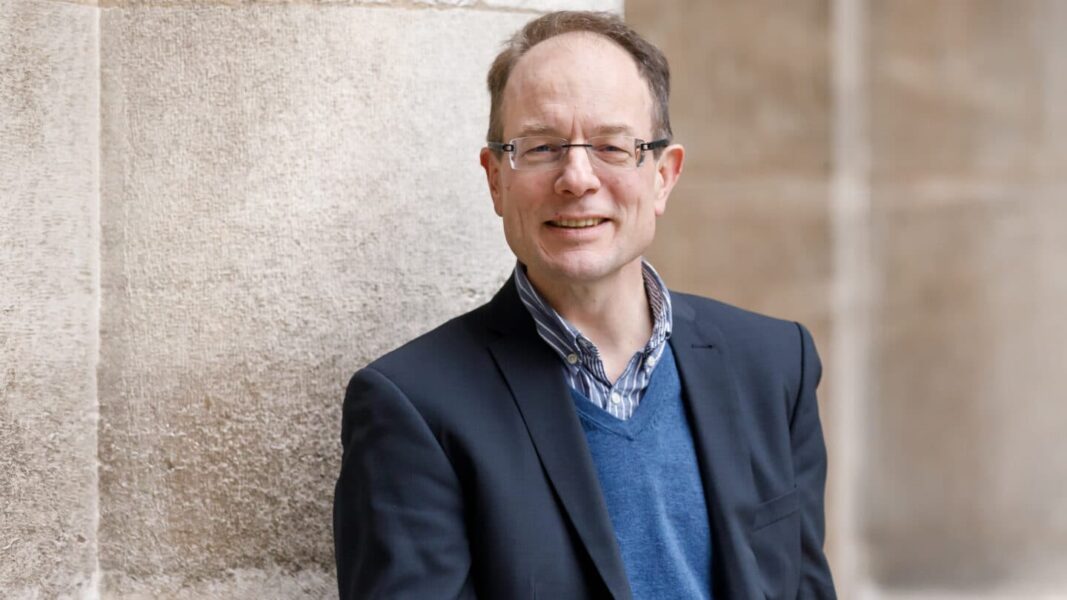
Pope Leo XIV on Monday, October 19, appointed German lay theologian Jan-Heiner Tück, professor of Dogmatics and History of Dogmas at the Faculty of Catholic Theology of the University of Vienna and director of the German edition of Communio, the journal founded in 1972 by Hans Urs von Balthasar, Joseph Ratzinger and Henri de Lubac, among others, as a member of the International Theological Commission. He is one of the 24 new members announced that day in the Holy See Press Office bulletin, appointed according to the Commission’s statutes on the proposal of the Prefect of the Dicastery for the Doctrine of the Faith, Cardinal Víctor Manuel Fernández. In July 2021 Tück wrote that Francis, by revoking with Traditionis custodes the freedom to celebrate the ancient Mass granted by Benedict XVI, was endangering the authority of the papacy: “Peter, the rock, begins to roll.” In May of this year, six weeks before the Écône consecrations, he maintained that a schism of the Priestly Fraternity of Saint Pius X would be unfortunate for both sides, but “also good” to clarify a situation that had long remained unclear.
The 2021 article appeared on July 22 in the Swiss daily Neue Zürcher Zeitung (NZZ), six days after the publication of the motu proprio, under the title “No to the Old Mass: Pope Francis repeals a decision of his predecessor and thereby endangers the authority of the office.” Tück recalled that Francis had once remarked that he might go down in history as the pope of division, and wrote that “last Friday he almost made that word come true,” because with the decree he had withdrawn “without blinking” the license granted by his predecessor. In his view, by openly correcting Benedict XVI instead of striving for coherence and consistency in the magisterium, the Pope gave many the impression that a pontiff can correct and revise the teaching of his predecessors at will, and that irruption of contingency into magisterial statements, visible to all, threatened to undermine papal authority.
The text acknowledged that there are partial tensions between the ecclesiology of the Council and the Tridentine Mass, and occasional overlaps with the milieu of the political right, but maintained that the argument of instrumentalization applied globally only to the Priestly Fraternity of Saint Pius X. To the Fraternity of Saint Peter and the other groups that expressly recognize the Council and the primacy, he wrote, precisely they were being deprived of “the papal protective roof,” so that they were being punished for their fidelity to the Pope “by the Pope himself.” He also criticized the requirement of Roman authorization for new priests as contradicting the “healthy decentralization” that Francis himself preached, and that leaving the matter to each bishop would produce a mosaic of permissions and prohibitions. “A ban on the old Mass is ultimately an expression of weakness,” he concluded, because it does not trust that the renewed liturgy will impose itself as the best option. At the same time, Tück defended the liturgical reform of the Council, calling it its most visible fruit and, in his judgment, something that “cannot and must not be called into question,” and ended by warning that excluding that tradition ignores its cultural strength and is “tendentially prone to division.”
That defense of the traditional Mass has not prevented him from being, for at least a decade, one of the most persistent critics of the Priestly Fraternity of Saint Pius X in the German-language press. On May 19, 2026, in a live interview on the German public radio program Tag für Tag on Deutschlandfunk, he considered it “very probable” that the episcopal consecrations without papal mandate announced for July 1 would take place, recalled that “a schismatic act does not necessarily have to remain schismatic” and described as accurate the statement with which Cardinal Fernández had warned on May 13 that those consecrations would constitute “a schismatic act.” Asked whether a separation would be a loss for the Church, he replied: “A schism is always unfortunate for both sides. But it would also be good in the sense of clarifying relations that have long remained unclear.” He rejected approaching the Lefebvrists with a seduction offensive and letting them act “under the mantle of mercy,” because what was at stake was ecumenical openness, the relationship with Judaism and the relationship with the liberal rule of law: “We cannot tolerate within the Catholic Church contradictory positions on such important issues.”
In the same interview he said he would not describe the Fraternity as anti-Jewish “in such a general way,” but that the declaration of faith it had published the previous week was “a clear indication of anti-Judaic theology,” because it upholds the theology of substitution, according to which God’s covenant with Israel would have been revoked, contrary to the Letter to the Romans and the conciliar declaration Nostra aetate. He described as “monstrous statements” the thesis, which he attributed to other writings of the Fraternity, that today’s Jews remain in some way co-responsible for the death of Jesus as long as they do not recognize him as Messiah. He also spoke of an “osmotic permeability” toward right-wing political positions, although he warned against generalizations, and maintained that the Catholic state defended by Lefebvre contradicts the declaration Dignitatis humanae on religious freedom. In the end he acknowledged in the faithful of the Fraternity an awakened sense “for holiness, for the liturgy” and a seriousness in the faith that challenges average Christianity, “often somewhat lukewarm,” and considered worrying the size it has reached, with about 750 priests.
The consecrations took place in Écône on July 1. The following day, the Dicastery for the Doctrine of the Faith published an Explanatory Note signed by Fernández declaring all sacred ministers of the Fraternity schismatic and subject to excommunication, extending the same consideration to laypeople who formally adhere to it, and declaring invalid the confessions and marriages assisted by its priests. The Fraternity maintains its appeals in Rome against those excommunications. Tück has published this year with the publisher Herder the book Ausverkauf des Konzils. Die Päpste und die Piusbruderschaft. Eine Konfliktgeschichte (“Liquidation of the Council. The Popes and the Priestly Fraternity of Saint Pius X. A History of Conflict”). In the preface, according to the sample released by the publisher, he maintains that relativizing the conciliar documents to attract traditionalists would be “a pontifical self-contradiction” and that Leo XIV must show “clarity on doctrinal questions,” also out of loyalty to his predecessors, without thereby advocating a conciliar fundamentalism. In another passage he writes that in the signs of the new pontificate one can see “a new culture of welcome for the friends of the Tridentine Mass,” recalls that the Pope has indicated that he wants to soften the restrictive policy of his predecessor on the so-called old Mass, and warns that, if it broke communion with the Church, the Fraternity would end up sliding definitively toward a sect of zealots.
The line goes back a long way. In May 2016, when rumors were circulating of a canonical recognition of the Fraternity by Francis, Tück warned in the NZZ against a reconciliation “without preconditions” and described as false, from the hermeneutics of the Council, the proposal of Archbishop Guido Pozzo, then secretary of the Ecclesia Dei commission, to establish a “graduated obligatoriness” that would distinguish between doctrinal and pastoral documents of Vatican II. Lowering the texts on ecumenism, religions and religious freedom, he wrote, amounted to “a blatant act of delegitimization of the Council,” and admitting the Fraternity without doctrinal requirements would be installing intra muros ecclesiae a Trojan horse loaded with “semantic dynamite”: “anti-modernism, anti-Judaism, intolerance toward other religions, integralism in the relationship between State and Church.” In that same article he distinguished the case of ordinary pastoral care: with the Fraternity, he maintained, it is not a matter of pastoral practice, but of the claim to validity of fundamental theological positions, and applying to it a mercy without preconditions would imply “a confusion of planes.” When Francis suppressed the Ecclesia Dei commission in January 2019, Tück interpreted it as “the end of the papal seduction offensive” toward the Lefebvrists.
The distinction between doctrine and pastoral care reappears in his defense of Amoris laetitia. In November 2017, in an article entitled “Pope Francis is not a heretic,” he acknowledged that footnote 351 of the exhortation grants for complex cases what John Paul II and Benedict XVI had excluded, since they only admitted to the sacraments the faithful living in a second union “under the reservation of sexual continence.” Even so, he maintained that the exhortation is a “legitimate continuation” of previous doctrine and not a “rupture with tradition.” He described as a “subversive procedure” that of Cardinals Brandmüller, Burke, Caffarra and Meisner in making their dubia public, and wrote that those who placed the Pope under suspicion of heresy, like the 62 theologians and philosophers who signed the Correctio filialis, behaved “like bulldogs of orthodoxy.” In the same text, however, he warned that the divergent applications of the episcopal conferences, with Poland prohibiting what Malta allowed as an exception, opened “fine cracks” that could degenerate into a “pathology of schismatic situations,” and asked the Pope to speak again: “Silence cannot be the final answer for a bridge-builder.”
Priestly celibacy is another of his fronts. In September 2019, on the eve of the Amazon Synod, he replied in the NZZ to Cardinal Robert Sarah, who had described the ordination of viri probati as a monstrosity. “Celibacy is not a dogma, but an ecclesiastical law,” he wrote; he called the idea that the continence of clerics has ruled without interruption since Jesus and the apostles “a fiction of continuity that is historically unsustainable,” recalled that Ratzinger had foreseen in 1970 that the Church of the future would ordain “proven Christians who exercise a profession” and concluded that tradition “can also be betrayed by freezing it.” In June 2023 he went further on the portal katholisch.de: he asked Francis to abandon his “decided indecision” and do what is juridically possible, ordaining in regions with a serious shortage of clergy married men accredited in marriage, family and profession. In that text he defended celibacy with three theological arguments: radical following, availability and the eschatological sign; he rejected that laypeople preside at the Eucharist, because it would be “a rupture with tradition” and “priests can only be replaced by priests,” and described without euphemisms the situation of the clergy: there are “priests who live in homosexual relationships” and, when bishops tolerate the double life, “hypocrisy acquires systemic features.”
On other issues he has maintained positions contrary to German reformism. In a 2021 essay in the journal Herder Korrespondenz, entitled “Representing the Bridegroom? What speaks against the priestly ordination of women,” he argued against it on the basis of the sacramental representation of Christ the Bridegroom and, according to the quotations collected by the liturgist Benedikt Kranemann in his reply, maintained that relativizing the masculinity of Jesus marginalizes at the same time his condition as a Jew. The presentation of the essay acknowledged that, in that debate, arguments from tradition and authority receive a poor reception. In 2023 he signed in the NZZ an article entitled “A back door for more women in the Church,” on the faculty of baptizing granted to laypeople in some dioceses and in Switzerland, whose subtitle maintains that the argument of the shortage of priests “is only a pretext.” In 2017 he considered problematic a “general license” for non-Catholic spouses in mixed marriages to receive Communion, because of the risk of simulating a unity that does not exist or exists only in an incipient form. He has also criticized the German Synodal Way: in November 2021 he signed in the Frankfurter Allgemeine Zeitung an article whose subtitle maintains that a national Synodal Council as projected “only contributes to swelling the apparatuses,” and in 2024 he questioned the joint diocesan council created by the bishop of Essen, Franz-Josef Overbeck.
The most debatable phrase of his career dates from July 2020. In an interview with katholisch.de, asked about the believer who has problems with parts of doctrine, such as papal infallibility, he replied that “a total identification with the doctrine of the Church is not necessary” and that “recognition of the Creed is enough,” within a sentire cum ecclesia. He added, with the hierarchy of truths of Vatican II, that not everything the Church teaches is equally important and that “rather on the margins are, for example, the Marian dogmas,” and specified that the dogma of infallibility must be seen in its historical context “without relativizing it.” The Code of Canon Law obliges one to believe with divine and Catholic faith everything that the solemn or ordinary and universal magisterium proposes as revealed (canon 750), and the Immaculate Conception and the Assumption were solemnly defined in 1854 and 1950. The declaration Mysterium Ecclesiae, published in 1973 by the Congregation for the Doctrine of the Faith, admits that there exists “an order and as it were a hierarchy of dogmas,” but specifies that “all dogmas, by the very fact of having been revealed, must be believed with the same divine faith.”
Tück was born in 1967 in Emmerich, in Lower Rhine. He earned his doctorate in Tübingen with a thesis on Johann Baptist Metz, obtained his habilitation in Freiburg with a study on the eucharistic theology of Saint Thomas Aquinas, and has been teaching in Vienna for more than fifteen years. According to his curriculum, he is a member of the theological commission of the Austrian Episcopal Conference and of the Commission for the Doctrine of the Faith of the German Episcopal Conference. He is married and has four children. He has devoted part of his work to the relationship between Christianity and Judaism, including a volume on Messianic Judaism co-edited with Mark S. Kinzer, and this year he has published with Cardinal Walter Kasper the book Jesus Christus auf der Spur, on the occasion of whose presentation in Vienna, in June, the cardinal stated that German theology must return to Christological questions. From October 22 to 24 he is co-organizing in Vienna, with theologian Thomas Marschler, a symposium on the theology of Joseph Ratzinger.
The Commission he is joining has, according to article 1 of its statutes, the task of studying “doctrinal questions of special importance” to assist the Magisterium and, in particular, the Dicastery for the Doctrine of the Faith, and article 3 asks its members to distinguish themselves by their “learning, prudence and fidelity to the Magisterium of the Church.” Tück is one of the seven lay members entering the new composition.
This medium has found no sanction or investigation by the Dicastery for the Doctrine of the Faith regarding his writings. In January 2024, the Austrian agency Kathpress reported his assessment of Fiducia supplicans under the formula “neither novelty nor concession,” but the text is not freely accessible and it is not clear in what terms he developed it. Nor has it been possible to consult the full text of the essay on the ordination of women or that of the book on the Priestly Fraternity of Saint Pius X.
Read also