


It’s hard to believe, seeing the intensity of the news these days, that we are in summer and July is over. We have to report what we see, and we are seeing a lot. Let’s move on to another day without wasting time.
Pope Leo’s summer visits.
In forty-eight hours, the Pope left Castel Gandolfo twice to visit Montecassino, the Shrine of the Most Holy Trinity of Vallepietra, and Subiaco, the geography of Saint Benedict. Yesterday he arrived at the Shrine of the Most Holy Trinity of Vallepietra, in the Simbruini Mountains, where he paused before the ancient fresco venerated in the grotto at more than 1,300 meters, and from there descended to the Abbey of Subiaco, the cradle of the cenobitic experience of the saint of Norcia. These private visits, devoid of ceremony and official speeches, were announced to the monks themselves only a few hours in advance, but with the request for absolute confidentiality so they could enjoy peace and silence.
Montecassino and Subiaco belong to the small number of current territorial abbeys: ecclesiastical districts under the care of an abbot, a testimony to an order in which the monastery constituted the legal, spiritual, and pastoral center of an entire territory. Reforms in recent decades have progressively reduced their boundaries to the monastic core. Montecassino lost all its territory and today retains only what belonged directly to it; the Holy See had already done the same for Subiaco in 2002. Toward the end of his pontificate, Francis also arranged a visit to the Abbey of Subiaco. These visits take on special meaning.
In a 1069 letter to the hermits Albizone and Pietro, Peter Damian compared monks to lighthouses on the coast: shipwrecked sailors benefit more, he argued, by remaining steadfast on the shore and illuminating the nocturnal mist of this life, pointing the way to port, than by throwing themselves into the waves and risking being swept away. These summer outings form a pattern far from improvised.
Another bishop consecrated in China.
In Inner Mongolia with the approval of Pope Leo XIV within the framework of the controversial agreement between the Vatican and China. In a ceremony presided over by Bishop Meng Qinglu, vice president of the Chinese Catholic Patriotic Association (CCPA), created by the Chinese Communist Party to oversee the state-controlled “Catholic” church. The Vatican announcement: “The Holy Father appointed him bishop of Chifeng (Inner Mongolia province, China) on June 15, 2026, after approving his candidacy within the framework of the Provisional Agreement between the Holy See and the People’s Republic of China.”
It is believed that the agreement between China and the Vatican, signed in 2018 and kept secret, recognizes the official state church of China and allows the Chinese Communist Party (CCP) to appoint bishops. Apparently, the Pope retains the right of veto, although in practice it is the CCP that exercises control. It is also alleged to allow the removal of legitimate bishops and their replacement by bishops approved by the CCP. The agreement was last renewed in 2024 for a four-year period.
During the sede vacante period following the death of Pope Francis, two bishops were selected by the CCP, which shows that Beijing does not consider the role of the Holy See or the Pope important. It also shows that, in the closed Chinese-Vatican agreement, it seems to be China—not the Holy See—that holds the reins. Joseph Chang Yanfeng is the sixth bishop that Pope Leo XIV has approved so far within the framework of the agreement between the Vatican and China.
Has Father Marco Rupnik been acquitted?
Americo Mascarucci comments on the situation. The news, published by the blog MessainLatino, was denied by the Holy See, but it sparked great controversy. The former Jesuit, expelled from the Society of Jesus for serious accusations of sexual, psychological, and spiritual abuse against numerous women who attended the Aletti Center he founded and directed, is undergoing a canonical trial at the Vatican.
Pope Francis had repeatedly been accused of protecting his former brother, intervening mainly through the Congregation for the Doctrine of the Faith to revoke the excommunication he had suffered for absolving an accomplice in confession. He had then announced that a trial would be held to determine Rupnik’s responsibilities, as the alleged victims had strongly demanded.
The trial only began under Pope Leo XIV due to the difficulty of finding judges willing to serve on the tribunal, perhaps given the delicate nature and wide media coverage of the case. Rupnik was expelled from the Society of Jesus, which considered the accusations against him highly credible (in fact, the former priest later stated that he himself had requested the indult to leave the Society of Jesus). Nevertheless, he was defended by the Vicariate of Rome, which ordered an inspection of the Aletti Center, accusing the Congregation for the Doctrine of the Faith, then led by Jesuit Ladaria Ferrer, of acting with prejudice and hostility toward Father Rupnik, triggering a bitter conflict. Francis’s decision to revoke the statute of limitations on the crimes and allow the trial to proceed was met with great satisfaction by the alleged victims, who have sent a letter, through their lawyer, to the Congregation for the Doctrine of the Faith, expressing their dismay at the news of the possible acquittal.
Everyone has the right to defend themselves before a court, without being condemned in advance solely by personal convictions, or worse, by ideological prejudices. Rupnik is an artist, and the artistic quality of his mosaics is not judged according to the penal code. Otherwise, we would have to demand criminal records from all artists commissioned to create religious works. The Rupnik case is yet another that manifests the climate of civil war that has characterized the pontificate of Pope Francis. Although all the evidence seems to point to the guilt of the former Jesuit, it must be borne in mind that so far the trials against him have been conducted exclusively in the media. The judges must decide based solely on evidence and concrete facts, since, despite the right of the alleged victims to seek justice, they cannot expect to find a guilty party at any cost or establish guilt based on public opinion. If the Vatican judges acquit Rupnik, it would be appropriate to clarify the reasons for his acquittal before issuing a sentence.
The information published by psicoblog in recent days has been denied. The canonical criminal process continues, without prejudice to the statute of limitations, and may determine any responsibility in accordance with canon law, without interference in the national laws of the countries where the crimes were allegedly committed. “Regarding certain information that has appeared in the media in recent days, I reiterate that reports of any deliberation by the judges following the case of Fr. Marko Ivan Rupnik are absolutely unfounded: the evaluation of the case is still ongoing and the tribunal is examining the documentation from the dioceses involved, the Jesuits, the interested parties, and the press. During the trial, as in any judicial proceeding, no information about the ongoing activity can be shared out of respect for the trial itself and to avoid harming anyone involved in the matter, as has occurred in recent days. If the tribunal deems it necessary to obtain more information, it will be its responsibility to proceed independently to obtain it. This canonical criminal process is judicial in nature and, as already communicated, is subject to the statute of limitations of any crime and may provide guidance on guilt or innocence according to Canon Law. Canon Law may judge and impose sanctions regarding the internal life of the Church, while Fr. Marko Ivan Rupnik remains subject to the legislation of the countries in which the crimes were committed, and the statute of limitations for such crimes is established by the legislation of each country, independently of ecclesiastical authority.”
Victims, abusers, and silence.
Speaking of sexual “abuse” is incorrect, because abuse means “excessive use” of sexuality and carries the risk of implying that it is permissible to use it in a non-excessive way. When we speak of minors, the correct term is another: sexual crime. This linguistic reflection is the starting point of the thesis “ This is our secret: victims, abusers, and silence,” with which Chiara Codardini. The study constantly refers to the documents and statistics of the Italian bishops published over the years, indicating that “attention is paid to the issue, but it is not yet common knowledge, and with my work I would like to contribute to that.”
“It is inappropriate to speak of pedophilia in the Church, because the most common cases of abuse within it involve boys and girls who have already passed puberty. Pedophilia is a particular paraphilia that manifests as a sexual preference for prepubescent children. It is interesting to know that not all pedophiles commit crimes, but when they do, they have many victims and often do not repent. Attraction to so-called ‘adolescents’ is more widespread. One may wonder whether this is not due to incomplete psycho-emotional development.”
Another interesting finding is that “child abuse by priests occurs, on average, eleven years after ordination.” This finding, combined with the lack of complete psycho-emotional development of the priest, suggests that something is wrong with the formation provided in seminaries. The bishops have drafted numerous documents on formation, affectivity, and sexuality, with contributions from academics, but this is not a problem exclusive to seminaries. The issue also affects religious orders. Individual behavior is never separate from structure, because wherever there is abuse, there is always a context that allows, encourages, and conceals it, both inside and outside the Church. Most crimes occur within the family, but although cases in ecclesial contexts are less frequent, this does not justify the lack of attention. The author believes it is necessary to initiate independent retrospective investigations, “only then can we truly put the victims at the center and understand the mistakes made in order to prevent them in the future.” “If a murder occurs in a church, it must be reconsecrated. Even a profaned body requires spiritual attention.”
The abuses in Peru affecting Pope Leo XIV.
Today our Infovaticana also reports in Ricardo Yesquén dies without having been investigated, one of the priests from Chiclayo accused of abuse before Prevost. The priest Ricardo Yesquén Paiva, 59, one of the two clerics from the Diocese of Chiclayo accused of abusing minors in the case that has accompanied Robert Prevost, now Pope Leo XIV, since his time as bishop of that diocese. Yesquén dies without any investigation, canonical or civil, having been opened against him in the six years since the first complaint, filed before Prevost himself in 2020. There are also photographs circulated on social media, dated January 12, 2023, in which then-Bishop Prevost appears at a birthday celebration alongside Yesquén, dressed in clerical attire, and other priests of the diocese: almost three years after the first complaint and nine months after the second.
Since the case gained international prominence with the election of Leo XIV, attempts have been made to portray it as the result of an operation by the Sodalitium of Christian Life or “ultraconservative” sectors against the Pope. This is the thesis collected in the authorized biography of the Pontiff signed by Elise Ann Allen and replicated by sympathetic media. With Yesquén’s death, neither of the two accused priests will ever have appeared before a court, canonical or civil. The questions the victims keep open before the Holy See remain, all of them, pending a response.
Does Ecclesia supplet?
The principle “ Ecclesia supplet,” included in canon 144, is invoked to support the ministry of “Lefebvrian” priests, which supposedly rests on a jurisdiction of substitution. But it is the Church itself that decides how and when it intends to supply, within the limits it establishes. The SSPX believes it possesses from the Church the jurisdiction that the competent authorities do not grant it, such as the faculties to validly absolve (later granted by Pope Francis), to assist at marriages, to consecrate bishops without an apostolic mandate, and, in general, to perform acts that in themselves require jurisdiction.
There are situations in which the Church supplies jurisdiction or faculties that a particular minister objectively lacks. What are these situations? The first general principle, however banal it may seem, is that the Church supplies where it can, that is, where its power of jurisdiction extends. This means that the Church can never supply provisions concerning natural law and divine law, because it has no power to change what God has established. Thus, for example, the Church cannot supply if the consecratory formula of the Eucharist is not observed or if the one absolving is a layperson.
The Church identifies common error and positive doubt (to which absolution in cases of danger of death must be added) as situations in which it intends to supply the lack of jurisdiction. Outside these categories, the Church does not intend to supply the lack of necessary jurisdiction. The Church does not supply when a believer approaches ministers whom he knows lack the necessary faculty nor when the minister himself knows that he has not received such faculties.
A balanced judgment of Paul VI.
Also from Americo Mascarucci, who follows up on a previous article. Often only the negative aspects of this pontiff are highlighted, with the totally unjust accusation of having sown disorder in the Church by implementing the conciliar reforms and introducing the Novus Ordo, which Lefebvrian traditionalists rightly call “Luther’s Mass.” The pope’s contribution to curbing conciliar errors and preventing the degeneration of a concept of renewal understood as a total break with tradition has not been sufficiently analyzed. Issues such as the suppression of the obligation of priestly celibacy, the ordination of women, the adoption of contraceptive methods to ensure birth control, and the revision of doctrine on family and marriage were blocked by Paul VI, who clearly understood their pro-Protestant character and their complete departure from the tradition of the Church.
The most recurrent accusations against Paul VI were that he had not condemned Karl Rahner and had allowed the spread of his theses. Paul VI never broke with the controversial Jesuit theologian nor openly criticized his theses, not even when they favored highly distorted interpretations of the Council. Rahner must be analyzed in two periods: that of the Council and the post-conciliar period. The Rahner of the Council is, in fact, the theologian who, together with Ratzinger, Congar, De Lubac, and other fathers of the so-called progressive camp, offered a fundamental and valuable contribution to the conciliar debate and helped shape the most important documents, beginning with Nostra Aetate, the document regulating relations with other religious confessions, both Christian and non-Christian. A Rahner, therefore, who operates within tradition and with the aim of indicating new paths for the Church in its relations and dialogue with the world and other religions. Then there is the post-conciliar Rahner who, unfortunately, swept along by the “revolutionary” fury and fervor inside and outside the Church, lends himself to favoring a pro-modernist reading of the conciliar texts, thus fostering the development of errors and openly clashing with Ratzinger, De Lubac, and Von Balthasar.
Paul VI was fully aware of Rahner’s errors, but out of respect for his role as a Conciliar Father and the important contribution he had nevertheless made to the Council, he did not condemn him. No pope, not even John Paul II or Benedict XVI, has publicly condemned Rahner, who continues to figure in the pantheon of theologians who, for better or worse, were protagonists of the conciliar era.
Pope Francis, despite having taken up many Rahnerian themes during his pontificate, never praised his illustrious German brother; on the contrary, he always reaffirmed the relevance of scholastic theology in the face of Rahner’s anthropological turn. For many, this was a clear sign of the ambiguity and contradiction of Pope Francis, but, coming from the Society of Jesus, the Argentine pope was fully aware of the minefield that Rahner represented and of how appropriate it was to use certain aspects of his theology.
Paul VI sought to keep the Church united in a difficult and turbulent time, caught between the pressures of traditionalists and progressives, remaining faithful to the truth. This was the case with Humanae Vitae, an encyclical that reaffirmed the indissolubility and procreative purpose of marriage, rejecting the use of contraceptive methods as a form of birth control. He preferred to remain faithful to the Gospel, knowing that this choice would expose him to criticism and attacks from society, even from progressive Catholics, as indeed happened.
He knew perfectly well that his social stances in favor of workers’ rights, already highlighted during his years as bishop of Milan with visits to factories and Masses celebrated in marginal neighborhoods, would expose him to accusations of pro-communism from the more conservative sectors of Christian Democracy. He ignored them and always followed the path he considered most just. These accusations intensified even further after the confrontation between Paul VI and the archbishop of Bologna, Giacomo Lercaro, spiritual and political leader, together with Giuseppe Dossetti, of the so-called “Bologna School,” which combined Christianity and socialism and, above all, interpreted the Council as a break with tradition. This confrontation led Lercaro to resign from the chair of San Petronio and left-wing Catholics to accuse the pontiff of complicity with American imperialism; at the same time, the right accused him of being pro-Marxist. What came later, especially with the pontificate of Pope Francis, cannot be attributed to the responsibility of Saint Paul VI.
Assisted suicide in New York.
A law requiring religious institutions to facilitate suicide will take effect on August 5. Four congregations of nuns have sued the state, governed by Democrats. Bishop Barres joins them: “We will never submit to New York’s culture of death.” Can someone be legally forced to participate in an act contrary to their religious beliefs and natural law? According to the courts, the answer is clearly no, but in practice, that is what the state of New York is trying to do with its assisted suicide law. The bill, signed in February 2026 by Democratic Governor Kathy Hochul, will take effect on August 5. With few exceptions, the new law requires virtually everyone—including healthcare facilities run by religious congregations—to participate in some way in assisted suicide procedures.
On July 17, four congregations of nuns and Bishop John Barres, bishop of the Diocese of Rockville Centre, represented by a team of lawyers from the Becket Fund for Religious Liberty, filed a lawsuit against the State of New York. Their 109-page petition is of great importance in establishing their inability to participate in an intrinsically evil act such as assisted suicide. “For centuries, New York Catholics have practiced their faith by caring for the sick with dignity and respect, often regardless of their ability to pay. Since at least 1849, when Saint Elizabeth Ann Seton opened the first Catholic hospital in the city to care for dying New Yorkers during the cholera epidemic that ravaged the city, such care has been provided through explicitly Catholic institutions guided by religious faith in the service of others.”
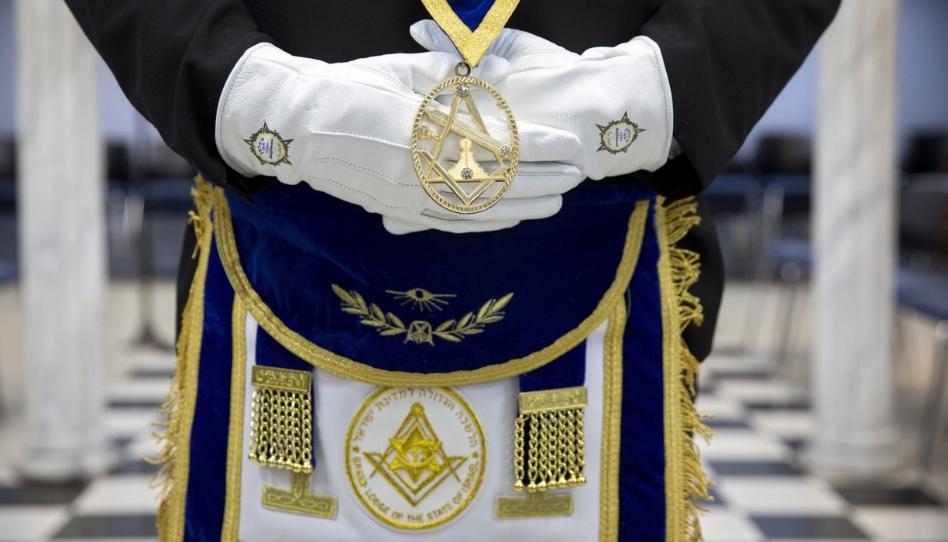
Italy kidnapped by Freemasonry.
It is not a unique case; an article today analyzes the situation in Italy that we can apply to almost all European countries. Italy is being attacked by a silent invasion, but not all immigration is the same. The Filipinos, for example, although present in large numbers, are perfectly integrated and respect our laws, almost more than Italians, and create no problems, but all this for one single reason: they are Catholic like us!
Other peoples follow their spiritual guides, both in agreement that “it will be the womb of our women that will give us victory,” convinced that demographic invasion, even if slow and gradual, will in any case lead to the ethnic replacement of the Italian people, who to a considerable extent follow other leaders and other elites, the Gnostic-Masonic ones of Maastricht Europe, which promote abortion ( numerical reduction before birth), euthanasia ( numerical reduction before death), gender theories and homosexuality (reproductive numerical reduction).
We find ourselves between two fires: the anvil of anti-human theories, which reduce people to mere biological entities, and the hammer of the Islamic invasion (this one in particular supported and encouraged by left-wing parties), in addition to the Hindu invasion (although much more contained) and criminal invasion in general, all of which aim to turn our country, until yesterday a world beacon of tolerance and welcome, into a social jungle where the law of the most… criminal prevails!
What is the Kalergi plan? Count Kalergi (1894-1972) was an Austrian politician and philosopher, founder of the Pan-European Union and the first politician to propose a project for a united Europe; his first book, entitled Paneuropa, was published in 1923 and contained the guidelines of the Pan-European Movement, which spoke of a plan for the ethnic replacement of European populations in order to control them, an expression of an elitist will that controlled the reins of socio-economic power. The so-called “Kalergi Plan” is a project desired by the world elites to promote mass immigration from Africa and Asia to Europe, with the ultimate goal of replacing and erasing the identity of European peoples, conceived and proposed years in advance, before its concrete, effective, and current application could be seen.
This is precisely what the mainstream media and the politically correct press refuse even to consider, dismissing it with the usual label of “conspiracy theories.” It is not so important to know whether Count Kalergi is a pawn or simply a protagonist, and yet he is the symbol and key piece of this artificial construction called Europe. Through this “Kalergi Plan,” hidden powers act with coherence and determination, with the aim of creating an Orwellian world, governed by an elite that, with insidious perversity, is precisely today bringing about the “end of history.”
And what exactly is the concept of “hybridization” proposed by Pope Francis? Introducing the concept of “mestizaje” (mixing) as a positive value, on several occasions and in various ways he who dared to affirm that the Virgin “wanted to be mestizaje for us, was mestizaje. And not only with Juan Diego but with the people. She was mestizaje to be the Mother of all, was mestizaje with humanity. Why? Because “mestizaje” to God. And that is the great mystery: Mary, Mother, “mestizaje” to God, true God and true man, in her Son.
And what “role” does Leo XIV play in all this? What has become of the “non-negotiable values”? Why is the terrible anti-Christian persecution of today not denounced aloud? Why is truth not proclaimed in the Church, but only unity prioritized, which, although an essential value, increasingly resembles a smokescreen to hide the truth? Let us not lose hope, and Italy often recalls the famous phrase of Judge Falcone before being assassinated by the mafia: “He who is afraid dies every day.” “He who is not afraid dies only once!”
«Blessed are your eyes because they see and your ears because they hear…”
Good reading.