


Saturday, the eve of All Saints, and the day feels like a seating chart. On Sunday the new prefect of Communication takes office, the Synod has two new under-secretaries, and the Curia puts in writing the right to a defense lawyer for anyone facing dismissal—a right that until now was nowhere in the rules. And above all that, the story that has gone around the world: the Holy See says the Pope mailed in his ballot for Tuesday’s U.S. elections.
The rest of the day: the headline on that vote changed overnight and the “first Pope in history” claim has been verified by no one; an Israeli rabbi writes to Parolin and the reply is not from the Pope; PETA announces a complaint against four Spanish priests for praising bullfighting and some headlines make it sound as if the Vatican were judging them; the Pope’s confessor has a book out and its most-quoted line matches no document; the Gates Foundation did sponsor the Assisi meeting, though not exactly as reported; the motto of the Night of the Shrines is a cut-down version of a papal phrase; and a cardinal had an article altered and the meaning of what he said changed.
The Holy See says the Pope mailed his ballot
We begin with the story of the day, and three separate acts must be distinguished because each rests on a different level of evidence and almost no one is doing so. The first is documented administratively: Robert Francis Prevost is listed as a registered voter in Illinois, with an address in New Lenox, Will County, and requested a mail-in ballot on 3 October; this was confirmed by name by Kim Fladhammer, chief of staff to the county clerk, to the Chicago Sun-Times. The second is asserted only by the Holy See: the Press Office released a written note on Friday in response to press questions stating that the Pope “has mailed his ballot to Chicago.” The third has been confirmed by no one: whether the ballot arrived and was counted. The Associated Press puts it this way: “it is unclear how he returned it”, and the NBC affiliate in Chicago reported on the 29th that it had not been received. So we do not write that the Pope voted; we write that the Holy See says he mailed the ballot—that is what is known.
The note deserves to be quoted in full because it says more than the headlines have reported. ANSA reproduced it: “The Pope has exercised his right to vote as a United States citizen whenever he has had the opportunity”; that he has done so “in line with this established practice of civic participation”; and a detail no one has highlighted: “the Holy Father has also confirmed that, during the years he resided in Peru, he exercised his right to vote whenever he had the opportunity.” It closes by expressing “his conviction regarding the right and duty of citizens to participate in democratic processes.” He has been a Peruvian citizen since 2015, before becoming bishop of Chiclayo, and has not renounced his U.S. citizenship.
The note places the ballot “in Chicago,” yet the registration is in Will County: Chicago is in Cook County, and the Associated Press adds that records show a prior registration there. We will say nothing about the content of the vote, which is secret like anyone else’s. Several outlets have published his primary-participation history and two have editorialized about his leanings on that basis. That is speculation by those outlets and we do not repeat it.
The headline that changed overnight and the “first Pope” no one has verified
The headlines in Euronews and Univision originally read “has requested to vote” and “requested to vote by mail, according to media reports,” and now say he voted and that it is the first time. These are not two outlets contradicting a third: it is the same story before and after the Vatican note, and what remains of the old headline is the page URL.
Of the claim “first Pope in history to vote,” which appears in half of Europe’s headlines, this must be said: it is an unverified historical negative. The Associated Press states it as fact without attribution; CNN accepts it and qualifies only the longer version with “probably.” The only named expert in the entire coverage is British historian Michael Walsh, who says, “I do not believe popes have ever voted in a democratic election”—a doubt about an absence of record, not a verification. The most scrupulous piece is Gerard O’Connell’s: Pope Francis kept Argentine citizenship and passport but there is no proof he voted from Rome, and for John Paul II and Benedict XVI, “as far as is known,” there is likewise no record. No one has done the archival work. We say there is no known precedent, and we stop there.
Two points of attribution on the reactions. The sentence AgenSIR attributes to “the bishops”—“by voting, our Holy Father sets the example that encourages every citizen to exercise civic responsibility”—comes from a statement by the United States Conference of Catholic Bishops issued by its spokesperson and executive director for public affairs, Chieko Noguchi: no bishop signed it, and the Conference places it within its “Faith Before Politics” campaign, whose emphasis, it says, is not on whom one votes for but on forming conscience. And criticism there has been: LifeSiteNews published two pieces the same day, one carrying the word “betrayal” in the banner. Neither quotes a named cleric, canonist or bishop criticizing the vote: the harshest language comes from an anonymous social-media account and the analysis rests on an unidentified source “close to the Curia.” Anyone invoking Article 24 of the Lateran Treaty should read it: it speaks of temporal rivalries between states and the neutrality of Vatican territory, not of a citizen’s vote. We have found no written, canonical or Vatican norm regulating the matter, and that is what should be said rather than inventing one.
Two more pieces appeared overnight, each repeating the same shift. Inedito vaticano, il voto anti Trump del pontefice, by Luca Kocci in Il Manifesto, with the subhead “la prima volta”: the “anti-Trump” claim is only in the headline, attributing an intention to a secret vote. The lead does state that Prevost remains registered in Chicago, the city where he was born in 1955; the registration is in New Lenox, Will County. It is the same slip carried by the agency dispatch, which headlines Chicago and lists New Lenox. The same error appears in Vaticano: Papa Leone ha votato per le elezioni Usa, unsigned, in a magazine launched in 2025 whose usual fare is horse racing and agro-food; it also places “the vote is a democratic duty” in quotation marks in the headline without saying who said it—there is not a single quoted sentence in the body.
The elections are Tuesday, 3 November. The first to report it was a local radio station in Joliet, in Will County itself, which saw the name on the list of mail-in applicants that campaigns have access to. It was not a leak or an announcement: it was an administrative list read by someone who lives there.
The Curia introduces defense counsel in dismissal proceedings
The day’s governance news is small in appearance and large in practice. The Bollettino published on Friday a “Rescriptum ex Audientia Sanctissimi” from the audience of 19 October, dated the same day and signed by the Secretary of State, Cardinal Pietro Parolin: the Pope approves and Parolin transmits—the same formula used in the Toledo telegram the day before. It amends three articles—62 § 3, 68 § 2 and 68 § 4—of the Personnel Regulations of the Roman Curia, not the General Regulations but the text promulgated on 23 November 2025, approved ad experimentum for five years and in force since 1 January. It enters into force upon publication in L’Osservatore Romano and will later appear in the Acta Apostolicae Sedis.
The concrete point—and it is best not to copy the agency summary because it invites confusion. The ten days to submit justifications were already in the 2025 regulations: they are not the novelty. The novelties are three. When the alleged facts are deemed “liable to suspension of more than thirty days or to dismissal,” the deadline rises to fifteen days. In those cases the person concerned may also avail himself “of counsel chosen from among the members of the Body of Advocates of the Holy See or of the College of Advocates of the Roman Curia.” And when the acts are forwarded to the disciplinary commission, there is an obligation to inform it “of the measure taken and of the possibility of retaining one’s own counsel.” The third is the most subtle: previously there was no duty to advise of the right. The 2025 text only said the accused “is given the possibility of defending himself,” without mentioning counsel or defender.
Vatican News explains that the previous wording created uncertainty about which authority was competent, and that the mismatch between the ten-day period in the Personnel Regulations and the fifteen-day period in the commission’s own rules caused difficulties in application and, “in some cases, nullity of proceedings for violation of the right of defense.” In other words, there have been cases annulled in the Roman Curia because defense was not respected, and this norm prevents that in the future. Vatican News identifies none.
Two things the rescript does not say and should not be said. It does not regulate retroactivity or pending proceedings: it is not that we have not found it; it is not there. And the word “appeal” does not appear: the 2025 regulations continue to govern, recognizing appeal “according to canonical norms” without naming the body, while other labor disputes go to the Labor Office of the Apostolic See. Disciplinary matters remain outside that office. Add a limit that is not minor: counsel must be on one of the two Vatican lists, so an external labor lawyer not enrolled cannot assist anyone.
Becciu’s lawyer says the Court has again requested the papers
Defense rights are also at issue, on another plane, in Svolta nel processo Becciu, parla l’avvocato Viglione, an interview published on the afternoon of the 30th in Lo_Speciale, a general-interest magazine not focused on Vatican affairs, signed by the editorial staff with no byline. What the outlet asserts must be separated from what the party asserts, and the separation is in the text itself. The outlet headlines “turnaround”; the verb in its lead is “reaffirmed”: the Court of Appeal of the Holy See is said to have reiterated to the prosecution the obligation to hand over to the defense all documents in its possession, under penalty of nullity of the first-instance trial. No date is given for that ruling. The procedural fact it refers to is the ordinance of 17 March, which recognized the nullity of the summons because of the incomplete deposit of the acts, whereas the hearing on the 29th lasted eleven minutes. Of a turnaround, nothing: what exists is a party statement, which is a different matter and also publishable.
What Fabio Viglione, the cardinal’s lawyer, maintains is that the first-instance sentence recognized that Becciu did not act to enrich himself and that there was no profit, and that the Court itself recognized that nullity, which would support the cardinal’s thesis of a setup he has maintained from the first day. These are defense assertions and must be read as such. What the piece does not do—and was the only thing expected of it—is say who is sustaining the prosecution: it speaks of the Promoter of Justice’s office without naming anyone, does not mention Diddi and does not mention the abstention. Nor does anyone else: Vatican News on the 29th still described that office as headed by Diddi, with the clarification that in January he filed a declaration of abstention from the appeal—not from the post—and neither Vatican News nor ANSA names who will sustain it at the January hearing.
A Jesuit sociologist and a Salesian liturgist for the Synod
The same day, two new under-secretaries at the General Secretariat of the Synod, and the contrast in profiles is the noteworthy part. Father Giacomo Costa, Jesuit, born in Genoa on 12 September 1967, entered the Society in 1992 and was ordained on 22 June 2002; he is a sociologist from the École des Hautes Études en Sciences Sociales in Paris, chaired the San Fedele cultural foundation in Milan from 2007 to 2025, directed Aggiornamenti Sociali from 2010 to 2021, and since 2022 has been national spiritual adviser to the ACLI. Until now he was a consultor to the General Secretariat itself, and previously had been special secretary of the last two synodal assemblies, those of 2018 and 2021-2024. He knows the machinery from the inside.
Sister Elena Massimi, of the Daughters of Mary Help of Christians, born in Rome on 16 June 1975, made perpetual profession on 24 October 2009, holds a doctorate in Sacred Theology with a specialization in liturgical-pastoral studies from the Institute of Pastoral Liturgy of Santa Giustina in Padua, incorporated into Sant’Anselmo. She is professor of Liturgy and Sacramental Theology at the Pontifical Salesian University, president of the Italian association of professors and cultivators of liturgy, and responsible for Music for the Liturgy in the national liturgical office of the Italian Episcopal Conference. She comes from outside the synodal machinery and from liturgy, which has not been the usual source of Synod personnel until now.
Who they succeed is the half the headlines have not told, and both halves matter. The Synod Secretariat itself explains: Costa succeeds Bishop Luis Marín de San Martín, the Augustinian who left in March for the Almonry and who was in Kyiv this week; and Massimi succeeds Sister Nathalie Becquart, who leaves the post after a five-year term. So Massimi is not the first woman under-secretary of the Synod, as some will headline: the first was Becquart, in February 2021, and Massimi succeeds precisely the first. The Bollettino of the 30th publishes both appointments and no resignations, and the mandate is five years. Cardinal Mario Grech, secretary general, says of Costa that he “accompanied the Assembly from within and knows its method,” and closes with a phrase: “a path is not inherited; one continues walking.”
Alvarado takes office on Sunday, and is the first laywoman, not the first woman
On Sunday, 1 November, All Saints, the new prefect of the Dicastery for Communication takes office. And the first thing is the date of the appointment, which is not from this week: the Bollettino named her on 2 June, so what is happening now is the taking of office and five months have passed between the two. She is Maria Montserrat Alvarado, Montse Alvarado, born in Mexico City, with degrees from Florida International University and George Washington University, fourteen years at the Becket Fund for Religious Liberty and, since 2023, president and chief operating officer of EWTN News, where she joined in 2021 as founding presenter of a weekly program. She succeeds Paolo Ruffini, who turns seventy and retires, and who was the first layman to head a dicastery. The date of the taking of office was already set in that Bollettino of 2 June; as for Ruffini’s resignation, to this day nothing.
Now the quantifier, where the nonsense will be said. Alvarado is the first laywoman to head a dicastery and the first woman at the head of Communication. She is not the first woman prefect of a dicastery: Sister Simona Brambilla was, a Consolata missionary, appointed by Francis on 6 January 2025 for the Institutes of Consecrated Life. Vatican News wrote it carefully—“the first non-religious woman”—and EWTN also—“the first laywoman”; anyone who drops the adjective will say something false. Note also that the Bollettino does not use “prefecta” but the name of the office, “Prefect of the Dicastery for Communication.”
Her words, to EWTN News In Depth: “it is an enormous responsibility; communicating Christ to the world is the mandate of the Dicastery for Communication, and this will happen in harmony with the Holy Father. I do not intend in any way to impose my own vision; on the contrary, I am welcoming a vision that has been entrusted to me and I commit myself to putting it into practice.” Two dry observations, and both are facts. The dicastery she receives oversees Vatican News, Vatican Radio, L’Osservatore Romano, Vatican Media, the Press Office, the Publishing House, the Printing Press and the Film Library. And her first interview as incoming prefect has been given to the house she comes from.
And last night there was a farewell, and the account is from the house itself: Grazie per il tuo esempio, by Salvatore Cernuzio in L’Osservatore Romano of the 30th, under the subhead Il Dicastero per la Comunicazione saluta Paolo Ruffini. Ruffini had been there eight years, since Francis named him in 2018, and the dicastery now works in fifty-eight languages. Alvarado told the staff: “I wanted us to be together, because it is a historic moment,” and “criticism helps make things better, but we are also strong enough to know the truth.” Ruffini closed with two sentences: “we have had to face many difficulties, and we have done so not by the merit of each one, but by the merit of us together,” and “I will carry you in my heart; I entrust you to Montserrat and I entrust Montserrat to you.”
And a message to Hindus with the “spirit of Assisi” inside
It passed almost unnoticed the same Friday. The Dicastery for Interreligious Dialogue published its annual message to Hindus for the feast of Deepavali, which this year falls on 8 November, and the theme is “Hindus and Christians: together let us give life to paths of peace in the spirit of Assisi,” for the fortieth anniversary of the 1986 meeting. It is signed by Cardinal George Jacob Koovakad, prefect, and Bishop Indunil Janakaratne Kodithuwakku, secretary. It is the third place in three days where the formula of the spirit of Assisi appears, after the Sant’Egidio meeting and the Pope’s video message, and it is worth noting that the expression is now being used by the Curia in documents, not only by the organizers.
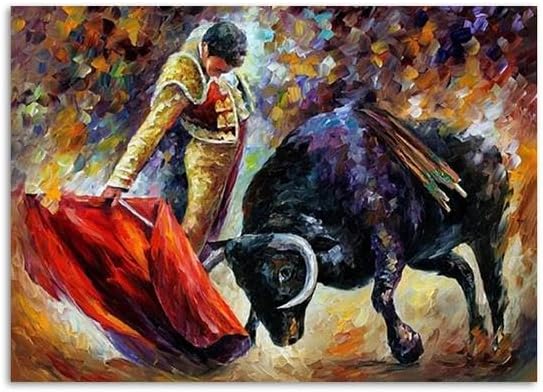
PETA announces, the Vatican does not judge: the priests and the bullfight
A headline is circulating that says Catholic priests are “subject to Vatican judgment” for having praised bullfighting, in a “historic judicial case.” There is no such thing. The piece is a PETA press release reproduced in full and translated into Italian by a local site in Fermo, with the organization’s press contact inside the text and the press-conference call included. And no other media outlet in the world has picked it up.
The real fact, which exists and is different. PETA published an investigation with statements by four Spanish priests in favor of bullfighting—one says that in the ring there is “a sacrifice that is not violent”; another, that “it is a sacrifice, as the Mass is a sacrifice”—and has announced by press release that lawyer and canonist Laura Sgrò, counsel for the Orlandi family, will file a submission with the Dicastery for the Clergy requesting an investigation and disciplinary measures. The press conference is in Rome on Tuesday, 3 November. That is: as of today the submission has not been publicly filed, there is no case, no tribunal and no procedure. A third-party complaint is not a trial, and disciplinary proceedings against a diocesan priest are initiated by his own Ordinary. PETA names the four; we do not, because the diocese of none is on record, because the organization does not say where or when the statements were recorded, and because nothing has been opened against them.
What does deserve space is the historical background, and here the campaign omits half the story. PETA invokes the bull of Pius V De salute gregis dominici, of 1 November 1567, which prohibited bullfights under pain of excommunication. What it does not say is that that discipline was dismantled in thirty years: as theologian Xabier Pikaza documents, Gregory XIII lifted the prohibition for the laity in 1585, Sixtus V reiterated it for clerics in 1586 and Clement VIII revoked the 1567 bull in January 1596. And in the opposite direction there is an established fact that no one has placed beside it: the International Encounters of Chaplains and Bullfighting Priests exist, the first in Zamora in April 2024, organized by the Heritage Delegation of that diocese, with the participation of Cardinal Baltazar Porras. There is no condemnation by the Holy See of bullfighting, and the campaign exists precisely because there is none.
The Night of the Shrines is tonight, and the motto is cut short
And something happening today. Tonight the Night of the Shrines is celebrated, an initiative of the Collegamento Nazionale dei Santuari Italiani and of the national office for the Pastoral Care of Leisure, Tourism and Sport of the Italian Episcopal Conference, born in 2019. The pontifical basilica of St. Anthony of Padua opens from nine to ten-fifteen with eucharistic adoration, the Word and a meditation on the beauty of holiness; its rector, Father Antonio Ramina, asks that “the desire for holiness be awakened in all of us.” In Padua the Sant’Antonio dell’Arcella shrine, also Conventual, and the San Leopoldo shrine, Capuchin, join in. How many shrines across Italy are taking part has no official figure: the Conference’s list gathers about sixty entries and not all are shrines, because it includes a cathedral, a parish and the Scala Santa in Rome.
And here there is a cut we must point out because we have been on that all week. The motto this year is “aspire to holiness, wherever you are,” and the convocation letter presents it as words of Leo XIV in the Tor Vergata homily. What the Pope said on 3 August 2025, at the Jubilee of Youth, was: “aspire to great things, to holiness, wherever you are. Do not settle for less.” The first half is missing and the closing is missing, which is the demanding part. It is not a literal quotation: it is a motto built on a quotation, and it is done by an office of the Italian Episcopal Conference.
On the date, the fact and not the temptation. The Night of the Shrines used to be held in June: there were editions on 1 June 2024 and 1 June 2025, and this year it falls on 31 October. That it has been moved to compete with Halloween is not said by any organizer, and in the convocation letter, on the Conference page and in the Padua communiqué the word Halloween does not appear once; the only thing they note is that it is the eve of All Saints. The counter-programming frame is supplied by an outlet, on 29 October, which headlines “the Night of the Shrines against Halloween” and does not attribute that frame either to the Conference or to the Collegamento, because it does not mention them. The change from June to October is a fact; the intention is not on record.
The Pope’s confessor, a book and a quotation that does not match
Luis Dri, il confessore di Papa Francesco che insegna al mondo la forza del perdono, by Paolo Martini in Adnkronos. And the first thing is to place the fact, because the headline does not say it: Cardinal Dri died sixteen months ago. What exists now is a book, Luis Dri. La forza del perdono, la debolezza della guerra, by Alver Metalli and Andrea Tornielli, due out in November from Ares with a preface by Alessandro Banfi and an afterword by Bishop Oscar Vicente Ojea, written in the first person from a long conversation. Adnkronos frames it on the eve of the Pope’s trip to America, and notes that no opening of a cause is announced.
The dossier, supplied by the Bollettino itself: Luis Pascual Dri, Capuchin, born 17 April 1927 in Federación, Entre Ríos province; habit 21 February 1945, ordained 29 March 1952 in Montevideo cathedral; confessor at the shrine of Our Lady of Pompeii in Buenos Aires; created cardinal in the consistory of 30 September 2023, with the deaconry of Sant’Angelo in Pescheria. He died on 30 June 2025, at the age of ninety-eight, and Leo XIV sent a telegram of condolence signed by Parolin, calling him a “generous pastor” and “so appreciated by Pope Francis.”
And now the documentary datum, which we give with no more weight than it carries. The phrase for which Dri is known throughout the world—“Lord, forgive me because I have forgiven too much”—has circulated in that wording since a 2023 piece in L’Osservatore Romano signed by Andrea Tornielli, in a block quotation with no indication of document, occasion or date; the Vatican News obituary attributes it to the Angelus of 9 July 2023 and the Bollettino of that day does not contain it. What is in a primary source is Francis’s meeting with the parish priests of Rome on 6 March 2014, where he recounts the anecdote of “a great priest of Buenos Aires”—without naming him and without calling him a Capuchin—who used to say “because I know I forgive too much” and, before the tabernacle, “excuse me, it’s your fault, because you have given me a bad example.” In October 2024, before the Vatican penitentiaries, he told it again: a Capuchin confessor in Buenos Aires, ninety-six years old, who “was afraid of forgiving too much.” The co-author of the book now coming out is the one who published the polished version. There is nothing reprehensible in polishing an oral anecdote; there is in citing it as a document.
A rabbi writes to Parolin, and it is not the Pope who replies
Il rabbino Weisz a Parolin: ebrei sono anche nazione, by Adam Mijatovic on the portal of the Italian Jewish communities. It is an open letter from Eliezer Simcha Weisz, a member of the Council of the Chief Rabbinate of Israel—member of the Council, not Chief Rabbi or spokesperson: he writes in his own name—and it is best to begin with the addressee, because everyone will read it as a reply to the Pope and it is not. It answers a speech by Parolin on 23 October to some fifty members of the American Jewish Committee, in the Apostolic Palace, the day after Leo XIV received them in audience. And the Pope’s speech does not contain the phrase that irritates: it is in the Secretary of State’s.
What Parolin said: that Jewish identity, religious faith and the policies of a government are “related questions, but the Holy See is of the opinion that they are not interchangeable”; that he wishes to maintain “a clear distinction between this dialogue and the relationship between States,” expressly mentioning the State of Israel; and that reasoned criticism of the policies of a government “must remain possible without being confused with hostility toward a particular group or, precisely, toward a religious faith.” What Weisz replies, in one line: “the Jewish people cannot be separated from its historical homeland.”
The dispute is not new and has been in writing for forty years, which is the only thing that needs to be explained to understand it. The documents of the Commission for Religious Relations with Judaism contain both halves: the 1985 document says that the State of Israel and its political choices “are to be seen in an optic that is not in itself religious” and that the question “is referred to the common principles of international law”; and the 2015 document says that the covenant offered by God to Israel “is irrevocable” and “has never been revoked.” That is: irrevocable election on the theological plane, the State judged on the juridical plane. Weisz challenges the separation, because if the Jewish people is constitutively also a nation with a bond to a land, the partition between faith and State amputates its self-definition. From the Holy See, for now, no response.
“A Church” is not “the Church”
Bishop Barron rebukes cardinal who said Church should not convert people, by Andreas Wailzer on the 29th. And it is the cleanest case of the series we have been recounting all week, because everything fits in one determined article. The cardinal is Jean-Paul Vesco, Dominican, archbishop of Algiers, created cardinal on 7 December 2024, and what he said to CathoBel was this, in French: “we are the Church of this people. Not a proselytizing Church, not a Church that is there to convert, but a Church that aspires to be one of the components of this people.” Une Église, a Church, and the preceding sentence says which Church he is talking about: the one in Algeria, where proselytism is restricted by law. In the version that has circulated in English, “a Church” became “the Church,” and with the article the scope changed: from a description of the Algerian Church to a thesis about the mission of the universal Church.
Bishop Robert Barron, of Winona-Rochester, replied on X with a “sorry, but… what?”, recalled the precedent of Cardinal Américo Aguiar and closed: “if I really thought the Church does not exist to bring people to Christ, I would resign and look for an honest job.” Barron does not name the cardinal: he speaks of “another cardinal,” and it is LifeSiteNews that supplies the name in the body. The second point is that Vesco did say that among monotheisms proselytism is poison, and he illustrated it with the phrase of a Muslim—“you are fine, but your religion is worth nothing”; the English summary that circulated erased the interlocutor and left it as “someone,” so that the phrase went from being an example of what the other suffers to a thesis of his own. CathoBel has published a reply, and its headline is already the argument: the cardinal’s words were taken out of context. One article, one interlocutor erased and one cardinal unnamed: three small operations in a single controversy.
Müller, the flags and an interview ten days earlier
Cardinal Müller: no place for rainbow flags in the Church, also on the 29th and also by Wailzer. The phrase is his and is literal, but the origin is not LifeSiteNews: the interview was published by the Gibbons Institute on 19 October, ten days earlier, conducted by Jan Bentz, and dealt with the limits of synodality and the direction of the pontificate. The phrase comes right after the claim that the German Synodal Way must be stopped because it cannot introduce heretical ideas about anthropology; calling that path heretical and pro-LGBT, however, is the writer’s and not the cardinal’s. And a clarification of title that almost everyone gets wrong: the Holy See itself titles him “prefect emeritus of the Congregation for the Doctrine of the Faith,” with Congregation, because the emeritus status refers to the body as it existed before Praedicate evangelium. He was also president of the Pontifical Commission “Ecclesia Dei.”
Back to “Ecclesia Dei,” which are two regimes and not one
Stilum Curiae publishes two long pieces the same day and both go to the same place. The first, by Américo Mascarucci, maintains that Traditionis custodes “was perhaps the greatest error of the Bergoglian pontificate,” that “it would have sufficed to return to the dispositions of John Paul II” and that “a return to Wojtyła’s Ecclesia Dei, which represented a perfect point of equilibrium, is desirable.” It concedes that “Pope Leo has so far prevented the prevalence of extremist positions” and asks that he assume the tutelage of the traditionalist world.
The documentary clarification, because the argument rests on a name that designates two different things. The Pontifical Commission “Ecclesia Dei” was instituted on 2 July 1988 by the motu proprio Ecclesia Dei adflicta; Benedict XVI linked it more organically to the Congregation for the Doctrine of the Faith with Ecclesiae unitatem, of 2 July 2009; and on 17 January 2019 Francis suppressed it, with that word, soppressa, and assigned its competences “entirely” to the Congregation, where a section was created. It was not a merger or an integration: it was a suppression. And the point of equilibrium Mascarucci misses is not that of 1988, which operated by indult and permission of the bishop, but that of Summorum Pontificum, of 2007, which is what Traditionis custodes derogated. They are two regimes with forty years between them and the article calls them the same.
The second piece is by Bishop Marian Eleganti, Benedictine, auxiliary bishop emeritus of Chur since 2021, and is harsher: current synodality would be “a late structural reform of Protestant stamp,” which “selects whom or what to include,” so that “all, all, all does not mean all”; and “the category of sin has been replaced by that of fragility.” What he calls a “Vatican disgrace” has behind it a concrete fact and it is the one that matters: the prohibition on entering St. Peter’s for the pilgrimage of 24 October. And the contrast that turns it into news: in 2025 Leo XIV himself authorized Cardinal Burke to celebrate a pontifical Mass in the ancient rite at the altar of the Chair, on 25 October. Same month, a year apart, opposite criterion, and no official explanation.
Gates finances Assisi
Gates Foundation was primary sponsor of scandalous Assisi meeting, by Emily Mangiaracina. The official sponsors page of Sant’Egidio, which was one click away, does indeed list the “Gates Foundation” under the heading “main sponsor / sponsor platinum.” It lists it, yes, alongside BFIO and the Fondazione Cariplo, so “primary sponsor” in the singular is a reading of a photo and not of the chart. No amounts are published, either in the piece or in the official material, so anything said about economic weight is conjecture.
What the chart does have, and no one has underlined, are two names in the partner category: the German Episcopal Conference and Soka Gakkai, the Japanese Buddhist movement, with two entries, one of them from the Italian eight-per-thousand. Under “gratefully acknowledged” appear the Region of Umbria, the city of Assisi and the diocese of Assisi-Nocera Umbra-Gualdo Tadino, which is not the organizer: the Community of Sant’Egidio organizes and its president, Marco Impagliazzo, presented it at the Dicastery for Communication.
The “Canticle of the Creatures”
Il Cantico delle creature è una lode a Dio, non un manifesto green, by Miłosz Manasterski in La Nuova Bussola Quotidiana. It maintains that the Canticle is prayer addressed to God, in which creation is praised, and not an environmentalist manifesto: “it is a Catholic response to left-wing climatism: it starts from the Creator, and the climate comes after,” and “the Church is left with that of the Canticle, which begins with the name of the Creator and before the end speaks of forgiveness and sin.” The model it proposes is the Polish one, of a meeting of diocesan officials of Laudato si’ in Brok: to speak of creation with the language of faith and, separately, concrete energy-efficiency projects in the parishes.
Wrapping up the day
We are finishing. Tomorrow, All Saints, Alvarado takes office in Communication; Monday is the commemoration of the faithful departed, with Mass at the Verano at four; Tuesday the United States votes and PETA’s complaint is presented in Rome; Wednesday the 5th, at nine, the suffrage Mass at the altar of the Chair, and that same day the centenary congress on China at the Urbaniana; the 6th the trip to America begins.
Have a good day.
“When you are invited, go and sit in the lowest place.”