


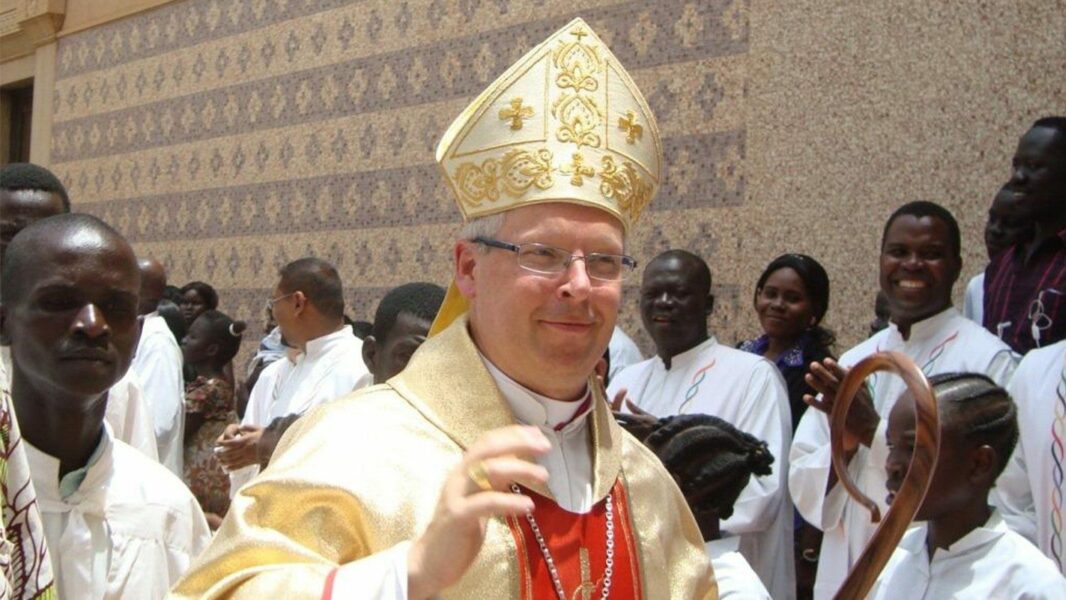
The apostolic nuncio in Germany, Hubertus van Megen, has ordered the diocese of Speyer to suspend the reform of its parish structure while the see remains vacant. The plan, prepared for more than two years, envisaged reducing the diocese’s parishes from 70 to 9. The diocese itself announced this on Wednesday, 11 November, together with the reaction of its diocesan administrator, Markus Magin, who accepts the decision but declares himself “disappointed” with the content of the letter.
The diocese has been without a bishop since August, when Leo XIV accepted, for health reasons, the resignation of Karl-Heinz Wiesemann, one of the German prelates who supported several of the reforms of the Synodal Way. Since then, Magin, former vicar general, has governed the diocese as diocesan administrator. His intention was to continue preparing the reform during the vacancy and to leave the substantive decisions to the future bishop. Rome has not seen it that way.
According to the diocesan statement, reported by katholisch.de and the agency KNA, the nuncio cites in his letter “well-founded canonical objections.” The Code of Canon Law states in canon 428 that, when the see is vacant, nothing is to be innovated: sede vacante, nihil innovetur. Van Megen warns that continuing the process could create expectations and limit the freedom of decision of the next bishop. He also recalls that erecting, suppressing or substantially modifying parishes belongs solely to the diocesan bishop, and that during the vacancy the presbyteral council and the diocesan pastoral council cease to function and cannot adopt binding agreements.
Speyer’s response is one of compliance with complaint. “We will respect the decision and implement it. However, I am disappointed by the content of the letter,” Magin states. The administrator, the diocesan governing council and the group leading the reform fear “considerable consequences for the future of the diocese” and that the parish reorganization, which they describe as urgent, will be delayed for years. Magin maintains that what he intended to do during the vacancy was compatible with canon law, because essential or legally binding decisions were expressly reserved to the new bishop, and he considers that a complete halt does not take into account the agreements already reached.
The administrator goes further and criticizes the Nunciature for the way the decision was made. He finds it difficult to understand that the diocesan authorities were not consulted, something which, in his view, contradicts the idea of synodality of the Synod of Bishops. He regrets that a synodal process begun more than two years ago has been cut short and fears that it will discourage those who took part in it and that the new bishop will have to begin by regaining lost trust.
The reform began in autumn 2024 with a draft entitled “Be a Blessing,” which, according to the diocese, received more than 3,500 contributions. Five working groups reviewed it, and at the end of October 2025 the first results were presented: nine large parishes instead of the current seventy. In June, the diocesan assembly unanimously approved its main lines. Magin insists that the reasons for change remain: fewer Catholics, less money and parishes without a parish priest. The diocese, in south-western Germany, has about 423,000 Catholics.
The decision comes as the German Church seeks to reconcile its synodal structures with Rome. Van Megen himself questioned in September, in an interview with katholisch.de, whether structural reforms can halt secularization. The quotations in the diocesan note are translated from German.
Rome reminds Speyer that, without a bishop, the diocese cannot be reformed: decisions about its parishes belong to the bishop who arrives.
Read also
- Leo XIV accepts the resignation for health reasons of German bishop Karl-Heinz Wiesemann
- The nuncio in Germany questions the synodal obsession with “power”: “It seems to me an almost dangerous word”
- Wilmer, president of the German bishops: “We do not want a specifically German path that distances us from the universal Church”