


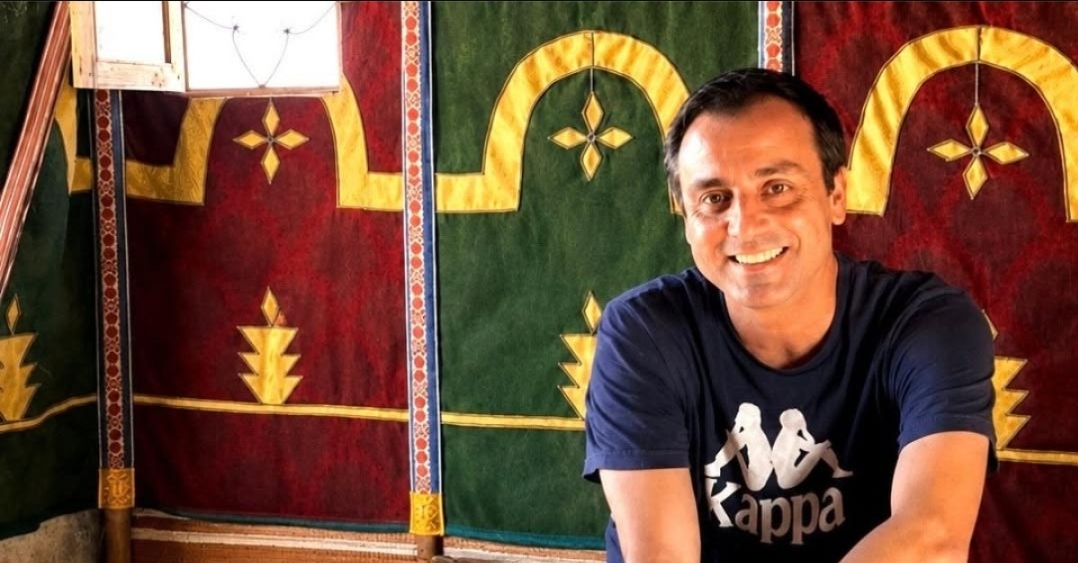
Pope Leo XIV has appointed Spanish priest Mario León Dorado as coadjutor archbishop of Rabat this Saturday. He is a missionary Oblate of Mary Immaculate and, until now, apostolic prefect of Western Sahara. This was made public by the Holy See Press Office in its daily bulletin, which reviews the appointee’s career without mentioning the current holder of the see, Cardinal Cristóbal López Romero, who has been removed from his duties since July while Rome investigates allegations from five adult women regarding alleged inappropriate conduct.
The appointment carries an immediate legal consequence. Unlike an auxiliary bishop, who assists the ordinary in pastoral tasks, the coadjutor enjoys by right automatic succession: canon 409 of the Code of Canon Law establishes that, when the see becomes vacant, the coadjutor immediately becomes bishop of the diocese. León Dorado will therefore succeed López Romero as soon as Rabat is officially vacant, whether by resignation, removal, or when the cardinal turns 75 in May 2027.
The formula chosen by the Vatican concludes a process that began on August 1, when the Nunciature in Morocco announced the appointment of the Madrid-born Oblate as apostolic administrator sede plena, an uncommon figure that left López Romero as titular archbishop but with jurisdiction suspended, as ACI Prensa reported at the time. Six weeks later, Rome converts the provisional arrangement into succession.
A computer scientist from Madrid who learned Arabic to live among Muslims
Mario León Dorado was born in Madrid on March 16, 1974, and grew up in the parish run by the Oblates in the Aluche neighborhood, where his missionary vocation was awakened. Before entering the seminary, he studied computer science at the Faculty of Computer Science in Madrid; later he earned a bachelor’s degree in Theology from the San Dámaso Faculty of Theology. He made his first vows in the congregation of the Missionary Oblates of Mary Immaculate on September 15, 1996, and was ordained a priest on June 2, 2001.
His first years of ministry were spent as a parochial vicar in Jaén (2000-2004). With the confessed desire to serve in Arab lands, in 2004 he received obedience to join the Sahara mission, where Spanish Oblates have maintained since 1954 the only Catholic presence in the former colony. There he learned Arabic, French, and English. His predecessor, veteran Father Acacio Valbuena, took him for a walk through Laayoune on the day of his arrival and told him a phrase that he himself has repeated ever since: “These are your parishioners, all Muslims. Being with them is what you have to do,” according to Independent Catholic News.
In 2009 he assumed the administration of the prefecture, and on June 24, 2013, Pope Francis appointed him apostolic prefect of Western Sahara, taking possession on September 29 in the cathedral of St. Francis of Assisi in Laayoune, before UN representatives and a handful of faithful. He is the third prefect in the history of that circumscription, after Félix Erviti (1954-1994) and Acacio Valbuena (1994-2009), as COPE recalled when that appointment became known.
The prefecture he has governed for thirteen years is one of the smallest in the Church: two parishes, the cathedral of Laayoune and the church of Our Lady of Mount Carmel in Dakhla, separated by more than 500 kilometers of desert, and a community of barely a few hundred Catholics, almost all foreigners, in a population of 800,000 inhabitants. In a 2024 interview with Aid to the Church in Need, he described with starkness the reality of the 40,000 sub-Saharan migrants trapped in the area and summarized his ministry with an eloquent image: “In our Masses we don’t have a philharmonic, but we have a choir. We cannot forget that at the foot of the cross there weren’t many people.”
Devoted to St. Charles de Foucauld, whom he considers a “model and example” for being Christian in Islamic land, León Dorado has cultivated a discreet profile, far from media controversy, very different from that of his predecessor. At 52, he must now receive episcopal ordination, a notable leap for a priest who until today was not a bishop.
The removed cardinal and an investigation that moves forward
The appointment comes two months after the most serious crisis in the recent history of the Church in Morocco erupted. As InfoVaticana reported on July 7, Cardinal López Romero, a 74-year-old Salesian from Almería and a reference of the progressive wing of the College of Cardinals, announced that he was withdrawing from all public celebrations and pastoral activity “so as not to hinder” the preliminary investigation opened by the Holy See following the complaints of five adult women. An investigation by the France Presse agency, released the same day, described “inappropriate” physical contact, “especially intense and prolonged hugs,” and, in one case, an attempt to kiss the complainant; three of the testimonies would have taken place in the context of confession, a circumstance that canon law considers an aggravating factor.
The cardinal denied from the first moment having committed “any violence, aggression, or sexual harassment,” and sources from his archdiocese attributed the accusations to “misinterpreted situations,” as El País reported. Rome, however, has moved forward. Between August 5 and 7, an apostolic visitation led by Bishop Hyacinthe Dione and Father Augustin Chako-Yodi heard in Rabat from the diocesan councils and the complainants themselves, within a procedure directed by the Dicastery for Evangelization under the authority of Cardinal Luis Antonio Tagle. López Romero, who had been summoned to Rome this month to give testimony, has seen his appearance postponed due to circumstances unrelated to the case, as Religión Digital reported this Saturday.
The cardinal’s public trajectory had been the subject of constant attention in these pages long before the scandal. During the 2025 vacant see, when his name circulated on lists of papabili, InfoVaticana analyzed in “Papabile of laughter and blessings” an interview in which he defended blessings for same-sex couples with the logic that “if a dog, a car, or a house can be blessed, why not a person?” and maintained that the Holy Spirit works “overtime” outside the Church. Last November, on the sixtieth anniversary of Nostra Aetate, this newspaper reported on his statement that “no religion possesses the truth” and that Christians should “abandon the false scheme of true religion and false religion.”
After the investigation became known, InfoVaticana reviewed in a detailed profile the trajectory of the Salesian born in Vélez-Rubio: his defense of Fiducia supplicans as president of the Episcopal Conference of North Africa, his enthusiasm for a synodality he described as “revolutionary,” his motto of “evangelizing without proselytizing,” his harsh criticism of European migration policy, labeled “mean, selfish, and myopic” during Leo XIV’s visit to Spain, and his famous ideological self-definitions: “The extreme left is far to the right for me; I am of the Gospel.” His public confrontation with the Archbishop of Oviedo, Jesús Sanz, regarding the word “moritos,” or his accusation of “sacrilegious” against anyone who links Christian faith and rejection of immigration, completed the portrait of a combative prelate omnipresent in the media.
Francis appointed him archbishop of Rabat in December 2017, after meeting him during his visit to Morocco, created him cardinal in 2019, and Leo XIV incorporated him into the Dicastery for Institutes of Consecrated Life. Never until now had a Spanish cardinal been the subject of a canonical investigation for conduct of a sexual nature. With Saturday’s appointment, the Holy See secures the governance of a tiny and fragile Church—little more than 25,000 Catholics of a hundred nationalities in a country of 37 million Muslims—and leaves open the question of when, and under what conditions, the see currently formally occupied by the cardinal will become vacant.
The cardinal enjoys the presumption of innocence. The complainants have the right for their testimonies to be examined with all rigor. And the Catholics of Morocco, from today, have the certainty of who their next shepherd will be.