


Opus Dei does not engage in politics. It never has. Its men do, one by one, on their own, with that freedom of the children of God that always coincides, with liturgical punctuality, with the interests of the house. The formula was set in November 1965 and has worked without a single breakdown since: sixty years of uninterrupted service.
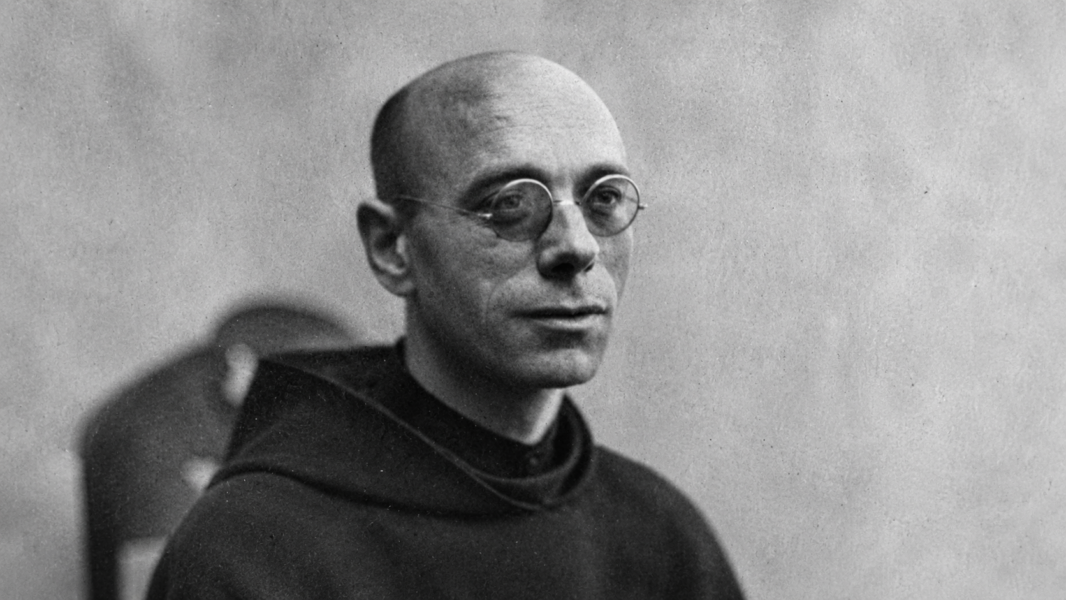
That November, the one who broke the silence was a Benedictine with considerable moral authority. Fray Justo Pérez de Urbel, medievalist from Silos, national councillor of the Movement and first abbot of the Valley of the Fallen, told a Falange newspaper that Opus occupied important posts and that, by occupying them, “it cannot avoid doing politics”. He added a Roman warning that the Work immediately denied: if you do not limit yourselves to being a religious institute, you will make the Church odious. The entire State shuddered. The Directorate-General of Security wrote to the Minister of the Interior that same day; Foreign Affairs opened a confidential bulletin; in Fraga’s ministry there was, the teletype says, consternation, because the newspaper had fired without asking permission. Madrid learned from Paris what Alicante was publishing. That is how finely the regime spun its threads when someone touched the Work.
The rectification arrived within forty-eight hours and is a literary genre in itself. “My words did not have the intention the newspaper gave them”, the abbot said, and it was true that he loved the founder: he himself had taught liturgy to the first three Opus priests, Don Álvaro among them. The problem is that the newspaper’s director had the statements recorded on magnetic tape, and so it appears, black on purple from the mimeograph, in the confidential bulletin of Foreign Affairs that this newspaper has just exhumed.
So Fray Justo retracted everything except the thesis: the people from Opus, he conceded, are never wrong except in their civil activities. An anonymous official from the Diplomatic Information Office, reading that, noted that in the “rectification”—the quotation marks are his—there was “a slight sting”. That nameless censor is the best literary critic the Franco regime produced.
Sixty years later, the community founded by Fray Justo is negotiating its survival with Sánchez’s government, and the monks’ strategy is being carried out de facto, according to what this newspaper has reported, by a man without office or mandate: Antonio Torres, a retired businessman, father of a monk, former colleague of Benigno Blanco in the now-defunct AVANZA, who already signs statements as the abbey’s representative and whose bet is to reach an agreement with Bolaños on a safeguard. The crack in the basilica is accepted, the museum of resignification is accepted, and in exchange whatever remains is preserved. In this house we have been calling it by its name: a plate of lentils.
Is Torres from the Work? The question has been idle since 1965. The Work is never there. Its men are there, its circles, its affections, its former political-foundation partners; and when the result is good, it is due to the high intellectual capacity of its members, which is a literal quote from the communiqué of that time, and when the result is bad, it turns out to have been a private initiative. The glove fits every hand, ministers of development or family strategists.
There is a chiasmus that Fray Justo never got to see. In 1965 the State apparatus mobilized within hours so that an abbot’s attack would remain an anecdote: note to the Interior Ministry, confidential bulletin, express rectification. In 2026 the drills are working in the basilica and the abbey’s statement condemns some graffiti. Then there was too much State for so little offense; now there is too much offense for so little abbey.
The abbot died in 1979 in his Valley, and there he remains, unlike the man who raised it, who was torn from his soil.