


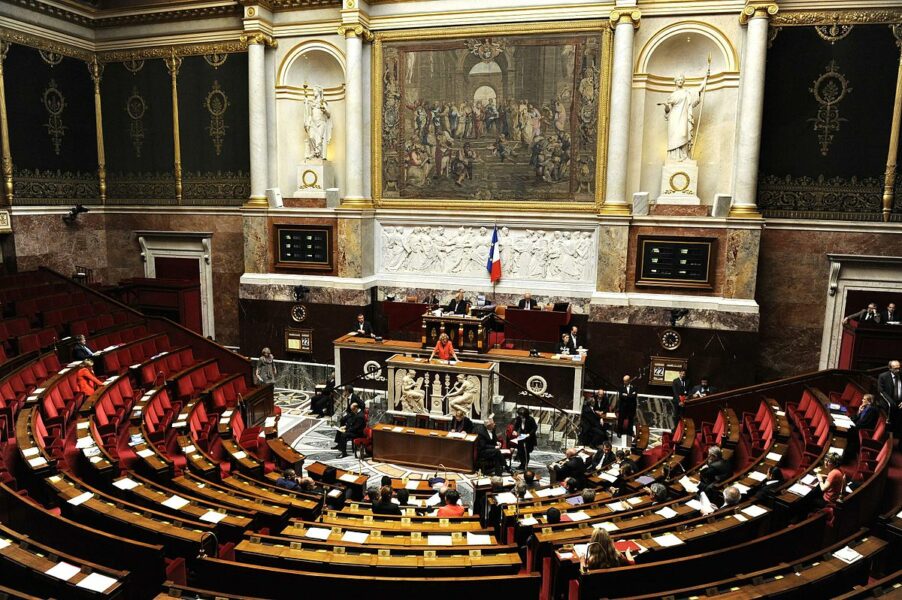
The French National Assembly unanimously approved on Monday a bill aimed at strengthening the protection of minors against violence in both school and extracurricular settings. However, the final text excluded two measures that had raised significant concern within the Catholic Church: the abolition of the seal of confession and the tightening of controls over state-funded Catholic education.
This decision marks a major shift from the initial versions of the bill, which had prompted a public reaction from the French Episcopal Conference just days before the parliamentary debate.
Parliament removes the provision on the seal of confession
The original proposal included obliging ministers of religion to report cases of violence against minors encountered in the course of their duties, even when the information had been obtained during sacramental confession.
The text explicitly stated that no “seal of confession” could override this reporting obligation, a provision that was strongly criticized by the Church and questioned by various legal experts.
Ultimately, lawmakers chose to withdraw this measure before the final approval of the law. As a result, the seal of confession retains the legal protection currently granted to it under French law within the general framework of professional secrecy.
Several legal scholars had warned that the proposal raised questions about religious freedom and the relationship between the State and religious denominations. They also noted that French legislation already provides mechanisms to prosecute abuse without altering the legal regime of sacramental secrecy.
Relief in the French Church
Bishop of Nanterre, Bishop Matthieu Rougé, and delegate of the French Episcopal Conference for Catholic education, publicly expressed his satisfaction with the outcome of the parliamentary debate.
In statements to France Info, the prelate said he was “very happy” about the unanimous approval of a law focused on what he described as the “real objectives”: the protection of minors and the fight against violence in educational settings.
Regarding the seal of confession, Rougé considered that the issue had been introduced into the debate in a “somewhat parasitic” way and defended the importance of sacramental secrecy within the Catholic tradition.
“Maintaining the secrecy of confession can be a means of freeing speech,” the bishop stated, explaining that a priest can encourage a victim to report the facts through other channels without breaking the confidentiality inherent to the sacrament.
Measures concerning Catholic education also disappear
Another provision ultimately withdrawn was the one that sought to modify the renewal regime for partnership contracts between the State and state-funded private schools.
The measure had raised concerns among Catholic education officials, who saw it as a potential increase in state oversight over these institutions.
Rougé also described the withdrawal of this provision as a “relief” and defended the importance of the so-called Debré Law, which has regulated the relationship between the French State and state-funded private education for decades.
A long-standing debate
The controversy over the seal of confession did not arise with this law. The issue had already appeared in the recommendations made by the parliamentary commission that investigated the Bétharram scandal and was also among some of the proposals put forward years earlier by the Independent Commission on Sexual Abuse in the Church (CIASE).
The French Episcopal Conference had warned last week that certain provisions of the bill could affect fundamental freedoms such as freedom of conscience, freedom of worship, freedom of education, and the professional secrecy of ministers of religion.
The final approval of the text without the most controversial measures has, however, allowed for broad political consensus. The 187 deputies present in the vote unanimously supported a law focused on strengthening mechanisms for the protection of minors in schools and extracurricular activities.