


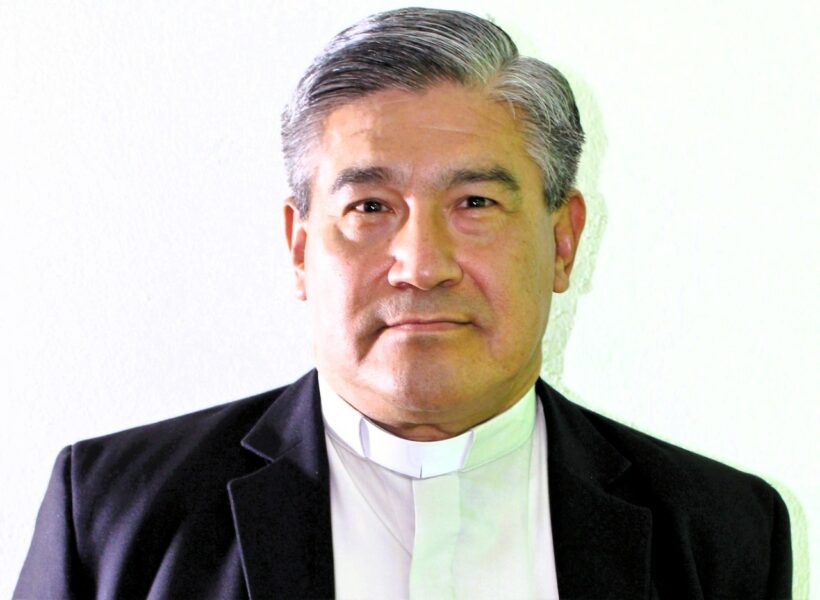
On August 14, 1986, then-Cardinal Ernesto Corripio Ahumada laid hands upon Juan de Dios Olvera Delgadillo and ordained him a priest forever. Forty years later, on this same day in 2026, that anniversary is not celebrated in the fullness of the public ministry that holy orders demand, but under the weight of a restriction that continues without definitive resolution. What should have been a day of thanksgiving for a life of service has instead become a call to rigorously examine the way canonical justice is administered in the archdiocese governed by Archbishop Carlos Aguiar Retes.
Juan de Dios Olvera Delgadillo was born in Mexico City on January 16, 1961. Formed at the Conciliar Seminary of Mexico, he moved to Rome, where he earned a licentiate and a doctorate in Dogmatic Theology at the Pontifical Gregorian University. Between 1989 and 1994 he served as an official at the Pontifical Commission for Latin America and took part in the IV General Conference of the Latin American Episcopate (Santo Domingo, 1992). Upon returning to Mexico, he was in charge of the permanent formation of the clergy from 1995 to 2002. He served as chancellor of the Archdiocese of Mexico from 2004 to 2011, under Cardinal Norberto Rivera Carrera, and as pastor for approximately seventeen years in various communities of the archdiocese. Since 1996 he has been a professor of Dogmatic Theology at the Pontifical University of Mexico and a member of the Mexican Academy of Theology. In 2016 Pope Francis appointed him a Missionary of Mercy. In October 2017 Cardinal Rivera named him canon of the Venerable Chapter of the Insigne and National Basilica of Guadalupe. He founded the group Priestly Friendship, aimed at the spiritual and doctrinal formation of diocesan and religious priests. He has published theological works, including Christological Methodology and Pastoral Reflection (CELAM, 1993).
This trajectory of service, study, and ecclesial responsibility was not enough in the face of the consequences of an act of conscience. In 2020, he himself had denounced the lack of prophetic witness and pastoral presence in the Archdiocese of Mexico. On October 22, 2021, a group of priests and laypeople published the declaration Virgen Santísima de Guadalupe, Mater Veritatis Salutaris (Most Holy Virgin of Guadalupe, Mother of the Truth of Salvation). The document affirms that the truth of faith is the truth of salvation, identified with Christ himself, and that it cannot be adulterated without betraying the Church’s mission. It points to three specific areas in which, according to the signatories, certain orientations of Pope Francis’s pontificate depart from the bimillennial Magisterium and the teaching of Saint John Paul II: the admission of divorced and remarried persons to the Eucharist while the sacramental bond and marital cohabitation persist; the promotion or legitimization of homosexual unions; and the lack of systematic genuflection before the Blessed Sacrament, considered a heresy in practice. The declaration concludes that, on these specific points, obedience is not possible, because “we must obey God rather than men” (Acts 5:29).
Olvera Delgadillo, one of the most visible promoters, sent the text to the archdiocesan curia in a spirit of dialogue. The response was not an open theological debate, but a precautionary measure. Auxiliary Bishop Salvador González Morales, then vicar general, imposed the precautionary restriction of not exercising the priestly ministry publicly while a canonical procedure was underway. In interviews granted to the Catholic News Agency and also through Infovaticana (June 2022 and April 2023), the canon clearly explained his situation: he was not notified of any formal decree of suspension from the clerical state or removal from the office of canon; he was forbidden to celebrate publicly and was in fact separated from his duties at the Basilica, but he was not deprived of the priesthood itself. He may administer the sacraments privately and, by universal law, in danger of death. He insisted that he would not retract “a single comma” of what he had written, because he is convinced that “the true faith must be proclaimed” and that “the norm is to live in communion in faith and charity.”
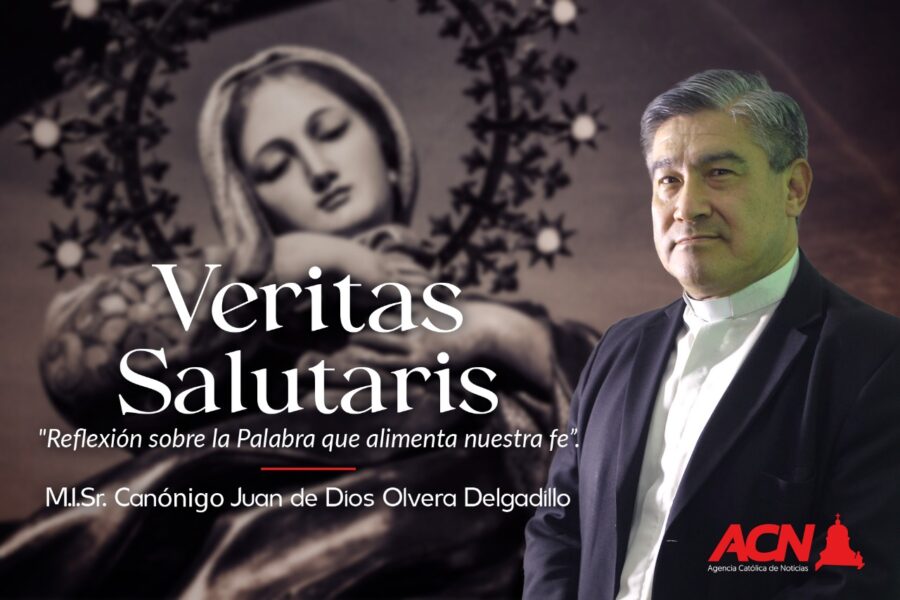
Almost five years later, the procedure remains unfinished. There is no public sentence, no formal acquittal, no reasoned condemnation. Subsequent references, including a series of interviews published at the end of 2025 under the title “Injustice in the Church… four years later,” describe a process plagued by anomalies, with mentions of extrajudicial procedures and the lack of basic procedural guarantees. Meanwhile, the canon has faced material difficulties arising from the irregularity of his income and his de facto separation from his duties at the Basilica. He continues to publish reflections under the title Veritas Salutaris in the Catholic News Agency, but the ordinary public exercise of the ministry entrusted to him in 1986 remains limited.
This situation is not an administrative detail. Canon law requires that processes be conducted with reasonable speed, with respect for the rights of defense, and with a definitive resolution. Maintaining an indefinite precautionary restriction without reaching a just sentence turns the provisional measure into a de facto sanction, without the guarantees that ecclesiastical law itself demands. It is neither legally nor morally possible to sustain an open canonical trial for nearly five years without clear and definitive results. Delay turns justice into an instrument of pressure. When the ordinary superior is the same person who heads the structure that must judge, and when the case is framed within a prior history of tensions—including a 2019 conflict over a property in Juventino Rosas, Guanajuato, in which attempts to impose coercive measures “by instructions of Archbishop Carlos Aguiar Retes” were documented—the perception of partiality becomes inevitable.
The criticism is not of the existence of a procedure. The Church has the right and the duty to examine the doctrinal statements of its clerics. The criticism concerns the way it has been conducted: opacity, absence of resolution, indefinite prolongation of a restriction that affects the ministerial life and dignity of a priest who has served for forty years. Aguiar Retes, as ordinary of the place, is responsible for ensuring that canonical justice in his archdiocese is administered with transparency, speed, and fairness. As long as the case of Juan de Dios Olvera Delgadillo remains in procedural limbo, that responsibility is called into question.
The fortieth anniversary of ordination is not an occasion for sterile polarization. It is a time to remember that the priesthood is not an administrative post subject to the convenience of the moment, but an ontological configuration with Christ. It is also a time to demand, firmly and without ambiguity, that a canonical process cannot become a silent sentence by exhaustion. The truth of the faith, which Canon Olvera Delgadillo says he defends even to the shedding of blood, also demands a justice that does not delay until it becomes injustice.
Justice is not a matter of whims or bureaucracies but a sign of truth; far from the law serving power, its application is ordered to the salvation of souls—souls that do not seem to matter in a pastoral government that has brought the primatial archdiocese of Mexico to the brink of disaster.
From this blog we join in the joy for forty years of ministry of a great priest, living before God in the depth of his conscience, imitating Christ, even in the face of situations that, from the hierarchy itself, seek to eclipse the sincere living of the Gospel.
Congratulations, Father Juan de Dios Olvera.