


Changes in the Vatican’s Council for the Economy.
It was meant to be an operational and powerful body, but it never has been. John Paul II established the so-called Council of Fifteen—an organism made up of fifteen cardinals who were not members of the Curia and who were diocesan bishops. This body was never operational and limited itself to two annual meetings without consequences; indeed, in the Pontifical Yearbook it was not listed among the organs of the Curia but rather in the chapter on episcopal conferences.
What we have now was born with good intentions but has come to nothing. Today the Holy See renewed the composition of the Council for the Economy, the body created in 2014 to oversee the economic and financial management of the Holy See. Leo XIV appointed eight new members—four cardinals and four laypeople—while confirming the leadership posts held during the previous pontificate: Cardinal Reinhard Marx remains coordinator of the Council, which is always presided over by the Pope, while the German jurist Charlotte Kreuter-Kirchhof retains her position as vice-coordinator.
Among the incoming cardinals are Grzegorz Ryś, Archbishop of Kraków; Ladislav Nemet, of the Archdiocese of Belgrade; Jean-Paul Vesco, Archbishop of Algiers; and Roberto Repole, Bishop of Turin and Susa. On the lay side, the four new appointments confirm a decision that deserves special attention: Denis Duverne, a Frenchman who led AXA, one of the world’s largest insurance groups, before becoming president of the Supervisory Board of the Fondation pour la Recherche Médicale. Princess Gisela of Liechtenstein, an environmental engineer trained at ETH Zürich, gained extensive experience in investment banking in London, Singapore and Switzerland before taking the helm of Industrie und Finanzkontor Etablissement. Elena Wettstein Principato, a Roman, works at the heart of international banking finance and manages UBS sales in the European region, having developed her career in the United States and Switzerland. Paolo Nusiner is a Vatican insider who directed the Department of General Affairs of the Dicastery for Communication, one of the Holy See’s most costly structures.
The German cardinal has led the Council uninterruptedly since 2014, a trajectory that makes him a kind of institutional reminder of the economic reform desired by Pope Francis. Remaining on the Council are Cardinals Odilo Pedro Scherer, Archbishop of São Paulo; Gérald Cyprien Lacroix, Archbishop of Quebec; and Joseph William Tobin, Archbishop of Newark. The Council also includes lay members Leslie Jane Ferrar, trustee of the Archdiocese of Westminster, and Alberto Minali, CEO of REVO Insurance. The secretariat of the body continues under Monsignor Brian Edwin Ferme, a man from Pell’s circle who remains in the Vatican and is clear evidence of the limited usefulness of this organism at present.
The Colombia earthquake.
Preparations for Pope Leo’s trip to France.
We always thought that southern Europe was the spiritual reserve; times change and it seems the Catholic future is coming to us from the north. A huge crowd is expected for the Pope’s visit to France from 25 to 28 September. On Monday evening the Diocese of Paris announced that tickets for the youth vigil at the Stade de France are sold out and that 200,000 people have already registered for the Mass on the Champs-Élysées. The diocese stated: “Tickets for the Stade de France are sold out! (…) The waiting list remains open. It is possible that places will become available after cancellations or the removal of duplicates, and they will be offered first to those on the list.” It strongly recommends registering to attend, but assures that “it will also be possible for those who have not registered to participate, within the limits of the spaces assigned.” The event at Notre-Dame is reserved for bishops, priests, deacons, consecrated persons and seminarians. All events are, of course, free of charge.
The unsettling immediate future.
Masonic strategies with Catholic funerals.
While the Bishop of Sanremo is criticised by the media and by Freemasonry, silence falls over the Rome case, that of Bishop Staglianò, who, without verification or explanation, authorised the funeral in Rome, forcing the Secretariat of State and the papal vicar to correct his omission. Even the news has disappeared from the Freemasonry website. It seems there is great interest in keeping quiet about the matter of a funeral cancelled at the last minute and in covering up the unforgivable chain of errors that led to the decision—the only one in recent times and probably the first taken in Rome since the funeral of Piergiorgio Welby. Preference is given to blaming Msgr Antonio Suetta, Bishop of Sanremo and Ventimiglia, who, at the same time and after the Roman decision, had taken the same step of preventing the already scheduled funeral of a local Freemason.
The two related stories, Rome and Sanremo, were treated completely differently by the media: Suetta’s decision was presented as uncharitable and obscurantist; by contrast, the decision of the Reina-Staglianò duo was viewed with suspicion by the outlets that covered it and was considered, at best, a curious item but not a momentous one. The version that the Roman case was a simple oversight was deemed sufficient by all the newspapers; they reported the news without generating controversy—unlike Sanremo—without even investigating further into how events had unfolded. It is evident that Staglianò knows more than he can or perhaps does not wish to say; today we have no one to publish the ‘Pecorelli’ list
It is the list of 116 Freemasons occupying the highest positions in the Vatican at the time of the Second Vatican Council (1962-1965). The list was published in 1976 by journalist Carmine (Mino) Pecorelli and, although still very incomplete (many names are missing), it is a genuine bombshell because it shows that the degree of Masonic infiltration in the Church was already out of control at that time. The Church had already been deeply wounded by infiltration since the nineteenth century through the heretical internal current called Modernism. The journalist who published the list, Carmine Pecorelli, was murdered in Rome on 20 March 1979, three years after its publication. Mr Pecorelli belonged to the Propaganda Due (P2) lodge, and the reason that led him to publish it remains unknown. As a curiosity, Achille Liénart, who consecrated Marcel Lefebvre, was the highest-ranking Freemason (33°) on the “Vatican Grand Lodge” list.
Christian or Muslim Europe.
In 2000, in the Pastoral Note The City of San Petronio in the Third Millennium, Cardinal Giacomo Biffi reiterated a reflection he had formulated some ten years earlier: “I believe Europe will either become Christian again or become Muslim.” Biffi’s main target was not Islam. It was what he called, with a simple but implacable expression, the “culture of nothingness”: a society founded on freedom without substance, on scepticism elevated to the status of intellectual achievement, on hedonism and on a conception of freedom increasingly detached from truth. A civilisation that, by progressively renouncing its roots and its sense of identity, would become incapable of confronting a religious vision that is solid and self-aware.
Europe continues to question immigration and integration, the relationship between religious freedom and civil order, the presence of Islam in Western societies, but above all its own identity. Churches empty as religious indifference grows; public references to Christianity are often perceived as relics of the past; at the same time, communities with far more marked religious convictions and identities are emerging. The question is not simply whether Islam will conquer Europe. It is a question addressed first and foremost to Europeans, and even more directly to Christians: can a civilisation survive that no longer knows what it believes, what values it considers non-negotiable, and where its conception of man, dignity, freedom and reason comes from?
The “culture of nothingness” denounced by Biffi was not about stirring up religious conflict, but rather about questioning the capacity of a society that is increasingly unaware of its own identity to relate to cultures and religions that, by contrast, possess a strong self-awareness. “This ‘culture of nothingness’ (sustained by hedonism and insatiable libertarianism) will not be able to withstand the ideological assault of Islam, which will not be lacking: only the rediscovery of the ‘Christian event’ as the sole salvation for humanity—and therefore only a decisive resurrection of Europe’s ancient soul—can offer a different outcome to this inevitable confrontation.”
Norway’s first synod.
The Bishop of Oslo, Fredrik Hansen, has announced the convocation of the first diocesan synod in the history of the Norwegian diocese, to be held in preparation for the Jubilee of St Olaf in 2030. In an interview released by the diocese he clarified the nature of the initiative, stating that “a diocesan synod is not a democratic assembly” and that doctrinal and moral questions will be excluded from any vote. “A diocesan synod is not a democratic assembly. As bishop, I also have the duty to exclude from the synod anything that contradicts or calls into question the doctrine of the Church. It is not for us to decide on matters of faith and morals.” “The purpose of our synod will be to gather, as a local Church, in prayer, to carry out thorough evaluations based on complete data and to draw up concrete plans and documents that will be presented to me, as bishop, for decision.”
Hansen compared the structure of the diocesan synod to the procedure of the Second Vatican Council, not to claim its authority, but rather with regard to its method of preparation, debate in assemblies and revision of texts between sessions. He also noted that canon law offers only general guidelines on participation, so the preparatory commission will define the details, conceiving an organ similar to “a significantly enlarged pastoral council.” Bishop Hansen confirmed that the Mass according to the 1962 Missal would continue to be celebrated every Sunday at St Joseph’s Church in Oslo: “If the need arises, and it is for the good of the Church and of souls, I will extend this form of Eucharistic celebration to the cathedral as well.”
There is a recent interview with the Bishop of Oslo. “Some time ago I said that our diocese needs dialogue and planning,” declared the Bishop of Oslo, specifying that the diocese has reached a diocesan level at which “there is a need for a common, developed vision for the life of the local Church: what we represent and in what direction we wish to develop. This is usually called a pastoral plan. Many of our plans are obsolete and many things have happened in recent years. Therefore, it is the right time for a deep and comprehensive dialogue that prepares the diocese for the next decade.” It will be modelled on “the synods presided over by St Charles Borromeo, the great reforming bishop of Milan, in keeping with the guidelines of the Council of Trent.”
Peru’s first martyrs.
It is always a joy to remember the Church’s finest sons. In 1988 the Franciscan superiors decided to open a mission in Peru, in the small village of Pariacoto, located 1,200 metres above sea level in the country’s mountainous and isolated region. This mission would be organised by Polish friars. In November 1988 three friars set out: Fr Zbigniew Strzałkowski, Fr Michał Tomaszek and the superior, Fr Jarosław Wysoczański. The Polish friars in Pariacoto found a desolate reality: the population lived in extreme poverty, there was no electricity or water, and the church was in a state of abandonment. The parish covered an area as large as a European diocese, with 73 villages, some at 4,000 metres above sea level. The young priests, all about thirty years old, began an arduous missionary work.
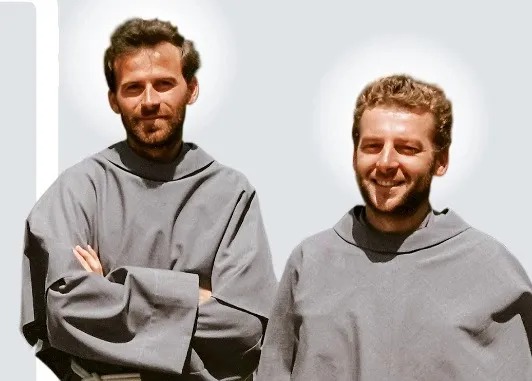
The armed communist organisation “Sendero Luminoso” was very active in the area. Their work of evangelisation and assistance to the population annoyed the communists, who aspired to revolution. For that they needed discontented masses angry with the government. In the 1980s and 1990s a veritable civil war broke out: the terrorists of “Sendero Luminoso” caused the death or disappearance of approximately 70,000 people. On the night of 9 August 1991 the “Senderistas” arrived at the Pariacoto mission looking for the priests. Only two priests were in Pariacoto at that moment, since the superior had gone on holiday to Poland. Friars Zbigniew and Michał, our image today, presented themselves to the terrorists and, under the terrified gaze of the faithful, were loaded into a van that drove them away from the village. They were accused of having been sent by John Paul II and the CIA, of proclaiming God, but religion, the “Senderistas” said, is the opium of the people. Shortly afterwards, near the village’s small cemetery, they were executed together with the mayor of Pariacoto by a shot to the back of the neck. The terrorists left a message on the bloodied body of Fr Strzałkowski: “This is how the servants of imperialism die.”
In August 1991 John Paul II was in Kraków for World Youth Day, and during those days of great emotion he received the dramatic news of the murder of two Polish Franciscans, Zbigniew Strzałkowski and Michał Tomaszek, at the hands of members of Sendero Luminoso on 9 August in Peru. The Pope said: “They are the new martyr saints of Peru.” Pope Francis authorised the promulgation of the decree on their martyrdom. The beatification took place on 5 December 2015 in the Peruvian city of Chimbote, the diocese where the martyrs carried out their mission, and they are the first martyrs in the history of Peru.
Leo XIV sent a message “to the brothers and sisters of the pilgrim Church in Chimbote.”“On the tenth anniversary of the beatification of the Chimbote martyrs—Blessed Michał Tomaszek, Zbigniew Strzałkowski and Alessandro Dordi—I wish to join in the gratitude of the Church in Peru, Poland, Italy and in so many other places where their memory endures as a stimulus to fidelity. These three missionary priests shared the life of their communities, celebrating the Eucharist and administering the sacraments, organising catechesis and supporting works of charity in contexts of poverty and violence. In 1991, after deciding to remain where they exercised their ministry and among the flock as true shepherds, they were murdered out of hatred for the faith.”
“…where two or three are gathered in my name, there am I in the midst of them.”
Happy reading.