


We have already celebrated the first anniversary of the pontificate of Pope Leo XIV. In recent days, we have seen some assessments with the general tone that they are not conclusive at all. Leo XIV remains a great question mark and possibly even for himself. The change of name in religion has the meaning that one man has died and another is born, and this is not fiction. It is what was called in religious life death to the world when taking the religious name. In a certain way, this happens with the Pope, Robert Prevost has died and Leo XIV has been born, every pontificate has logical phases of growth, a year has passed, Is it much? Is it little? Is it enough? We will see and tell.
One year with Leo XIV.
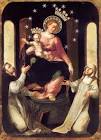
«Exactly one year ago, when the ministry of Successor of Peter was entrusted to me, it coincided precisely with the day of the Supplication to the Virgin of the Holy Rosary of Pompeii. That is why I had to come here, to place my service under the protection of the Most Holy Virgin». «Having chosen the name of Leo, I follow in the footsteps of Leo XIII, who, among other merits, developed a broad magisterium on the Holy Rosary». «To all this is added the recent canonization of Saint Bartolo Longo, apostle of the Rosary». The final appeal, in reference to the tragic international situation. «When Saint John Paul II proclaimed the Year of the Rosary —next year will mark a quarter of a century— he wanted to place it in a special way under the gaze of the Virgin of Pompeii»: «The times have not improved since then. The wars that are still being waged in many regions of the world demand a renewed commitment, not only economic and political, but also spiritual and religious,» because «peace is born from the heart.»
The Italian media refer to the words of Giorgia Meloni to the Pontiff on the anniversary of his election. «One year ago, the white smoke over the Sistine Chapel announced to the world that the Church had chosen the successor of Peter. On this occasion, I wish to reiterate my gratitude to Pope Leo XIV for his tireless message of faith, hope, peace, dialogue among peoples, and closeness to the most vulnerable. In a complex time marked by great uncertainty, his voice represents a global reference, for Christians and for all».
The visit to Pompeii.
And exactly twelve months after the «Habemus Papam» that took him to Saint Peter, Robert Prevost chose a pastoral visit to the Sanctuary of Pompeii and Naples. Even before greeting and addressing them, Pope Leo greeted the sick and disabled one by one who are cared for by the «Temple of Charity». In the Sanctuary of Pompeii, Mass and at 12 noon the Rosary of Bartolo Longo to the Most Holy Virgin, a prayer that thousands of faithful from all over the world pray every year on May 8.
When Saint Bartholomew first arrived in the valley of Pompeii, he found a land devastated by extreme poverty, inhabited by a few very poor peasants, ravaged by malaria and bandits. However, he saw the face of Christ in all: in young and old, and especially in orphans and the children of prisoners, to whom, with his tenderness, he made them feel the heartbeat of God’s heart. To those who told him that his young people were destined for the same fate as their fathers, he replied that love can inspire even the most difficult children to do good and that, in every sphere of action, only charity guarantees certain, great, and definitive victories.
And then a visit to Naples: «It is a great joy for me to visit this city, so rich in art and culture, located in the heart of the Mediterranean and inhabited by an unmistakable and joyful people, despite the burden of so many difficulties». The Pope meets with the clergy and consecrated persons in the Cathedral of Naples. «Today I am here also to catch this joy. Thank you for your welcome». Leo quoted a fragment of the speech that his predecessor gave in Scampa in 2015: «Pope Francis, when he came here in 2015, said: “Life in Naples has never been easy, but it has never been sad! This is your great resource: joy, optimism”».
The meeting of Pope Leo XIV with the clergy in the Cathedral of Naples concluded with the apostolic blessing through the intercession of Saint Januarius, his patron saint. The Pope, as he had done upon entering the Cathedral, showed those present the reliquary containing the blood of Saint Januarius, already liquefied since the previous Saturday, and kissed the reliquary. Pope Leo XIV arrived at Piazza del Plebiscito for the last stage of his Pastoral Visit to Naples. The Pope arrived at the main square of the Neapolitan capital for a meeting with the citizens, preceded by a meeting with the Community of the Minims in the Basilica of San Francesco di Paola.
After the Audience with Marco Rubio.
A forty-five-minute conversation, with a smile on his face: the meeting with the U.S. Secretary of State was no match for Prevost, who today blows out his first candle as Pope at a time of maximum popularity after Trump’s accusations. The differences are evident, but the Holy See has no intention of breaking with the White House. It was a tense visit after Donald Trump’s new attack against China and Iran. Rubio, a Catholic and increasingly moderate within the Republican government, had to deal with a more delicate topic than expected.
The meeting lasted forty-five minutes, more than the usual half hour . The issues at stake, after all, were numerous, and the State Department statement noted that among them was «the situation in the Middle East,» as well as «other issues of common interest in the Western Hemisphere». According to Rubio’s office, the meeting highlighted the strong bond between the United States and the Holy See and their shared commitment to promoting peace and human dignity. The Vatican statement reported that during the conversations the shared commitment to cultivating good bilateral relations between the Holy See and the United States was renewed, and that there was an exchange of views on the regional and international situation, with special attention to countries affected by war, political tensions, and difficult humanitarian situations, as well as on the need to work tirelessly for peace.
Authorized diplomatic sources stated that it is impossible to exclude passages on migrants, a true division in relations between the Church and the White House, as well as with the United States, which in its new document on counterterrorism qualifies Europe as an «incubator of radicalization.» It is also impossible to exclude passages on multilateralism, given the Vatican’s influence in international organizations and the presence of Archbishop Paul Gallagher. Likewise, it is impossible to exclude passages on artificial intelligence and the view of a Europe at war, with Ukraine at the forefront.
Two diametrically opposed diplomatic approaches. The Pope gifts his interlocutor an olive wood pen, emphasizing that «it is a plant of peace.» Rubio’s team carefully publicizes the event with photos and press releases. Rubio’s approach is different, because it is multifaceted, the initiative «started with them,» Parolin recalls. The interest is mainly American. «Vatican diplomacy is very refined. It rises to the highest level, but knows how to be pragmatic». The reception of Rubio is a sign of «realpolitik»: the Vatican has listened to all its interlocutors over the centuries and, even in the face of unprecedented attacks, «does not get scandalized». «This is the other side of the coin and it must be listened to» reminds that the priority of Vatican diplomacy is «not to be exploited».
The Pope knows that the 53 million American Catholics are shocked by the magnitude of the conflict. His approach, always with a pastoral perspective, can only be oriented toward dialogue.
The Pope dresses in Nike.
In recent days, an image has been circulating on the internet that, at first glance, seems like an editing error or an AI-generated image: Pope Leo XIV vested for celebration, captured in the documentary «Leo in Rome » by Vatican News , sporting white Nike sneakers. The detail of the sneakers immediately sparked curiosity on the internet and turned a simple photo into a small global case. Beneath the vestments, Nike sneakers of minimalist design peek out, with the black Swoosh clearly visible . Sneaker enthusiasts began searching for the model, arriving at a fairly common reconstruction: it seems to be the Nike Franchise Low , a sneaker born in the world of tennis and now hard to find on the market.
Leo XIV, the first American pontiff in history , seems to carry with him a very specific part of American culture. Robert Francis Prevost, in fact, grew up in Chicago, a city that in the 1990s lived the heyday of the Michael Jordan and Bulls era . A time when Nikes were not just sports shoes, but a cultural symbol. In the months following his election, a photo circulated in which he appeared with a Chicago White Sox cap (one of Major League Baseball’s professional teams), his favorite team. The topic is not new even for the Vatican, and we have seen dozens of times images of John Paul II, it is true that in non-liturgical contexts, in which he wore sports footwear for his usual mountain walks.
The first anniversary of Leo XIV in New York.
The Archdiocese of New York commemorated the anniversary of the historic pontificate of Pope Leo XIV with reflections from Archbishop Ronald Hicks, Cardinal Timothy Dolan, Auxiliary Bishop Joseph Espaillat, and members of the faithful community in front of St. Patrick’s Cathedral. Archbishop Hicks recalled for The Good Newsroom exactly where he was when the white smoke rose over the Basilica of Saint Peter, signaling the election of a new holy father. Cardinal Timothy Dolan, who met briefly with Pope Leo in Rome at the end of April, sent him bagels and peanut butter for the occasion, as the emeritus archbishop recounted in a social media interview on May 8. The auxiliary bishop Joseph Espaillat shared his own experience witnessing the election from New York and offered a pastoral perspective on the pope’s first year. In a Spanish-language interview with Buenas Noticias , the archdiocese’s Spanish portal, Bishop Espaillat described Pope Leo XIV as “a man of deep prayer” with a special dedication to migrants.
They continue to attack Woelki.
Thomas Schüller, canonist from Münster, sees possible violations of canon law in the way the Cardinal of Cologne , Rainer Maria Woelki, handled the 2015 abuse allegations. In an article for the theological magazine «Feinschwarz», he concludes that, both from the canonical perspective and from the criminal law standpoint , there was a «justified initial suspicion of a sexually motivated crime against minors.» The fact that the accused denied the allegations is not sufficient, according to canon law, to close the case without a more thorough investigation, Schüller argues. A diocesan bishop cannot simply delegate responsibility to appointed commissions or advisory boards, nor can he exempt himself from it by claiming that he did not find «advisors or competent structures» when he took office. Schüller considers a new investigation by the Vatican possible as part of a visitation.
He cites as an example what happened in the diocese of Osnabrück but the diocese denies this connection. «Bishop Bode submitted his resignation to the Pope, and it was accepted. There was no criminal procedure, as Professor Schüller suggests, that resulted in his dismissal». On December 8, 2022, the Joint Advisory Council of Victims of the (Archdioceses) of Hamburg, Hildesheim, and Osnabrück filed a complaint against Franz Josef Bode with the metropolitan Stefan Heße , in accordance with Article 1 et seq. of the Apostolic Letter «Vos estis lux mundi ». Bode respected this measure and supported the investigation initiated by the Roman authorities, according to a statement issued by him on December 12, 2022. The outcome of the procedure remains undisclosed. Effective March 25, 2023, Pope Francis accepted the resignation of the Bishop of Osnabrück.
Patti Smith and the Vatican.
The voice of Patti Smith closed the inauguration of the Vatican Pavilion, where she was invited as an artist along with many others, as a prayer. Thus, the doors were opened to the public for the contemplation of «The ear is the eye of the soul», inspired by the famous figure of Hildegard of Bingen . The Holy See presents its exhibition this year in two locations: the Mystical Garden of the Discalced Carmelites , near the Santa Lucia station, and the Santa Maria Ausiliatrice Complex in Via Garibaldi at Castello. The figure of the nun, mystic, artist, and healer was presented by Tolentino: «Our time needs teachers like Hildegard. Figures like her who unite humanity and society in pursuit of spirituality.»
Back to Benedict XVI’s ‘declaratio’.
For better or worse, it remains a decisive moment for the Catholic Church of our time: the morning of February 11, 2013, when, in the presence of the cardinals gathered for the consistory, Benedict XVI unexpectedly began to read aloud in Latin a document simply titled Declaratio . The consequences of that declaration have been and continue to be enormous.
In 2016, Peter Seewald asked Benedict XVI in the interview-book titled Last Conversations to explain the choice of Latin:
Seewald: «When and who drafted the text announcing your resignation?»
Benedict: “I wrote it. I can’t say exactly when, but at most two weeks before.”
Seewald: «Why in Latin?»
Benedict: Because something very important is done in Latin. Besides, Latin is a language I know well, so I can write it elegantly. Of course, I could also have written in Italian, but there was the risk of making mistakes .
The vernacular language versions reproduced by international media were not exact translations of what Benedict XVI actually said that morning. This is nothing new; among others, Antonio Socci analyzed this issue in depth in his 2018 book, The Secret of Benedict XVI: Why Is He Still Pope?
Are the Vatican’s economic results positive?
The impression we have is that they are selling Leo XIV an old and faulty donkey and he is very eager to buy it. Selling all Treasury bonds in a year of high interest rates is not a frequent measure. However, that is what emerges from the 2025 financial statements of SGIR , the real estate company 100% owned by the IOR. This operation freed up liquidity, increased financial flexibility, and was associated with growth in rental income. The result? A net profit of more than one million euros and solid indicators that stand out in the Roman financial landscape. It was decided to completely liquidate the BOTs in the portfolio and the immediate consequence was an increase in liquidity , from 1.3 million euros to 3.5 million euros. A greater cash reserve allows covering extraordinary operations and, if opportunities arise, proceeding without resorting to new debt. The IOR closed 2024 with a net profit of 32.8 million euros , and the real estate component represents a stable and recurring source of income. The presence of a specialized subsidiary in Rome allows it to cover a broad and liquid market, maintaining coherence with institutional and economic sustainability objectives.
The plague of rainbow bishops.
There are those eager to make fools of themselves and twelve Italian bishops, more than double that in 2025, participate in vigils to «overcome homophobia, transphobia, and biphobia.» At least 23 dioceses participate, along with various associations, from Scouts to Catholic Action. Dozens of vigils are scheduled for the months of May and June, generally called «to overcome homophobia, transphobia, and biphobia,» at this moment there are 47 events of this type according to the constantly updated list by the Progetto Gionata website.
There are other cases where the bishop’s participation is neither planned nor announced, but the dioceses remain involved —in various ways— in the organization, support, or sponsorship of LGBT vigils. Some of these vigils have the participation of several well-known Catholic groups, such as the Agesci scouts, Catholic Action, the Focolare Movement, among others.
In the face of so much mitral confusion, it is not too much to recall the Letter to the Bishops of the Catholic Church on the Pastoral Care of Homosexual Persons (1986) by Joseph Ratzinger, then prefect of the Congregation for the Doctrine of the Faith. «No authentic pastoral program can include organizations in which homosexual persons associate without it being clearly established that homosexual activity is immoral. A truly pastoral attitude will include the need to protect homosexual persons from proximate occasions of sin. […] Only what is true can, in the ultimate analysis, be pastoral as well. When the Church’s position is ignored, homosexual men and women are prevented from receiving the care they need and to which they have a right».
Another macarrista bishop dies.
He resigned after credible accusations of sexual and financial misconduct – what a tribe- has died at the age of 82. Bishop Michael Bransfield was accused of sexual abuse, harassment, covering up abuses, and exorbitant use of Church funds for a «luxurious» lifestyle during his life. He was president of the Board of Directors of the Papal Foundation of the late former Cardinal Theodore McCarrick , a charity that raises money from wealthy American Catholics to fund charitable projects. Due to misconduct allegations, Bransfield, who was bishop of the Diocese of Wheeling-Charleston from 2005 to 2018, was informed by his successor that he would be denied burial in any diocesan cemetery after his death. Archbishop Carlo Maria Viganò, and he knows about this, declared to the Italian journalist Marco Tosatti that Bransfield is «a perfect example» of the » homosexual mafia » that operates in the Catholic Church. “It is important to note that, before being appointed bishop, he was rector of the Basilica of the National Shrine of the Immaculate Conception in Washington D.C. and president of the Pontifical Foundation Board, both linked to McCarrick and Cardinal (Donald) Wuerl”.
Schneider with the Society of Saint Pius X.
On April 23, 2026, Athanasius Schneider offered a personal testimony to the students of the Saint Thomas Aquinas school in Józefów, near Warsaw, an institution of the FSSPX in Poland. Evoking his childhood under communism, the faith lived in clandestinity, and the heroic example of his family, the auxiliary bishop of Astana exhorted the young people to preserve intact the treasure of the Catholic faith. Without intervention, he focused on «Childhood under the Soviet regime and communist persecution.» «Communism aimed to completely eliminate God from society. It wanted to establish a totally godless society. They called that materialism: only material and temporal reality mattered. There was nothing eternal or supernatural. And the greatest danger to the communists was the Church, because the Catholic faith and Catholic life constituted the most radical opposition to communist ideology.» «You know that Stalin was one of the greatest communist dictators. In 1936-1937 he decided to undertake what he called a «purification» of society. They were two years of terror. During those two years, millions of innocents were murdered in the Soviet Union. He called those victims «potential enemies of communism.» And who were those potential enemies? First and foremost, priests; then, intellectuals; then, those who owned property. Thus, practically all Catholics and all believers were considered dangerous to communism. Similarly, people capable of thinking independently and understanding what was happening in society were also considered enemies.»
All Masses were celebrated there according to the traditional rite, as here among you. It was there that I made my First Communion and received Confirmation. As we were the family that lived farthest from the church, the priest suggested that we spend Sunday afternoons in a room in his parish house while we waited for the train. One day —this is one of the most vivid memories of my childhood—, after Mass, while walking with my mother toward the parish house, I asked out of simple curiosity: «Mom, how does one become a priest?» The priest impressed me deeply, but I wasn’t seriously thinking about becoming a priest. I just wanted to understand. My mother replied: «To become a priest, the most important thing is that God grants the call.» I didn’t understand what she meant. I thought a call from God meant a voice coming from heaven! From that moment, I never asked again how one becomes a priest. And yet, I became a priest… and even a bishop. That brief conversation with my mother was etched in my memory for life. Years later I returned to that place in Estonia. I knelt exactly where that conversation had taken place and gave thanks to God for my priestly vocation.
My former archbishop of Karaganda, Msgr. Lenga, who now lives in Poland, participated one day in a synod in Rome. A cardinal approached to greet him and asked: «Who are you?» Msgr. Lenga replied: «I am a bishop in Kazakhstan. And you?» Then the cardinal listed all his titles: «I am a cardinal, prefect of this congregation, president of this, member of that…» When he finished his long list of titles, Msgr. Lenga looked at him and asked: «Eminence… are you Catholic?» Because that cardinal had forgotten the most important thing: to say that he was Catholic and that is what matters most.
Vienna, a Muslim city.
A mix of liberal socialism and subsidies is opening the doors of the Austrian capital to Islam, where the memory of Sobieski is censored and teachers struggle to make themselves understood by children who do not speak German. The latest data from the city school authorities, recently published by the newspaper Die Presse , show the advance of Muslims, who now represent 42% of the 114,000 students in Vienna’s public schools, while the other main groups consist of children «without religious affiliation» (23%), Catholics (17%), and Orthodox Christians (14%). In public schools, secondary schools, and polytechnics (technical and vocational institutes), nearly half of the students (49%) profess the Islamic religion. In public primary schools for children aged six to ten, Muslims represent 39% of all students. While in the past, most Muslims in Austria were of Turkish origin, the recent wave of immigration has brought a change, with a greater presence of Muslims of Arab origin, a more homogeneous Islam, more focused on the Quran and, consequently, more rigid and radical. This will also affect the way Vienna students practice Islam; it is no coincidence that newspapers and television programs have recently reported on several cases of non-Muslim students who have been harassed and insulted by Islamist classmates; In some cases, girls are forced to wear the niqab to escape harassment.
Marriages with minor Christian girls in the Muslim world.
Nothing strange, if we review history we will see it full of tributes of ‘virgins’. A young Pakistani Christian girl has been forced to remain with her Muslim kidnapper, much older than her, after a court ruled that her forced marriage was «valid.» The case of 13-year-old Maria Shabaz has caused outrage in Pakistan and has received condemnation from defenders of Christians’ rights and other civil society groups. Shabaz was kidnapped in July 2025, when she was 12 years old. The girl was forcibly converted to Islam and forced to marry a 30-year-old Muslim man. Her father filed a petition to rescue his daughter, leading to a legal process that lasted for months. On March 25, the Federal Constitutional Court of Pakistan ruled that the young woman must return to her captor, as it considered the marriage valid. According to OpenDoors , the controversial decision sparked a national protest, and Christian rights advocacy groups and other human rights organizations accused the court of ignoring key findings and evidence that demonstrated the marriage was illegal and therefore invalid. Pakistan has 4.8 million Christians, representing nearly two percent of the population, and ranks eighth on OpenDoors’ World Watch List of countries where Christians are most persecuted.
Transgender ideology as a threat to national security.
The 2026 U.S. Counterterrorism Strategy, published by the White House names transgender ideology as a major threat to national security. Under the Biden-Harris regime, conservatives, Christians, and patriots were constantly under suspicion and labeled as terrorist threats. The anarchist group Antifa and those who defend extreme transgender ideology —both responsible for acts of violence, destruction, and, in the case of certain «transgender» individuals, mass murders— are now considered as dangerous as cartels and Islamist terrorist groups. The senior counterterrorism director, Sebastian Gorka: “If we see a threat, we will respond and crush it, whether it’s cartels, jihadists, or violent left-wing extremists like Antifa and transgender killers, the left-wing radicals who killed my friend Charlie Kirk. We will face them head-on”. «The radical gender ideology is pushing unstable individuals toward violence and attacking innocent people.» “To say that the transgender movement is radical would be an understatement,” declared Tyler O’Neil, senior editor of Daily Signal, commenting on Trump’s new transgender communication strategy. «This movement not only encourages men and women to adopt a «gender identity» of the opposite sex and to modify their bodies to fit that identity, but it also demands that society accept, and even celebrate, this deception».
Artificial intelligence and religious information.
Social media is flooded with AI-generated content that, unknowingly, usurps the identity of religious leaders. This is a particularly serious problem, as it also affects the correct transmission of faith.
Imagine U.S. immigration agents, with bulletproof vests, approaching a Gothic-style church. In the atrium, a bishop with a red zucchetto and pectoral cross confronts them with punches and drives them away, shouting: «Get out! You are not welcome here. I don’t know what god you worship… but my God is love!». The faithful rejoice, comments on social media multiply, and the bishop becomes a hero. It’s a shame that the bishop does not exist nor has ever existed, but it is a classic AI-generated avatar, and the scene that moved thousands of people never happened, but a significant percentage of those who saw the content simply believed it.
«If the world hates you, know that it has hated me before you.»
Good reading.