


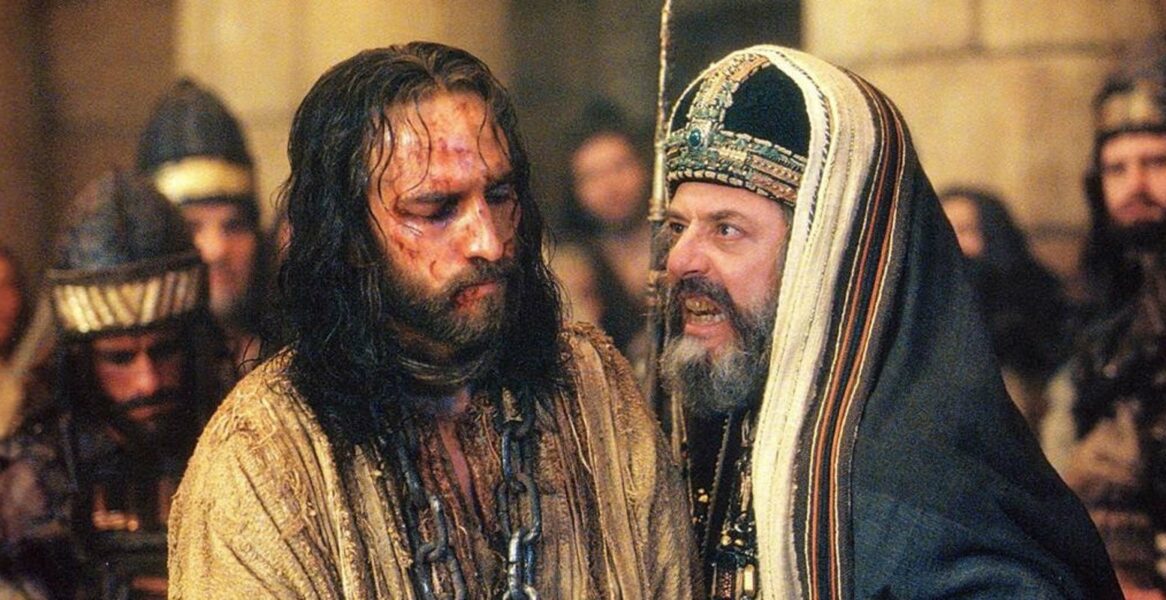
The expression “Judeo-Christian tradition” has become common in political and cultural debate, including in Catholic circles, to refer to the roots of Europe or the values of the West. Two voices from the Hispanic Catholic world now question it head-on: the educational channel Fortunata y Jacinta, in an episode devoted entirely to the issue, and Father Gabriel Calvo Zarraute of the Archdiocese of Toledo, who calls it “absolutely absurd.” Both maintain that the term lacks historical and theological foundation and dilutes the originality of Christianity.
Three religions, three readings of Scripture
The starting point of the Fortunata y Jacinta video is Scripture itself. Judaism recognizes the Hebrew Bible or Tanakh as sacred text, excluding the New Testament. The Church receives both the Old and New Testaments as a single revelation centered on Jesus Christ. Islam acknowledges numerous biblical figures, yet its sacred book is the Qur’an, and it holds that the Torah and the Gospels were altered over time. For the presenter, these differences “are not secondary but essential”: they affect the very idea of God, the person of Christ, and the meaning of salvation.
The three monotheistic religions share the affirmation of one God, creator and provident, who guides history toward an end. According to the video, they diverge precisely in how they interpret that history of salvation. The biblical narrative is universal until Genesis 11; with Genesis 12 God calls Abraham and chooses his lineage for a divine pedagogy that prepares the coming of the Messiah, with a promise addressed to “all the families of the earth.” The presenter stresses the distinction between Ishmael, son of the slave Hagar, and Isaac, son of the promise, drawing on the Letter to the Galatians. The covenant follows the line of Isaac and Jacob, whom God calls Israel, whereas Islam will later place in the line of Ishmael the tradition that culminates in Muhammad.
The video adds a terminological clarification often overlooked. Abraham was a Hebrew; King David, an Israelite of the tribe of Judah, and it would be improper to call him a Jew, because the term became widespread after the division of the kingdom and the fall of the northern kingdom to Assyria in the eighth century B.C. Jesus was Jewish by birth, ancestry, religion, and culture, as the Fathers and St. Thomas teach, yet he did not belong to rabbinic Judaism, which took shape after the destruction of the Temple in A.D. 70 from the rejection of the central Christian claim: that Jesus of Nazareth is the Messiah and the Son of God.
“A negative charge of denial of the divinity of Jesus Christ”
Father Calvo Zarraute concurs on this point, taking the argument into christological territory. “We are not Judeo-Christians, we are not Jews,” he states. To the objection that Christ was Jewish, he replies that Christ is above all the Son of God, the Word incarnate. He recalls that in the Gospels Jesus submits to the law, yet always makes clear that he is above it, as shown by the Sabbath healings and his claim to be “Lord of the Sabbath.” In his view, the fashionable expression carries “a negative charge of denial of the divinity of Jesus Christ.”
The priest frames his critique within the typological reading of the Old Testament, in dialogue with texts by Bishop Athanasius Schneider. Melchizedek and the sacrifice of Isaac prefigure the sacrificial dimension of the Holy Mass; Jacob, rejected by his brothers and leaving his land to seek a wife, prefigures Christ, rejected by his own and come from heaven to espouse the Church. “The Church is the new Israel,” he summarizes, following St. Paul: the Old Covenant reaches its fullness in Christ, and Judaism and Christianity “are not two things glued together.”
A twentieth-century formula
Both sources also agree on the historical argument. Fortunata y Jacinta maintains that for nearly twenty centuries no council, Church Father, or great medieval theologian spoke of a “Judeo-Christian civilization.” Historiography dates the spread of the term to the twentieth century: various studies locate its rise in the United States in the 1930s and 1940s, as a response to anti-Semitism and fascism, and its consolidation during the Cold War as a formula of American identity against communism. In the nineteenth century, by contrast, it designated Jews converted to Christianity.
Calvo Zarraute develops the thesis that Western civilization rests on three pillars: Greek philosophical thought, Roman law, and biblical revelation. Christian missionaries evangelized the pagan Roman Empire; the early Church adopted its juridical and administrative structure, and the Fathers refined categories of Greek philosophy to express the truths of the faith. The priest cites transubstantiation as an example, which cannot be understood without the Aristotelian notion of substance. In Europe, he adds, there was no Jewish people, but Jewish communities within the Empire. Fortunata y Jacinta sums it up: for centuries Europe called itself Christendom.
The priest further insists on the universal character of Christianity in contrast to a Judaism he describes as tied to the condition of a chosen people. As examples he cites St. Paul’s mission to the Gentiles after being rejected in the synagogues and the episode of the Canaanite woman who asks for the crumbs that fall from the table.
Fulfillment, not prolongation
The underlying theological argument is common to both: speaking of “Judeo-Christianity” presents the Catholic faith as a prolongation of Judaism, or both as equivalent branches of the same trunk. The Church teaches, instead, that in Christ the promises made to Israel are fulfilled: “I have not come to abolish, but to fulfill” (Mt 5:17). That is why she has never rejected the Old Testament, and already in the second century she condemned as heretical the doctrine of Marcion, who opposed the God of Israel to the Father revealed by Jesus Christ. The Augustinian-rooted formula sums it up: the New Testament is hidden in the Old, and the Old is manifested in the New.
Fortunata y Jacinta also alludes to the ancient Good Friday prayer for the Jews and the Latin term perfidis, which, it explains, meant “lacking in faith” and not “treacherous.” St. John XXIII removed that word from the liturgy in 1959, and Benedict XVI composed a new prayer for the extraordinary form in 2008.
Calvo Zarraute attributes the spread of the expression to “liberal and modernist theologians,” and regrets that columnists, seminaries, and preachers repeat it. His request to the faithful is concrete: “banish that expression” and, when someone uses it, exercise “with much charity” fraternal correction.
The two sources go beyond the magisterium on one point. Fortunata y Jacinta maintains that interreligious dialogue among Judaism, Christianity, and Islam is not possible. This is the presenter’s opinion: the declaration Nostra aetate of the Second Vatican Council recognizes the spiritual bond that unites the Church with the descendants of Abraham and encourages mutual knowledge, without thereby renouncing the confession of Christ as the sole Savior.