


By Luis E. Lugo
In his recent video message to participants in the World Day of Prayer for Peace held in Assisi, Italy, Pope Leo firmly condemned religious justifications for war. As he stated, “war can never be waged in the name of God,” and therefore, he explained, “there is no such thing as a holy war.”
The Pope left little clear about whom his words were directed at. To Muslim jihadists, who, following the example of the prophet Muhammad, see war as a legitimate means of extending the borders of Islam? Or perhaps to the claim of Patriarch Kirill and the Russian Orthodox Church that “from a spiritual and moral point of view, the Special Military Operation [the Kremlin’s preferred euphemism for its invasion of Ukraine] is a Holy War”?
Be that as it may, some will be inclined to see the Pope’s words as an indirect attack on the just war tradition. That would align with the way some give a pacifist gloss to the Pope’s statement in Magnifica humanitas that the just war tradition is “obsolete.” That reading is highly misleading, as I have already argued in this same space.
One would think that Pope Leo dispelled such speculation with his address to the delegation of the Military Ordinariate of Portugal, delivered just two months after publishing his encyclical. On that occasion, the Pope praised the “noble mission” of the military in defending the sovereignty of their homeland and ensuring the security of their fellow citizens. Referring to Jesus’ encounter with the Roman centurion in Capernaum, he offered high praise for the values of military service: obedience, discipline, self-denial, loyalty, camaraderie, dedication, responsibility, and courage.
Nevertheless, some concerns in this regard are not entirely without foundation. At times Pope Leo has made statements that lend themselves to a pacifist interpretation. Moreover, his predecessor’s views on this issue cast a long shadow over the current pontificate and continue to generate suspicion.
A fair assessment of Pope Francis’s words and actions strongly suggests that he intended to steer the Church in a pacifist direction. In his 2020 encyclical Fratelli tutti, for example, he wrote that, given the brutality of modern combat, it had become “very difficult” for countries to invoke the principles of just war to justify violent conflict.
Then, in a March 2022 video call with Russian Orthodox Patriarch Kirill to discuss the war in Ukraine, the Holy Father moved from “very difficult” to outright denying the possibility of a just war. As he stated during the call: “there was a time, even in our Churches, when people spoke of holy war or just war. Today we cannot speak in that way.”
As if to leave no doubt about his meaning, Pope Francis emphatically declared that “wars are always unjust… War is never the way.” Any impartial observer would have to conclude that the Pope had come to adopt a functionally pacifist stance, if not yet one in principle.
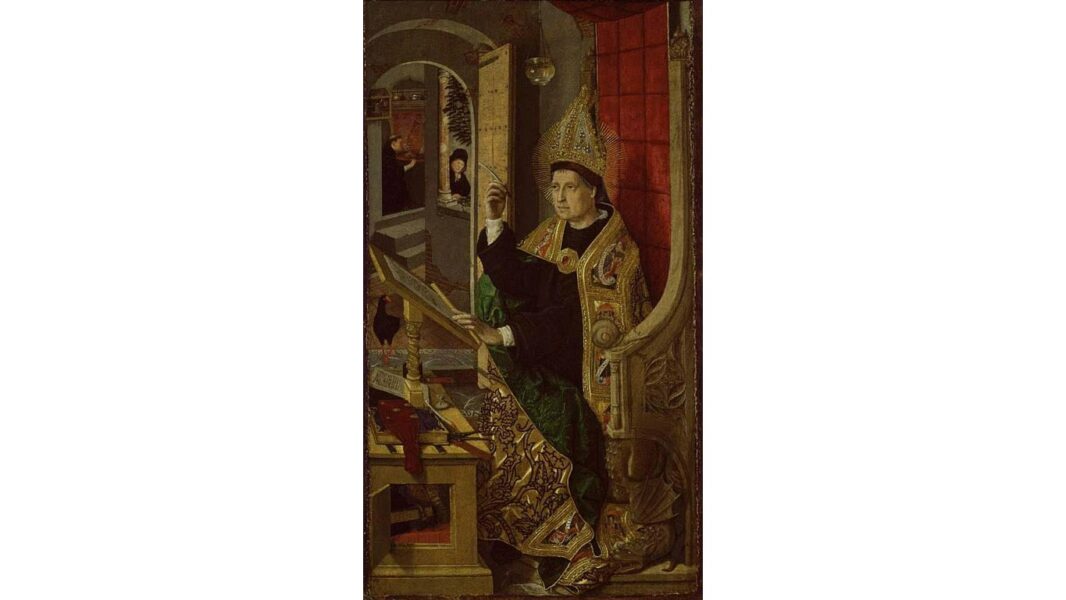
It is worth noting how Pope Francis juxtaposed the terms holy wars and just wars in the above quotation. Holy wars are generally understood to be undertaken for religious motives and with explicitly religious ends. Just wars, by contrast, follow the requirements of natural law and aim at the more modest goal of securing the well-ordered peace of the temporal city, its tranquillitas ordinis, according to St. Augustine’s famous formulation.
Must the idea of just war be rejected because it is “adjacent” to holy war, to borrow an expression from woke ideology? We see an analogous situation today in the way some use the words proselytism and evangelization interchangeably. By conflating them in this way, they subtly attribute the coercive and manipulative connotations of the former to the entirely legitimate (and God-ordained) efforts of conversion of the latter.
It is also worth recalling the context in which Pope Francis spoke those words: a Russian invasion of Ukraine that the Pope himself described as a clear case of “violent aggression.” Despite this, he was reluctant to acknowledge that Ukraine’s actions constituted a just response to an unjust war. Will the logic of that reasoning inexorably lead the Church toward a pacifist position, not only in practice but also in principle?
One point often overlooked in these discussions concerns what we might call secularized versions of the idea of holy war. These consist in offering justifications for war that go beyond those provided by the just war tradition, but fall short of those historically associated with holy wars.
C. S. Lewis understood this phenomenon well and expounded on it in a brief but penetrating section on the love of country in his classic The Four Loves. He argued that when rulers can no longer count on a healthy sense of patriotism among citizens, they are tempted to present international conflicts in a purely ethical light. Instead of calling their citizens to defend the legitimate interests of the country, they resort to the abstract language of saving civilization or promoting universal justice.
Noble as these sentiments may be, Lewis considered the way rulers appeal to them a step backward, not forward, in moral reasoning: “Good men had to be convinced that their country’s cause was just; but it remained their country’s cause, not the cause of justice as such.”
Lewis believed that this kind of grandiloquent rhetoric can easily degenerate into the kind of self-righteousness that confuses the cause of the country with the cause of God (or its secular equivalent). One unfortunate result, he warned, is that “a false sense of transcendence is given to things that are very much of this world.”
The just war tradition is the antidote to all this folly: it offers a morally serious alternative, on the one hand, to a Machiavellian approach to statecraft and, on the other, to the idea of holy wars and their secular equivalents. Why would the Church want to abandon such a valuable legacy?
About the author
Luis E. Lugo is a retired university professor and foundation executive; he writes from Rockford, Michigan.