


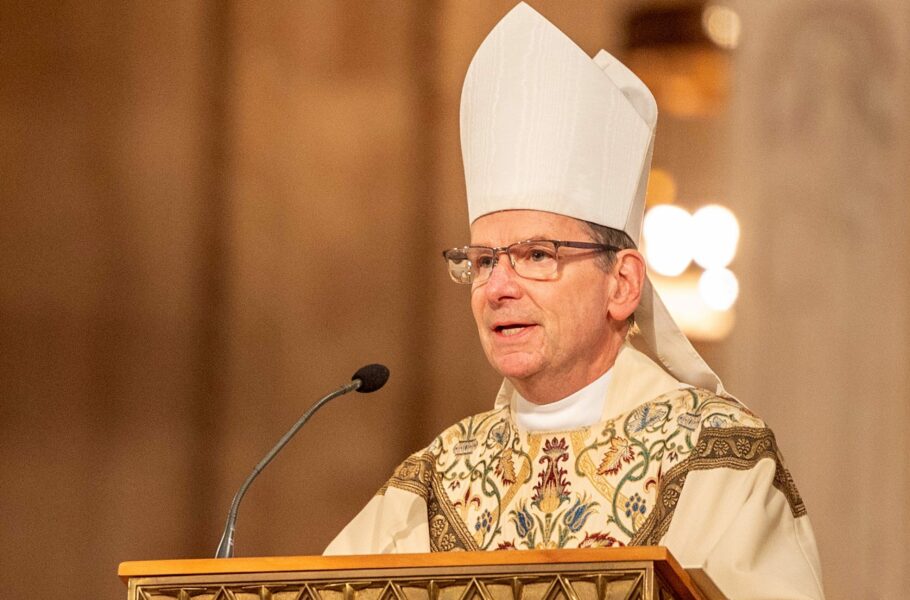
Voters in Virginia and Nevada approved on Tuesday, November 3, during the United States midterm elections, constitutional amendments that enshrine abortion as a right in each state’s constitution. In Missouri, by contrast, voters rejected a proposal to reinstate its prohibition, and in Idaho they defeated an initiative that sought to open a legal avenue against the current ban. The Bishop of Arlington, Michael F. Burbidge, lamented in a November 4 statement that a majority of Virginians had voted to “insert a legal right to extreme and unlimited abortion” into the state constitution.
In Virginia, Question 1 received 62 % of the “yes” votes with 88 % of precincts reporting, according to WSLS results. The amendment protects decisions concerning pregnancy, contraception, abortion and fertility, prohibits penalties for them against patients and physicians, and allows abortion restrictions only in the third trimester, except when the mother’s health is at risk or the pregnancy is non-viable. On the same ballot, Question 2 removed from the constitution the definition of marriage as the union of one man and one woman, passing with 57 % support.
The state’s two bishops, Burbidge and the Bishop of Richmond, Barry C. Knestout, had promoted the Catholics Vote No campaign. In a joint statement reported by EWTN News, they called the outcome “deeply tragic” and warned that, unless a court intervenes, the decision will embed virtually unlimited abortion in the constitution. In his diocesan website statement, Burbidge argues that the change will likely eliminate health and safety regulations on abortion and affect parental involvement and commercial surrogacy. He notes that the Church will continue to accompany mothers through Catholic Charities, the Gabriel Project and Project Rachel, and affirms that the fundamental truths about life and marriage “can never legitimately be subjected to a vote”. “We know the truth, and no temporary political defeat changes this reality,” he concludes.
In Nevada, Question 6 was voted on for a second time because state law requires that a constitutional amendment by popular initiative be approved in two successive elections. It surpassed 60 % of the vote and recognizes the right to abortion with the possibility of restricting it after fetal viability, except to protect the mother’s life or physical health. The Archbishop of Las Vegas, George Leo Thomas, described it as a “very serious and harmful” expansion of abortion law, and the Catholic Conference of Nevada responded that “a vote can change Nevada’s constitution, but it cannot change the dignity and worth of every human life,” according to EWTN News.
In Missouri, Amendment 3 sought to repeal the right to abortion approved by voters in 2024 and to ban it except in cases of medical emergency, fetal anomaly, rape or incest. It also included a ban on gender-transition treatments for minors. Nearly 55 % voted against it. The Catholic Conference of Missouri, on behalf of the bishops of the state’s four dioceses, expressed that it was “deeply saddened.” In Idaho the opposite occurred: about 56 % rejected Proposition 1, which would have created a right to “reproductive freedom” to challenge the existing ban, which remains in force. The Diocese of Boise had not issued a statement.
The results add to the Democratic victory in both chambers of Congress. Since the Supreme Court returned the regulation of abortion to the states with the Dobbs decision in 2022, most ballot measures on the issue have been resolved in favor of abortion. The president of Susan B. Anthony Pro-Life America, Marjorie Dannenfelser, attributed low Republican turnout to the weakening of the party’s pro-life stance: “Republican consultants got the campaign they wanted, and the defeat they earned.” Four years after Dobbs, abortion is no longer decided in the courts but at the ballot box, and in Virginia and Nevada it has now been written into the constitution.
Read also