


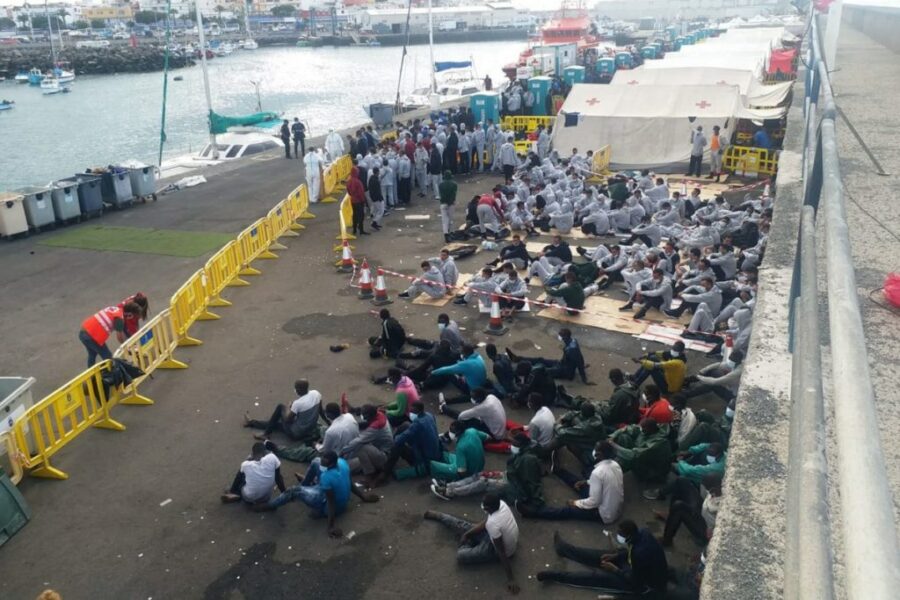
Seven people died during the crossing of an inflatable boat heading to Lanzarote with 139 migrants on board, which was rescued in the early hours of this Monday, November 2, about 150 kilometers northeast of the island. According to Maritime Rescue, the Guardamar Urania located the vessel around 5:20 a.m. and took the 132 survivors, 120 men and 12 women, to the port of Arrecife, where they were attended by medical teams and the Red Cross.
Only two of the bodies remained on the inflatable boat when the rescue teams arrived. According to the testimony of the survivors themselves, the other five were thrown overboard during the crossing, under circumstances that have not yet been clarified. That same Monday, the Salvamar Acrux rescued another vessel with 59 Maghrebi men about eight kilometers off the northern coast of Lanzarote, and arrivals also continued in El Hierro.
A route that continues to claim lives
The tragedy is not an isolated incident. At the end of October, a cayuco from Gambia reached El Hierro after eight days adrift with four dead, including a baby, and at the beginning of September another cayuco was found after 26 days at sea with dozens of victims. The Canary Islands route is one of the most dangerous migration routes in the world, and each new shipwreck or each body thrown into the sea confirms that the mafias organizing these crossings are trafficking in human lives in exchange for money.
The discourse of welcome, under scrutiny
In the face of each tragedy, the ecclesial discourse is usually reduced to the demand for welcome, without addressing an uncomfortable question: whether a policy of open doors, or perceived as such, encourages more people to risk their lives at sea. This is known as the pull effect, and those who point it out argue that the best way to avoid deaths is not to multiply departures, but to deter them and dismantle the networks that organize them. This is an editorial assessment, not data verified by the authorities.
The Spanish hierarchy has chosen another path. The Bishop of Tenerife, Eloy Santiago, declared after the visit of Leo XIV to the Canary Islands that he does not want to “hear the word remigration, because it is a sign that humanity has failed,” as published by InfoVaticana. During that trip, the Pope visited the ‘Las Raíces’ reception center in Tenerife, in a day that InfoVaticana reported as a defense of the Government’s welcome policy.
With the World Day of Migrants and Refugees, the Spanish Episcopal Conference once again emphasized welcome, according to this media outlet reported. In contrast to that message, seven more deaths in the Atlantic raise the question of whether the Church should also speak of prudence, of order at the borders, and of the responsibility of those who profit from these crossings.