


By Richard A. Spinello
The nebulous doctrine of the “consistent ethic of life” continues to inspire some Catholics and unsettle others. Cardinal Joseph Bernardin of Chicago introduced this principle in a 1983 address at Fordham University and championed it zealously until his death in 1996. It has recently been revived by his successor, Cardinal Blase Cupich, who traveled to Fiera di Primiero, the ancestral home of Cardinal Bernardin’s parents, to deliver a lecture honoring the cardinal and his celebrated theory.
According to Cardinal Cupich, this moral framework offers a useful corrective to our polarized political and social climate. In his view, Cardinal Bernardin’s idea remains one of the most influential frameworks in modern American Catholic social thought.
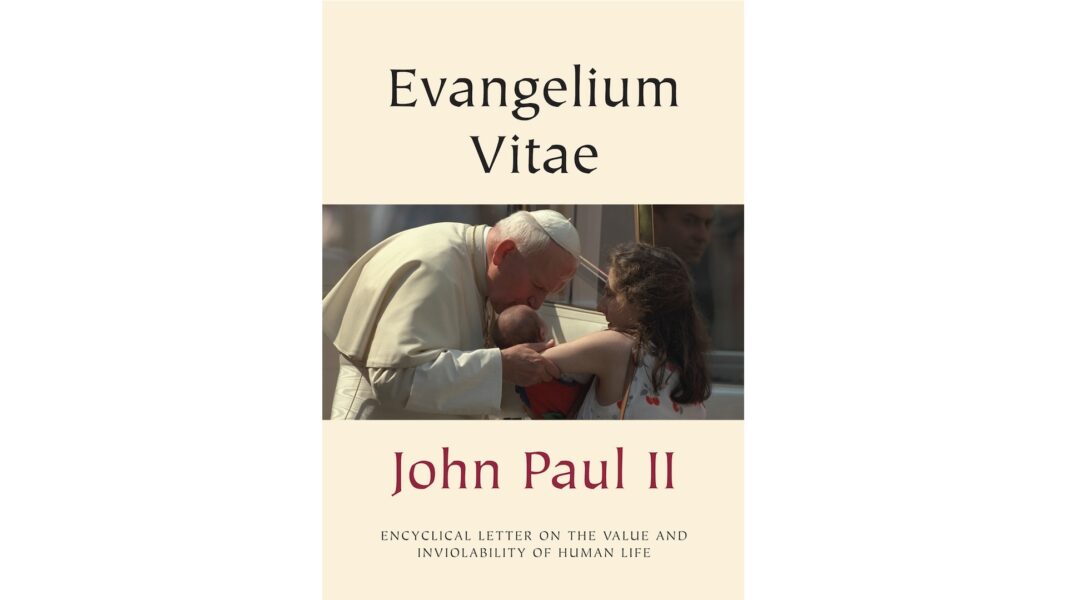
Cardinal Cupich further claims that his predecessor’s framework anticipated the integral moral vision proposed by Pope John Paul II in his landmark encyclical Evangelium vitae: “John Paul II validated Bernardin’s broader synthesis by explicitly placing direct attacks on innocent human life, such as abortion and euthanasia, alongside broader structural threats to human life, including war, poverty, and ecological degradation.”
These statements invite us to consider two key questions: what the “consistent ethic of life” actually means and whether John Paul II validated this theory.
The first question has no easy answer, since Bernardin’s theory can be interpreted in several ways. Stripped of nuance, it suggests that Catholics should develop a comprehensive and balanced moral vision on abortion, euthanasia, unjust war, capital punishment, poverty, environmental degradation, and so forth. They should not defend human life in one sphere while remaining indifferent to threats to life in others.
The framework is intended to challenge pro-life advocates who are passionate about abortion but divided on other life-related issues. At the same time, it challenges those who care about poverty and the environment but are lukewarm or evasive about abortion. Catholics are called to promote and defend the dignity and quality of life of every person in the face of the full range of threats.
Accordingly, following Cardinal Bernardin’s example, Cardinal Cupich maintains that those who defend the right to life of the unborn must be equally visible and resolute in addressing other life-and-death issues, such as health care, the “scourge of racial injustice,” and the ominous threat of climate change. He also cites Pope Leo XIV, who observed that “no one can claim to be pro-life because they oppose abortion and yet support the death penalty or fail to oppose the inhumane treatment of migrants.”
For Bernardin, as for Cupich, this “quality-of-life stance” translates into concrete political and economic positions on various social-welfare policies, health care, and the environment.
Yet the principal flaw of this theory is that it obscures the fundamental distinction between intrinsically evil acts and prudential moral questions, between moral absolutes and affirmative responsibilities. For example, there is a clear asymmetry between issues such as abortion and infanticide, on the one hand, and environmental degradation, on the other.
As philosopher John Finnis notes, moral absolutes such as “it is always wrong to take the life of an innocent person” are immediately applicable and therefore translate directly into unambiguous social policies. But affirmative responsibilities such as “protect the environment” admit of exceptions and nuances, as well as differing approaches in social and economic policy.
Several norms and prudential considerations come into play. Businesses, for instance, must balance legitimate moral and social demands for environmental integrity with value creation.
Therefore, we cannot equate moral absolutes with affirmative responsibilities, since these obligations have a different moral structure and cannot be directly converted into social policy. Nevertheless, these fundamental distinctions appear to be blurred when we hear speeches about a tightly woven “seamless garment” in which all life-related issues are in harmony.
Second, is there any basis for Cardinal Cupich’s claim that Bernardin’s framework anticipated the work of John Paul II? Did the Pope incorporate this theory into Evangelium vitae?
John Paul II would certainly agree that all threats to human life must be confronted and overcome through sound social policies. No society should tolerate extreme poverty or permit discriminatory practices in health care. And John Paul II undoubtedly opposed unjust war, while calling for the death penalty to be applied only in exceptional cases. He demands a certain respect for the life of the criminal and holds that capital punishment should be used only in cases of “absolute necessity … when it would not otherwise be possible to defend society.”
But “the commandment ‘You shall not kill’ has an absolute value when it refers to the innocent person, and all the more so when it concerns the weak and defenseless” (EV 57).
Thus, he contrasts the absolute value of innocent human life with the life of the guilty, noting that those lives also deserve respect, but not to the same absolute degree as the life of the “innocent.” The commandment not to kill does not have unconditional value when it concerns the “guilty.”
Therefore, it is difficult to maintain that John Paul II places issues such as capital punishment on the same moral plane as abortion and euthanasia. It seems safe to conclude that he would disagree with Pope Leo’s claim that one cannot be pro-life without opposing the death penalty. One can be pro-life and favor the use of the death penalty provided it is applied justly and under conditions of absolute necessity.
In summary, if the seamless-garment framework means that Catholics must broaden their moral perspective and take seriously both direct and indirect threats to human life across a wide spectrum, it is perfectly acceptable. If, however, it implies that issues such as abortion and capital punishment are morally equivalent and must be translated into social policy in the same way, this framework is highly problematic and inconsistent with the magisterial teaching of Pope John Paul II and with a correct understanding of the moral law.
About the Author
Richard A. Spinello is a professor at Boston College and an adjunct faculty member at St. John’s Seminary. He is the author of numerous books and articles on philosophy and ethics, including Four Catholic Philosophers: Rejoicing in the Truth (Jacques Maritain, Edith Stein, Dietrich von Hildebrand, Karol Wojtyła).