


Seventy Years of the 1956 Hungarian Uprising
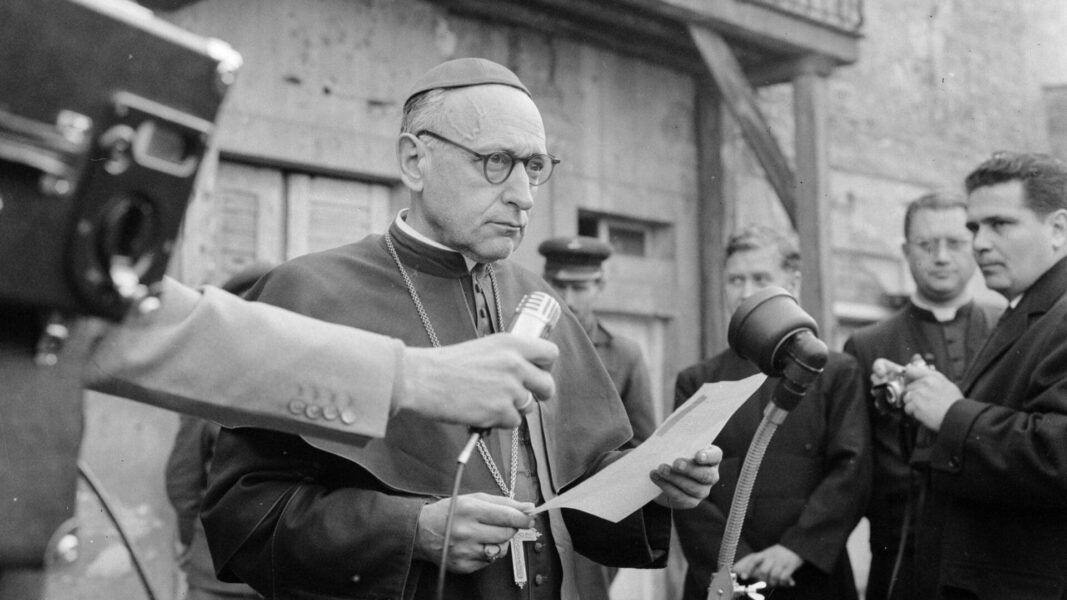
In the autumn of 1956, during the few days when the Hungarian uprising seemed to open a crack in the communist regime, Cardinal József Mindszenty once again served as primate, spoke on the radio from Parliament, and ended up taking refuge for fifteen years in the American embassy. His story recalls something that today’s Christian has forgotten: there are regimes that do not demand death, but a signature—or at least silence and acquiescence.
In the early 1950s, unrest in favor of greater political freedom grew in Eastern Europe, and in 1956 the movement reached Hungary. The moderate communist leader Imre Nagy returned to power and even released political prisoners, but his concessions only increased the pressure from workers and students, who threatened to overthrow the regime and break with Moscow. Khrushchev sent in the army, and the uprising was crushed. Amid those days, from the morning of October 31 until the afternoon of November 3, the newly freed primate of Hungary once again acted in public.
József Mindszenty was born in 1892 in Csehimindszent, the son of a farmer, and was ordained a priest in 1915. He soon experienced prison. In 1919, after directing a newspaper highly critical of communist attempts to infiltrate the government, he was arrested by Béla Kun’s regime of terror. In 1944, already bishop of Veszprém by appointment of Pius XII, he protested alongside the other Hungarian bishops when the Jews of Budapest were confined to ghettos, and forbade the celebration of any Mass or Te Deum while churches displayed posters announcing thanksgiving for the expulsion of the Jews from their city. That earned him a second arrest.
On September 8, 1945, he was informed that Pius XII wished to entrust him with the archdiocese of Esztergom and, with it, the primacy of Hungary. He asked for twenty-four hours to think it over. The communists advanced with cunning: they participated in Catholic events to appear religious while the government abolished catechesis for children and limited Catholic newspapers to two, under the pretext of paper shortages. The primate responded with a campaign of prayer and penance in all dioceses. In February 1946, he preached in Budapest that “only a praying humanity can build a better world.” From that moment on, he was a marked man.
In 1948 the regime unleashed its offensive. The slogan left no room for doubt: “We will annihilate Mindszenty! The well-being of the Hungarian people and peace between the Church and the State depend on it.” A press campaign was launched accusing him of being cruel to the people; schoolchildren and workers were ordered to take to the streets to demonstrate against him, and it was made to appear that his own bishops wanted to remove him. Many Hungarians were forced to sign petitions demanding his resignation. This was the first sign of what the regime sought: it was not enough to remove the cardinal; his fall had to appear voluntary and backed by names.
The arrest came on the eve of the feast of Saint Stephen, the first martyr. Agents entered the Esztergom residence with their car engines running. Mindszenty himself later recounted that he knelt at the prie-dieu to pray and then went to the door, where the officer in charge announced they had come to arrest him. When he asked for the arrest warrant, they replied that they did not need one. He was taken to 60 Andrássy Street in Budapest, which he described as “a true nucleus of horror,” a torture center set up by Hungarians trained in the Gestapo school.
There he was stripped, subjected to brainwashing, tortured, and interrogated countless times, always with the same questions. They wanted to know when he had become an enemy of the State; he replied that the Hungarian people did not consider him such. They asked why he opposed progress; he answered that he never had, but that he did not know how to call progress what he had seen done to his country. The charges bordered on the grotesque: conspiring with Otto von Habsburg over the crown of Saint Stephen and seeking out the Americans to provoke a third world war. Again and again they demanded that he sign a statement certifying those charges. After each refusal, he was returned to his cell.
In February 1949 he was brought to trial, which was little more than an exercise in propaganda, and sentenced to life imprisonment. In prison he rose at five in the morning. Only after nine months was he allowed to celebrate the Eucharist, and even then not frequently; he could borrow one book per week. He sustained those years with prayer. “A stay in prison can orient a man’s soul toward God,” he wrote. He prayed six rosaries daily for all the longings of the world.
When the 1956 uprising was crushed, he chose not to fall once more into the hands of the regime: “I climbed onto the saving roof that the American embassy represented to avoid my deportation to the Soviet Union.” President Eisenhower allowed him to settle there, and Cardinal Spellman arranged for an American Catholic organization to cover his maintenance, so that no one could reproach the United States for indefinitely supporting a Catholic priest. He remained in the embassy for fifteen years without going out either day or night. He wrote his memoirs, attended to the Catholic staff, and earned the respect of his hosts, even though they did not share his faith.
With the détente between Nixon and the communist world, the climate changed. In September 1971 he was freed, and his first stop was the Vatican. Paul VI embraced him, placed his own pectoral cross around his neck, and invited him to concelebrate the opening Mass of the synod, where he called him “an emblem of the unbreakable strength of faith and adherence to the Church.” He spent the rest of his life in a seminary in Vienna. Today, thousands of people come each year to pray before his tomb in Esztergom Cathedral.
Seen from afar, his life appears as a succession of prisons. Seen up close, it is a succession of papers that others wanted signed. The petitions for resignation extracted from the faithful, the declaration that was to certify the charges. The regime did not need his death: it needed his name at the bottom of a lie. It is the same trap laid for Thomas More, whose wife tried to convince him to take an oath that, after all, was only words. Today’s Christian is almost never asked for blood. He is asked for a signature, a silence, a formula.
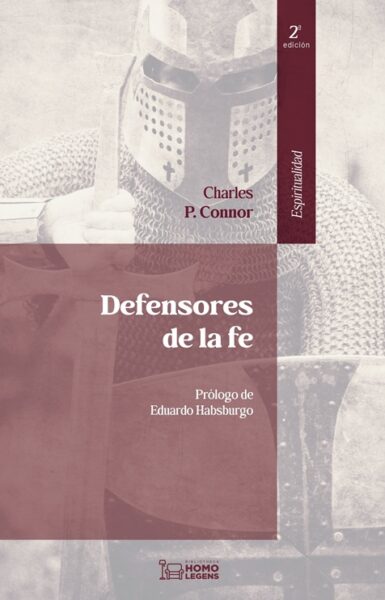
Father Charles P. Connor titles “the bloodless martyr of Hungary” the chapter he dedicates to the cardinal in Defenders of the Faith, now in its second edition. In the prologue, Eduardo Habsburg warns that “it seems that martyrs have become very unpopular,” and recalls that for More it would have sufficed to say “a few stupid words” to save himself. And Connor writes of the martyrs of the Reformation that they were willing to die for a mystery, “but never for a question mark.” Mindszenty did not shed his blood, but he gave decades of his life in cells and embassies. It remains for each reader to ask what he would sign for much less.