


By Randall Smith
I was reading the work of a modern, progressive moral theologian the other day. And he gave what has become an eerily common response to the classic moral dilemma: whether one can lie when hiding Jews in the house and the Nazis come to the door asking if you are hiding Jews. “The Nazis have no right to the truth, so they can be lied to.” Now, while one is not obliged to tell everything one knows to whomever asks, the easy acceptance of outright lying troubles me.
My first reaction to all these classic moral puzzles is to question the premise. “The Nazis do not come to the door and ask if you are hiding Jews. They break down the door and search.” There is another famous story about a man exploring caves with his friend when the water starts to rise. The only way out is through a small hole, and your friend, who is fat, gets stuck in it. You have some dynamite. Do you blow him up, or do you let yourself drown? I always ask: “Wait, did you go caving with dynamite? Why? Just in case you needed to blow someone up? Who goes into a cave with that guy?”
Most of these stories are crafted precisely to undermine a moral principle. If I can lie to the Nazis, then not every lie is wrong. If I can blow up my portly companion, then killing an unborn child who endangers the mother’s life must be acceptable.
Unless both are wrong.
My question about lying to the Nazis is this: Where does anyone get the right to the truth? Students say things like: “I have a right to play my music in my dorm room!” The proper response is: “No. You don’t.” There is no such “right.” Where would such a “right” come from? Was it bestowed by God? Is it a demand of human nature?
Perhaps we should let you play your music, depending on how it affects the common good of the community. But there is no absolute “right” that trumps all other considerations, such as the ability of others to sleep and study.
Likewise, perhaps I should tell you things you want to know, but perhaps not. I do not see how it helps to assert that this person does or does not have a “right” to the truth. That only confuses the matter, especially in American culture, where we take rights as “absolute,” where rights are “trump cards” that outweigh a utilitarian calculation of costs and benefits.
It was for this reason that the utilitarian philosopher Jeremy Bentham described natural rights as “nonsense upon stilts.” If someone has a right to life (as the Declaration claims), then we would need a compelling interest to deny someone that right. Likewise, if there is a right to the truth, then we would need a weighty reason to deny someone that right, even by remaining silent.
Although we might offer a compelling explanation for this particular situation of the Nazis at the door, my concern is that this little tale results in the easy assumption that one can lie whenever one thinks people do not have the right to the truth. Fine, so maybe (and note that I said “maybe”) one can lie to the Nazis about the Jews hidden in the house, but does that mean I can lie to my mother about where I went last night because—let’s be serious—does she really have a right to the truth? If I witnessed a crime, do the police, the judge, and the jury have the right to the truth?
I knew of a case in which a car with four law students hit and killed a young woman walking along the side of the road on a dark, rainy night. They did not stop, probably because they had been drinking. The driver’s version was that he knew he had hit something, but did not know what.
Suppose the verdict depended on the testimony of his friends in the car. Did the judge and jury have the right to the truth? I ask my students how they would testify if they had been the friends in the car. Tell the truth about what happened? Or not? They are divided. What good would it do? It will not bring the girl back. It will simply destroy this young man’s life. Ah, but don’t her parents deserve the truth?
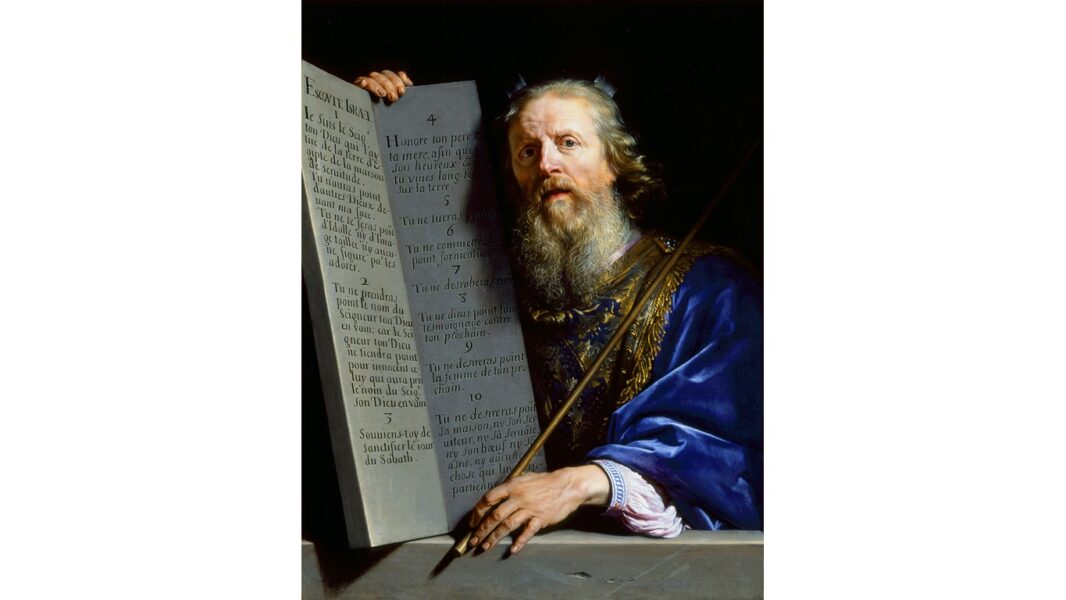
Who has the right to the truth in this case and who does not? These students would fare much better, not only morally but also legally (perjury is a crime), if they simply realized that they must not lie. There is, after all, a divinely revealed commandment against lying. Does God simply not understand these things?
But whatever one’s view of these little moral puzzles, there is a deeper problem. When a man says that he is permitted to lie if the people he is addressing do not have the right to the truth, then we have to ask whether he thinks that we have the right to the truth.
If he does not judge that we have that right, then he might be lying to us. Once a man has accepted the principle that lying might be acceptable in certain circumstances, we have reason to doubt the truth of anything he says. And if he can persuade others of this principle, then we will have reason to suspect anything people tell us. It would be especially good if politicians and the press understood this.
In the movie A Few Good Men, Tom Cruise’s character shouts: “I want the truth!” If instead of “You can’t handle the truth!”, Jack Nicholson’s character had said: “You have no right to the truth”—if he cannot “handle” the truth, does he really have a “right” to it?—then our progressive theologians might say: “Well, you know, he has a point.”
About the Author
Randall Smith holds the J. Michael Miller Endowed Chair in Theology at the University of St. Thomas in Houston. His most recent book, Mapping the Itinerarium: A Companion to Bonaventure’s Journey of the Mind into God, has just been published by Emmaus Press. His articles can be found here: Randall Smith’s Portfolio