


By Father Thomas G. Weinandy, OFM Cap.
Psalm 57:9 proclaims: “Awake, my soul; awake, O harp and lyre! I will awake the dawn!” It is a poetic verse, but does it make sense? Normally we think that it is the dawn that awakens us when the first light enters through the bedroom window. But we never think that we must get out of bed while it is still dark to awaken the dawn, as if, should we not awaken it, the dawn would not come.
The Old Testament temple faced eastward. It did so to symbolize the light of God’s presence within the temple. Every day, without fail, the sunrise made manifest that God dwelt, in a unique way, within the temple.
What was prefigured in the Old Testament finds its fulfillment in the Incarnation. In the prologue of his Gospel, John proclaims that, before the beginning of Creation, the Word was with God and was God. God created all things through his Word: “In him was life, and the life was the light of men. The light shines in the darkness, and the darkness has not overcome it” (John 1:4-5). The Word is the life-giving light that shines in the darkness of sin and death, so that they could not overcome the saving and life-giving light of the incarnate Word: Jesus.
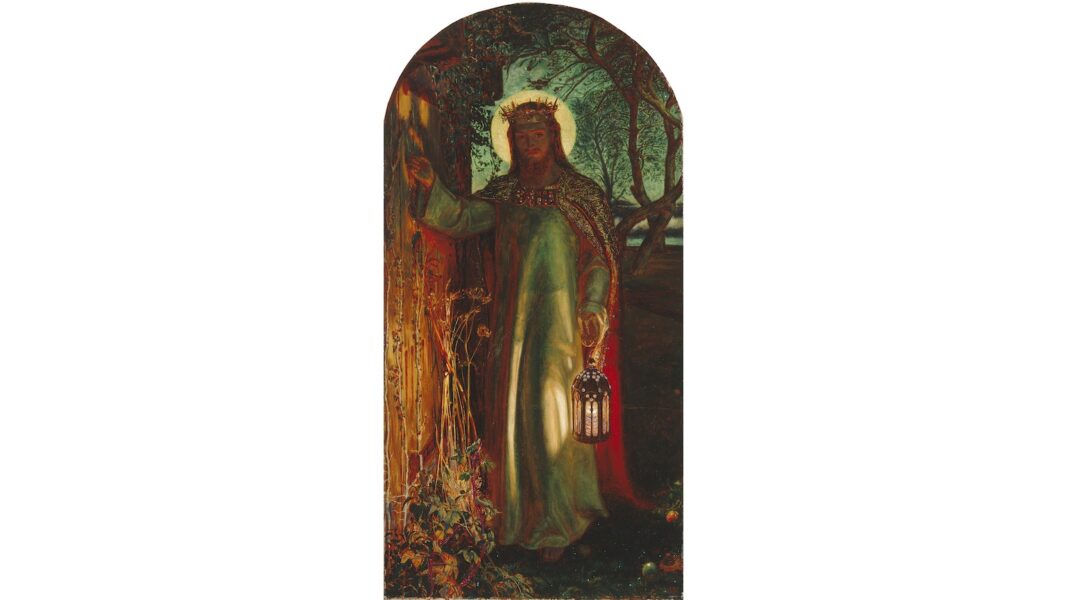
Later, Jesus echoes what had been proclaimed in the Prologue: “I am the light of the world; whoever follows me will not walk in darkness, but will have the light of life” (John 8:12). If we follow Jesus, who is the life-giving light, we will never walk in the darkness of sin and death; on the contrary, we will enjoy the light of endless life. The dawn will have awakened within us, and the darkness will never overcome it.
When Jesus cleansed the temple, the Jews asked him for a sign to show by what authority he did so. Jesus answered: “Destroy this temple, and in three days I will raise it up.” For the Jews, “this” referred to the material temple before which they were standing. However, Jesus was not referring to the temple, but to himself: “But he was speaking about the temple of his body. When therefore he was raised from the dead, his disciples remembered that he had said this, and they believed the Scripture and the word that Jesus had spoken” (John 2:19-22).
Thus, Jesus is the ever-living and life-giving temple. To abide in him, the new temple, is to dwell anew in his life-giving light: the risen Jesus is the dawn of the eternal day.
When Jesus was crucified, darkness covered the earth. It seemed that the darkness of sin and death had claimed victory. The darkness had overcome the life-giving light of the incarnate Word of God. Yet it is no coincidence that Jesus rose from the dead at the break of a new day. In his Resurrection, Jesus awakened the dawn.
John describes it this way: “Now on the first day of the week, Mary Magdalene came to the tomb early, while it was still dark, and saw that the stone had been taken away. So she ran and went to Simon Peter and the other disciple, the one whom Jesus loved, and said to them, ‘They have taken the Lord out of the tomb, and we do not know where they have laid him’” (John 20:1-2).
Although it was still dark, it was Mary who was truly in darkness. She went to the tomb where she believed the dead Jesus lay. The tomb was empty, and she concluded that someone had taken the body. What she did not understand was that the darkness of night had given way to the light of the gloriously risen Jesus. The darkness of sin and death could not overcome him. Once again, in his Resurrection, Jesus awakened the eternal day.
The dogmatic constitution on the Church of the Second Vatican Council (Lumen gentium) begins thus: “Christ is the light of the nations. Because of this, this most sacred Synod, gathered in the Holy Spirit, earnestly desires to enlighten all men with his brightness, which shines upon the face of the Church, proclaiming the Gospel to every creature.”
As the risen one, Jesus Christ is the light of all nations. No nation or people is excluded. That is why the Fathers of Vatican II, in union with the Holy Spirit, wished to bring this life-giving light of Christ to all humanity: a light that is visibly seen on the very face of the Church. The Church awakens the dawn of salvation throughout the world and for all ages.
Moreover, each member of the Church becomes a light for all those with whom he or she lives. In baptism, the baptized are transformed: from birth in sin and death they become new creatures in Christ, filled with the Spirit.
This is symbolized by the presentation of a candle. The baptized are given a lighted candle, signifying that they no longer live in the shadow of darkness, but have entered into the heavenly and eternal light. Likewise, the baptized are to be living lights for the world, by what they say and do. They are to awaken the dawn in others.
Eight hundred years ago, Saint Francis of Assisi died: his transitus, his passage from this life to eternal life. In his time, Francis awakened the dawn in a world that had grown cold. He brought the warmth of the Gospel not only by his preaching, but also by the example of his own life. He became another Christ: a living light that all could behold.
On the occasion of the 800th anniversary of his death, Pope Leo XIV proclaimed a special Jubilee Year in honor of Saint Francis of Assisi. This Jubilee Year began on January 10, 2026 and concludes on January 10, 2027.
Just as Saint Francis longed for his transitus, all of us should eagerly await our passage to Heaven. In the meantime, we must strive to awaken the dawn.
About the author
Thomas G. Weinandy, OFM, a prolific writer and one of the most prominent living theologians, was a member of the Vatican’s International Theological Commission. His most recent book is the third volume of Jesus Becoming Jesus: A Theological Interpretation of the Gospel of John: The Book of Glory and the Passion and Resurrection Narratives.