


By Francis X. Maier
“One death is a tragedy; a million deaths is a statistic.”
The phrase is often attributed to Joseph Stalin, a veteran of mass murder, though it probably predates him by several decades. Still, the words are true. The mind can only take in so much suffering. The greater the crime against humanity, the more quickly it becomes a mere number, and the more unreal the personal savagery behind it seems.
Ninety years after the Holodomor, Stalin’s murderous famine in Ukraine, eighty years after Auschwitz, and with dozens of “lesser” genocides and ethnic and religious wars since then, we have almost lost the capacity to be outraged by anything. We are inured to large-scale inhumanity. But it was not always so. The modern taste for mass murder had a beginning. It began in Turkey a little more than a century ago. To this day it remains one of the great crimes of history for which there has never been repentance.
By the late nineteenth century, the Ottoman Empire had reached an advanced state of decay. Politically, it was a secondary player in the struggle for regional dominance among the French, British, Germans, and Russians. A corrupt sultanate blocked reforms and wrecked imperial finances. In the Balkans, once-conquered Christian peoples were winning their independence. Even among those loyal to the empire, the need for reform became obvious.
Amid this ferment, the situation of Christians within the empire grew increasingly precarious. Islamic law tolerated Christians and granted them a degree of autonomy. But the price was a culture of permanent discrimination, expressed in special taxes, arbitrary violence, humiliating dress and conduct codes, and exclusion from political power. Christians also suffered the devshirme, or “boy levy,” by which Ottoman officials routinely took sons from Christian families, converted them to Islam, and forced them to serve in the army or administration.
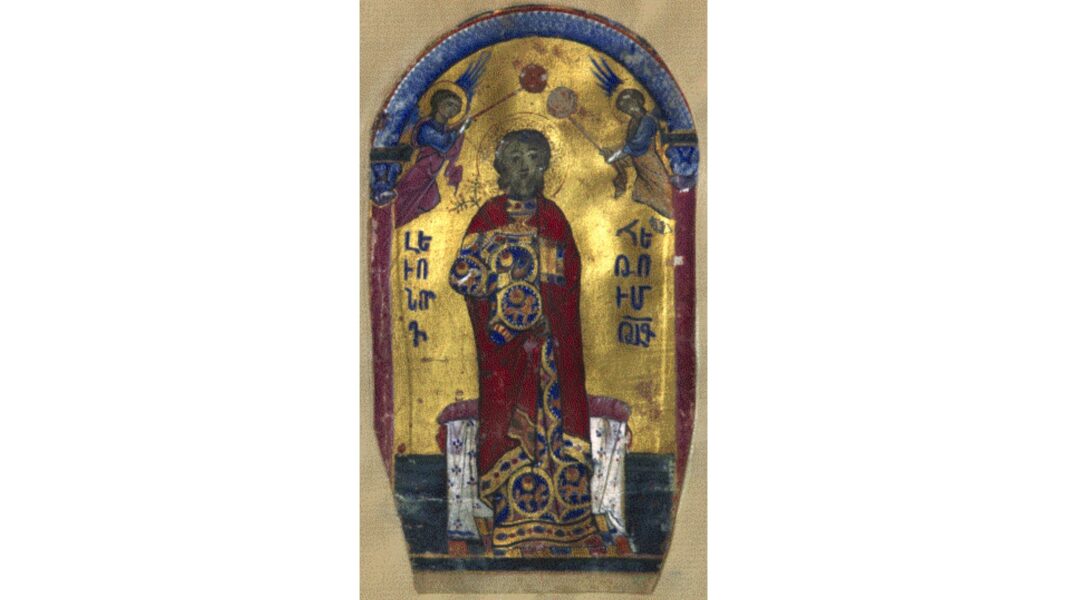
The Armenians formed one of the empire’s largest Christian communities. In the 1890s, their villages stretched across the Anatolian plateau, the heart of the modern Turkish state. They had lived there for centuries, long before the Turks arrived. Ancient Armenia became the first formally Christian nation in the early fourth century. The Armenian king Levon II was a friend of Richard the Lionheart and, like Richard, a crusader.
Medieval Armenia had strong ties to Christian Europe until the Muslim conquest severed them in 1375. With the arrival of American Protestant missionaries and the rise of Orthodox Russia’s regional power in the nineteenth century, contact with the outside world became more frequent, but also more dangerous for the empire’s Christian minorities.
In the 1890s, alarmed by growing unrest and pressure for political reform among his Armenian subjects, the mentally unstable Sultan Abdul Hamid II decided to deal directly with the “Armenian question.” In 1894–95 he encouraged the massacre of 100,000 Armenians and starved another 100,000 to death. Violence against Armenians continued for years, even after a constitutional government was installed. It culminated in the brutal 1909 massacre of Adana, in which an entire city was burned, including churches and schools filled with Christian children. But even this was only a prelude to the planned, state-sponsored program of extermination that killed more than a million Armenians in 1915.
New massacres in 1920 and 1922 murdered tens of thousands more. Many thousands of others converted to Islam to save their families’ lives. Turkish authorities deliberately set out to destroy the Armenian people and erase every memory of their presence. The removal of Armenian cultural traces—their churches, monasteries, and monuments—continues to this day in the Turkish countryside.
While political and ethnic resentments fueled the genocide, it also had a religious dimension, with a deep current of anti-Christian hatred. Muslim leaders encouraged the violence and called for jihad “against the infidels and enemies of the faith.”
Scholar Peter Balakian noted some years ago that “Muslim clerics played a consistent role in the massacres of Armenians; imams and softas [students of Islamic theology] often harangued the mob with prayers; and mosques were frequently used as places to mobilize crowds, especially during Friday prayers. Christians were killed in the name of Allah… [and] massacring Armenians [was] seen as routine, sanctioned both by Islam and by the government.”
Two lessons remain.
First, Turkey has never admitted its guilt for the Armenian genocide. Even today, in the face of overwhelming evidence, it devotes time and resources to denying that the mass murder occurred. Turkey is the classic case of a nation confident in its lies, its denial of mass murder, and its rewriting of history. Harassment of the tiny Christian minorities still left in the country continues daily.
Second, for forty years, from the late nineteenth to the early twentieth century, the United States championed the Armenian cause with economic aid for refugees and public outrage at the killings. But as U.S. interests in the Middle East grew, American policymakers abandoned the Armenians and courted the Turks. That arrangement continues to this day. As a result, we now witness the strange spectacle of a middle-ranking (and increasingly ambiguous) ally—Turkey—pressuring a superpower to ignore its own human-rights policies and minimize a grotesque crime against humanity.
Armenian Genocide Remembrance Day is observed each April 24 in present-day Armenia and throughout the worldwide Armenian diaspora. But too many millions of otherwise faithful and committed Christians still know nothing of the catastrophe inflicted on believers very much like themselves.
The Jewish people have never allowed the world to forget the Holocaust and, with their vigilance, have served and defended the humanity of us all. Forgetting the Armenian genocide is a luxury none of us can afford, because the price is our soul.
About the Author
Francis X. Maier is a senior fellow in Catholic studies at the Ethics and Public Policy Center. He is the author of True Confessions: Voices of Faith from a Life in the Church.