


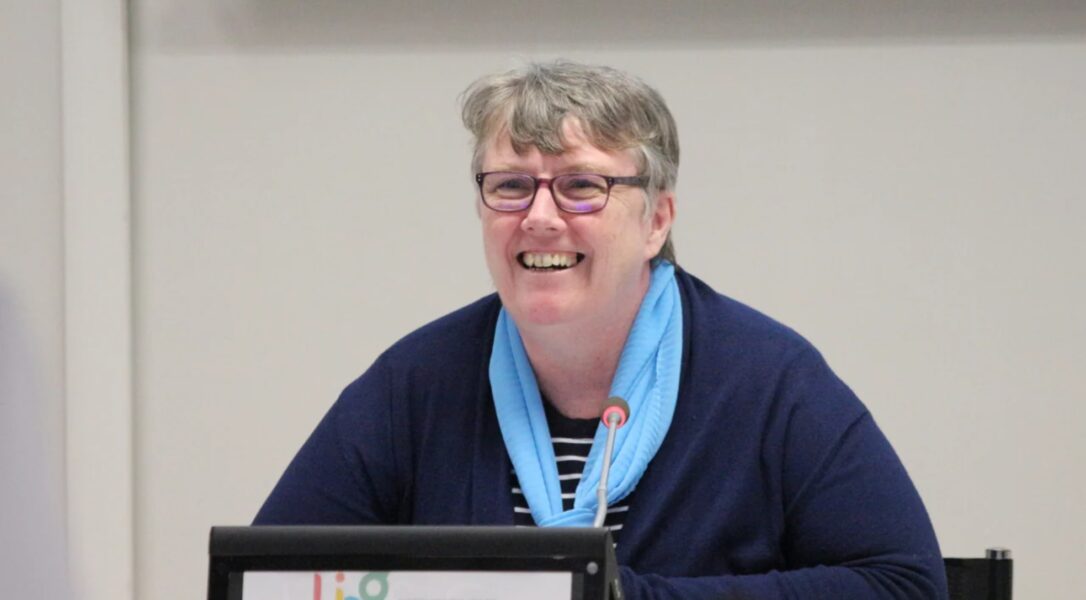
Pope Leo XIV has appointed Sister Mary Teresa Barron, N.S.A., as undersecretary of the Dicastery for Evangelization and president of the Pontifical Mission Societies. The Irish religious sister will be the first woman to lead the network that oversees, among other initiatives, the World Mission Sunday collection. The appointment was published this Thursday in the bulletin of the Holy See Press Office, and Barron will take office on January 4, 2027.
She will hold the undersecretary position in the Section for First Evangelization and New Particular Churches, the former Propaganda Fide, which is presided over as pro-prefect by Cardinal Luis Antonio Tagle. The post had been vacant since March 2025, when Pope Francis transferred its previous holder to the Governorate of Vatican City State, according to National Catholic Reporter.
The Pontifical Mission Societies comprise four institutions: the Society for the Propagation of the Faith, the Holy Childhood Association, the Society of St. Peter the Apostle, dedicated to the formation of native clergy, and the Missionary Union. The announcement comes in the midst of Mission October and ten days before the 100th World Mission Day, which will be celebrated on October 18 under the theme “One in Christ, united in mission.”
A missionary trajectory
Born in Donegal on November 7, 1968, Barron has been superior general of the Missionary Sisters of Our Lady of the Apostles since 2018, a congregation founded for mission work in Africa. She worked as a missionary in Nigeria and Tanzania on projects for the promotion of women, pastoral care, and the fight against AIDS. She holds a master’s degree in Public Health Administration from the Institute of Public Administration in Dublin and another in International Development from the Kimmage Institute, also in the Irish capital.
She chaired SEDOS, the Roman service for documentation and study on mission, from 2022 to 2025, and the International Union of Superiors General (UISG) from 2023 to 2025. She is also a consultor for the Dicastery for Interreligious Dialogue and was already a member of the Dicastery for Evangelization.
Her name made international headlines in November 2025, when armed men raided St. Mary’s School in Papiri, in the Nigerian diocese of Kontagora, which is run by her congregation, and abducted 265 students and staff. Barron led public appeals for their release. In December, after one hundred of them were freed, she denounced the “atrocious conditions” in which the others were still being held in the jungle, many of them children between five and twelve years old, and urged the authorities to act to return them immediately to their families.
Her words at the Synod
During the second session of the Synod on Synodality in October 2024, Barron participated as a delegate in one of the daily press conferences. Asked about the female diaconate, which Cardinal Víctor Manuel Fernández had declared closed days earlier and which had been withdrawn from debate in the hall to be entrusted to a study group, the religious sister maintained that the issue should also be viewed through discernment: “Is the Spirit calling women?” She added that “some women feel a call to the priesthood or the diaconate,” although she admitted that “for the moment we may not be contemplating ordained ministry,” according to EWTN News.
In that same intervention, she defended that the Synod should serve to make known the possibilities for governance and responsibility that already exist for women in the Church, because, in her view, “we are quite ignorant of what is possible at this moment.” Months later, in January 2025, she described the appointment of Sister Simona Brambilla as prefect of the Dicastery for Institutes of Consecrated Life as “pioneering.”
With this appointment, Pope Leo XIV places a religious sister at the head of one of the oldest and most widespread structures of the Church’s missionary action, with national offices in more than one hundred countries.