


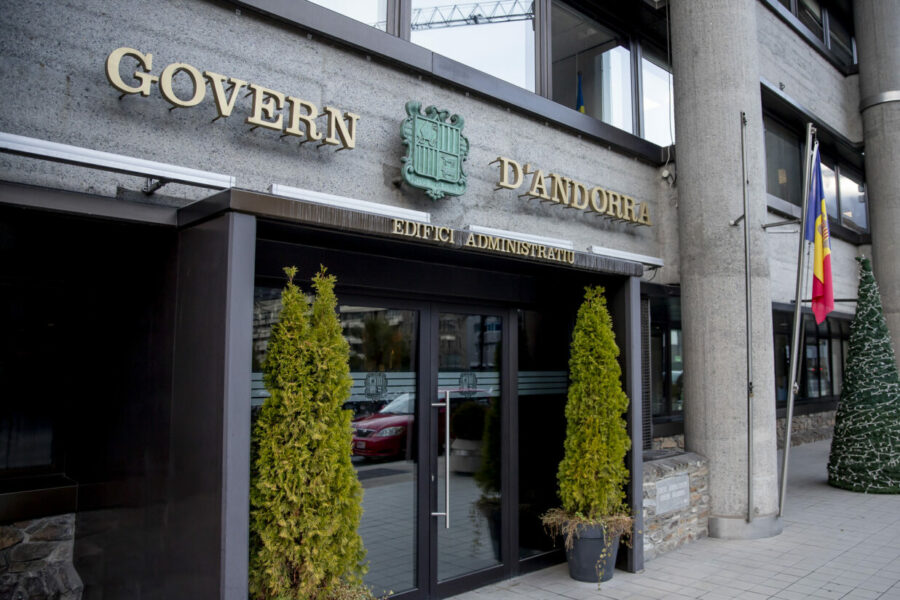
The Government of Andorra plans to bring before the Consell General this October the text to decriminalize women who have an abortion, after years of discreet negotiations with the Holy See and several postponements aimed at finding a formula that would allow progress on the reform without blowing up the peculiar institutional system of the Co-Principality.
According to La Veu Lliure, the head of Government, Xavier Espot, has stated that decriminalization will be “a reality before the end of the legislative term” and has indicated that it is “very likely” the proposal could be presented during this same month.
“Very probably it will be possible to present it during this month of October,” he affirmed.
The reform now being prepared will be more limited than the one considered a year ago: the woman who aborts would no longer be criminally prosecuted, but the doctor or healthcare professional who intervenes would remain subject to the current penal regime.
Abortion would continue to be illegal in Andorra, but one of the criminal protections that until now kept the Principality among the few European countries whose legislation still recognized, at least partially, the legal gravity of ending the life of the unborn would disappear.
Years of negotiations with Rome
The Andorran Government has maintained talks with the Holy See since 2019 to find a way out of a problem that the Executive itself made a political priority.
The difficulty stems from the country’s particular structure: one of its two heads of State is the bishop of Urgell, currently Monsignor Josep-Lluís Serrano Pentinat. Any reform of abortion therefore directly affects a Catholic prelate who serves as co-prince.
For years, that circumstance acted as an effective brake on the legalization or decriminalization of abortion. However, negotiations with Rome have gradually opened a path to modify the Penal Code without formally calling into question the continuity of the episcopal co-prince.
In 2025, a broader formula was put on the table, which contemplated not only the decriminalization of the woman, but also the protection of the healthcare professional and even the possible participation of the CASS in certain expenses related to abortion.
The proposal ended up stalling. Talks dragged on and the change of pontificate in the Vatican after the death of Francis altered a scenario that had seemed much more advanced under the previous papacy.
Francis would have given the green light to a broader formula
According to Vatican sources cited by La Veu Lliure and as also stated by general councilor Cerni Escalé, Francis would have given his approval to the reform in the terms initially proposed.
The information has not been publicly confirmed by the Holy See, but it fits with the evolution of talks that for years moved toward a solution increasingly favorable to the Andorran Government.
If confirmed, it would mean that Rome would have accepted under Francis a broader formula than the one that now seems set to be approved: decriminalization of the woman, possible protection of the healthcare worker, and eventual coverage of part of the care.
The election of Leo XIV would have partially halted that process, but would not have reversed it.
The new Vatican administration would have raised objections to some of those elements, especially the coverage of healthcare professionals and eventual public funding. The result would be the minimal formula now being prepared by the Executive: the woman would no longer be punished, but abortion would still not be legally permitted within the Principality.
Parolin, Andorra’s main interlocutor
Cardinal Pietro Parolin has been a central figure in these negotiations for years.
At the end of July 2026, Espot and Ladislau Baró traveled to the Vatican to meet with the Secretary of State and try to unblock the dossier once and for all.
Read also: Parolin receives the head of the Government of Andorra and talks on abortion resume
After that meeting, the Government went so far as to announce that the text could be presented in September. The month ended without news, and now Espot again sets October as the new horizon.
The Executive speaks of a solution “satisfactory for all parties.” But the balance of seven years of negotiations is hard to hide: the Vatican has ended up accepting, or at least not blocking, Andorra’s removal from the Penal Code of the penalty for women who have an abortion.
From one of Europe’s last pro-life strongholds to a negotiated decriminalization
The Andorran case carries an evident symbolic weight.
For years, the presence of a bishop as head of State turned the Principality into one of the last European territories where legislation still offered particularly strong criminal protection to the unborn.
Now that protection is beginning to give way, and it is doing so not against the express will of the Holy See, but after years of conversations with it.
The comparison with other Catholic microstates is inevitable. In November 2025, Prince Albert II of Monaco vetoed an expansion of abortion, directly citing the country’s Catholic identity and the protection of life. In Andorra, by contrast, negotiation with Rome has led in the opposite direction: not to strengthening pro-life legislation, but to seeking the legally least traumatic formula for partially dismantling it.
Read also: Andorra acknowledges new difficulties with the Holy See in decriminalizing abortion
If Espot meets the announced timetable this time, the Consell General will receive the text in the coming weeks.
It will then be possible to see the exact scope of the reform. But the political and ecclesial fact is already clear enough: after years of dialogue with the Holy See, Andorra is closer than ever to removing from the Penal Code the penalty for women who have an abortion, and Rome, far from having closed that door, has actively participated in the search for the formula that makes it possible.