


The curriculum dedicates four courses to anatomy, contraception, sexually transmitted infections and consent, and not a single hour to the difference between desiring a person and loving them. The conversation that almost no one has with a teenager is not the one about sex, which is already given to them in the classroom, on the phone and on the street: it is the other one. José Ramón Ayllón, an ethics teacher, decided to have it within a love story. Diario de Paula returns to bookstores with Homo Legens, just in time for the start of the school year.

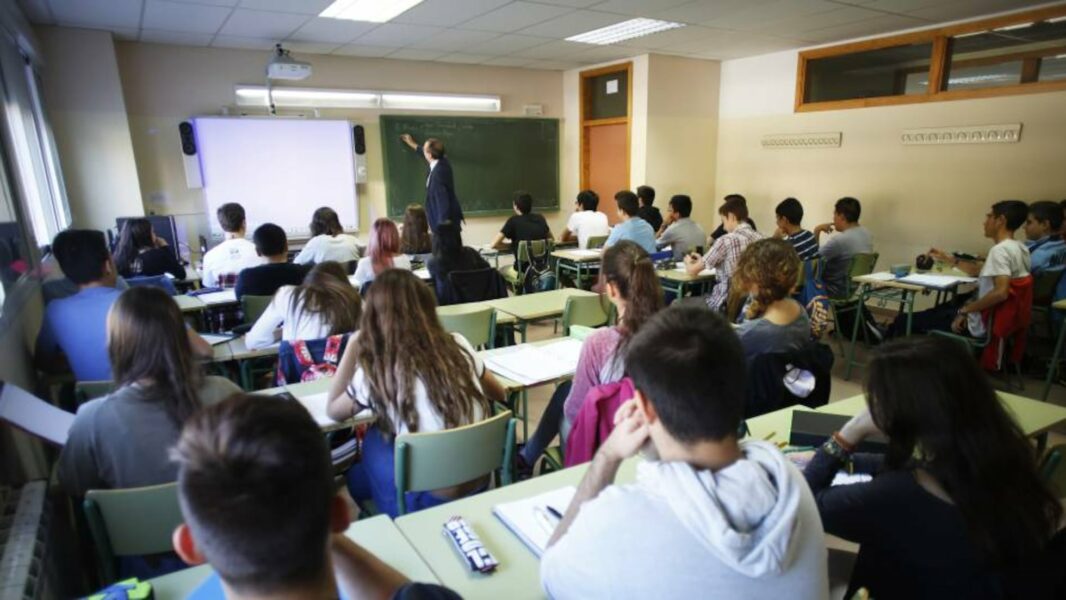
Spanish high schools open between September 4 and 22, depending on the region and educational stage. Waiting inside, among other things, is the only sentimental education that the State has decided to provide to a teenager. It is worth examining what it consists of.
The LOMLOE incorporated affective-sexual education as a cross-cutting content across all stages, and Royal Decree 217/2022 distributed it among Biology and Geology, Social Sciences, and Values Education. The materials that reach classrooms are always organized around the same blocks: anatomy and sexual response, contraceptive methods, prevention of sexually transmitted infections, consent and diversity. It is a syllabus written with the logic of an occupational safety manual, devoid of any moral framework. Not a single hour is dedicated to the only question a sixteen-year-old boy truly asks himself: what is the difference between desiring someone and loving them.
It is not an oversight. It is a decision. Love is not taught because it cannot be examined, and what does not fit into a rubric has ceased to exist for the educational system. But absence also educates. A teenager who is taught over four courses how to protect themselves from the other ends up understanding, without anyone telling them, that the other is fundamentally a risk to be managed, and that everything else—the fidelity, the waiting, the forgiveness, the possibility of giving oneself to someone forever—is a private matter, debatable and probably outdated.
The results are measured. According to the annual report of the ANAR Foundation, mental health now accounts for 35.8% of the problems detected among minors treated, and more than half last for more than a year. The State Observatory on Unwanted Loneliness calculates that nearly one in five young people experience unwanted loneliness at age 16. Faced with this, the system has only one prepared response: referral. We have replaced character formation with diagnosis, and the moral question with protocol. Professional help is needed when it is needed; what cannot be is that it is the first thing offered and the only thing planned for.
There is, therefore, a conversation that almost no one has with a teenager. Not the one about sex, which is already given to them in the classroom, on the phone and on the street. The other one: the one that distinguishes between loving a person and using them. An ethics teacher decided twenty-three years ago to have it where teenagers do listen—not in a syllabus, but in a love story.
José Ramón Ayllón, professor of ethics and philosophical anthropology at the universities of Montevideo and Navarra, published Diario de Paula in 2003. It has been read by more than thirty thousand readers, and Homo Legens is now reissuing it, just in time for the start of the school year. It is the notebook of a high school term: Paula Monfá arrives in Vigo from Barcelona with her family on the brink of separation, a recent heartbreak, and the determination never to fall in love again. There are Cris, the friend who supports her, and Borja, determined to prove to her that love does not always end badly.
At some point in the course, Paula writes the paragraph that summarizes what no subject has explained to her: “It is as if you discovered that desiring another person is not the same as loving them, and that desire, many times, what it really seeks is to use, manipulate, handle… I don’t know if you will agree with me, but it seems to me that it is not the one who is simply desired who is loved, but the one for whom something is desired.” She is seventeen and has figured it out on her own, by making mistakes.
And she has arrived there by the long road. A few lines earlier she acknowledges that “many times I have sought love through the path of pleasure” and that love did not appear anywhere; that one launches oneself “through the shortcut of desire” and its intense pleasure leaves on the palate “a sad taste of disappointment”; that the person who drives you crazy is much more than skin and shapes, “because in fact kisses and caresses do not give what they promise.” There is no moralizing here: there is a girl doing the accounting of her own experiences and drawing the only conclusion that the data allow.
The most uncomfortable part of the book, however, is the reproach Paula directs at her parents, cultured, modern people respectful of her privacy. Since she was thirteen they have given her freedom and money, and have never told her “this is right” or “this is wrong”: “It is as if they were afraid to talk about fundamental issues, about necessary criteria in the traffic of life.” She formulates it without resentment and with a precision that should hurt: “I would have liked, for example, a little guidance on the issue that most disorients us young people.” That is exactly what neither the curriculum nor the home has given her.
And then the novel does what no emotional well-being program dares to do: it rises. The Philosophy teacher explains Plato to them, and Paula notes that love is “the hunger that awakens in us the desire for our definitive homeland.” The question ceases to be hygienic and becomes what it always was: metaphysical. One may agree or not, but the teenager is being treated not as someone incapable of sustaining a difficult idea, but as a user who must be instructed in operating a device.
From there come conclusions that are not sentimental. One: after the relationship in which she gave everything and received nothing, Paula imposes on herself “not to beg for anyone’s love again,” and she keeps it for an entire term with the boy she does like, who has to win her over slowly. Another, about friendship, with an image any teacher can take to class: “If a friend is never something to use and throw away, like a plastic cup that is drained and ends up in the gutter, much less can a love be.”
The center of the book is a Friday in October. Grandfather Andreu dies suddenly. Paula, who has just heard in class about the death of Socrates, waits for her teacher in the school parking lot and blurts out the question: “My grandfather died last Friday… Do you believe there is something after death?” The man clears his throat and replies: “I believe that question is more than philosophical, and I think it has an affirmative answer.” She insists on whether that is demonstrable, and he answers with another question: whether she has read the Gospels. He does not comfort her, does not administer an emotional regulation technique, and does not refer her to anyone. He returns the question better formulated and points her to where it has been answered.
The novel is twenty-three years old and it shows: 40 Principales plays, records are bought, letters are written by postal mail. Paula gets to tell Borja that she finds him “a bit prehistoric” because he has no cell phone and does not surf the Internet. A teenage reader will find museum scenes, and that is precisely the interest: the backdrop changes and not a single one of the questions moves. The conclusion for anyone with a child or student starting the school year is not that another subject is needed. It is that at that age what is needed is an adult willing to say out loud what is right and what is wrong, and that if none does, the adolescent will have to figure it out like Paula: in solitude, and paying a high price.

Diario de Paula, by José Ramón Ayllón. Bibliotheca Homo Legens.