


By Sister Renée Mirkes, OSF
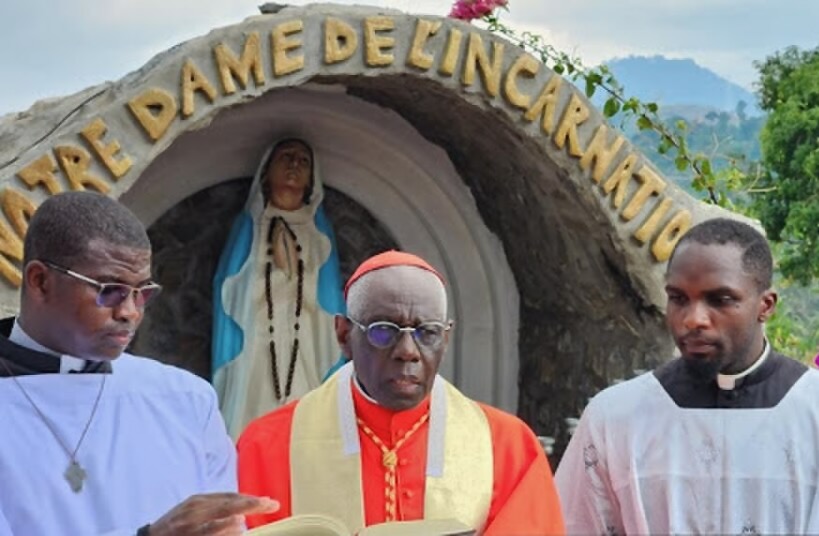
The speech this summer before the European Parliament by Cardinal Robert Sarah identifies a fundamental problem in contemporary bioethical discourse: the growing gap between language and reality. Words that once conveyed stable meanings—“health,” “rights,” “dignity”—are increasingly used with ideological elasticity.
Sarah warns that this linguistic instability constitutes a “crisis of the logos or of reason,” a rupture in the relationship between words and the realities they signify. Language ceases to correspond to reality; reason loses its foothold, and moral judgment becomes vulnerable to sentiment, ideology, or political coercion.
Sarah’s thesis rests on three philosophical principles deeply rooted in the Catholic intellectual tradition.
First, language must correspond to reality. For Sarah, language is not a neutral tool but an instrument of truth. Words are meant to reveal reality, not obscure it. Once medical discourse employs euphemisms or ambiguous terminology, it becomes difficult to identify the moral nature of medical actions. When terms such as “health,” “choice,” or “medical assistance in dying” conceal the underlying reality of direct killing or murder, the loss of linguistic clarity engenders a loss of moral clarity.
Second, reason is the foundation of ethical judgment. Sarah’s critique presupposes a classical and Christian understanding of reason as the faculty capable of discerning truth. In turn, ethical judgment depends directly on reason’s capacity to apprehend the nature of the human person and the goods proper to human flourishing. Instead of a rational inquiry into human goods, many contemporary bioethical debates become mere contests of sentiment or political power.
Third, human dignity is objective and intrinsic. Sarah insists that human dignity does not depend on “autonomy,” utility, or political consensus. It flows from the nature of the human person as imago Dei, a being created in the image of God.
The consequences of ignoring these principles are particularly acute in bioethics, where, as Sarah argues, what is at stake involves human life, corporeality, and dignity.
For this reason, Sarah’s lectio consistently evaluates four major bioethical issues: abortion, in vitro fertilization, transgender ideology, and physician-assisted suicide. In each case, he demonstrates how linguistic distortion functions as a precondition for moral confusion and policy error.
Referring to abortion as “health,” for example, is a linguistic manipulation that conceals the elimination of a life. Sarah cites U.S., European, and international policy documents in which “sexual and reproductive health” is routinely used to include abortion. He argues that this scandalous “inversion of the logos” reframes the deliberate interruption of a human life as a form of healthcare, conditions human dignity on maternal choice, and treats the unborn child as an object whose existence depends on external approval.
Sarah insists that the linguistic distortion of “health,” “choice,” and “rights” normalizes abortion by inserting it into the language of medicine and the Constitution.
But if abortion is described as “healthcare,” the unborn child becomes a pathology, the moral reality of direct killing is obscured, and reason is subordinated to political convenience. Within this conceptual framework, Sarah warns, it becomes difficult—if not impossible—to recognize the gravity of the act of abortion.
Sarah also maintains that the language of “reproductive rights” justifies in vitro fertilization, embryo cryopreservation, selective reduction, and embryo disposal. While the term “rights” is used to present the child and its laboratory production as privileges, it covertly conceals the moral implications of creating and destroying human beings at the embryonic stage.
And when IVF is framed as a “right,” the child becomes a product of technique rather than the fruit of a unitive act of conjugal love. The origin of a new human being shifts from the unitive interpersonal love of the parents to the technical expertise of embryologists and endocrinologists.
With such verbal artifices, reason is displaced by technological positivism, while the logic of laboratory reproduction supplants the logic of the gift.
Transgender ideology, in Sarah’s assessment, severs “identity” from the body. Through deceptive linguistic maneuvers—something the Cardinal maintains is fundamental to transgender ideology—terms such as “gender identity,” “assigned at birth,” and “affirmative care” divorce gender identity from biological sex and completely obscure the reality of corporeality.
As Sarah warns, once identity is detached from the body, reason loses its capacity to discern the meaning of corporeality. The body itself is no longer revelatory; it is arbitrary. Instead of a gift that reveals personal identity, the body is treated as a canvas for self-expression.
And born of this kind of verbal artifice, ethical judgment on transgender ideology in general and on “transition to the opposite sex” in particular rests entirely on sentiment or subjective thought, rather than on rational reflection on human nature.
Sarah demonstrates how verbal subterfuges—terms such as “medical assistance in dying,” “death with dignity,” and “compassionate choice”—conceal the reality of intentionally killing a patient. This linguistic displacement reframes the killing of a human being as “care.”
As Sarah points out, if direct killing can be redefined as compassion, then compassion loses its meaning. If suicide can be redefined as healthcare, then healthcare loses its meaning.
Throughout this “crisis of the logos,” Sarah shows how reason is deprived of the conceptual tools necessary to distinguish healing from harm. The sick person becomes a burden to be eliminated rather than a neighbor to be cared for. Human dignity becomes contingent on functionality, and the entire medical vocation is distorted as the physician’s role mutates from healer to executioner.
Sarah’s thesis links the future of bioethics to the future of language. When we lose the capacity to speak truthfully about the human person, we lose the capacity to defend the human person and human life, the bios.
The crisis of the logos or of reason is, in Sarah’s estimation, the crisis of our entire civilization.
Only the restoration of reason will restore human dignity. And only the restoration of human dignity will restore hope in our future and in the future of bioethics.
About the author
Sister Renée Mirkes, OSF, Ph.D., is a Franciscan of Christian Charity and director of the Center for NaProEthics, the ethics division of the Saint Paul VI Institute, Omaha, NE.