


By P. Raymond J. de Souza
This summer I acquired a new favorite song: Chimes of Freedom by Bob Dylan. It is not a new song; it dates from the early sixties. It was completely unknown to me until a few months ago, at Madison Square Garden, where Bruce Springsteen used it as the closing song of his Land of Hope and Dreams tour. He also used it on his European tour last year. I am not the only one who often prefers other people’s versions to Dylan’s own.
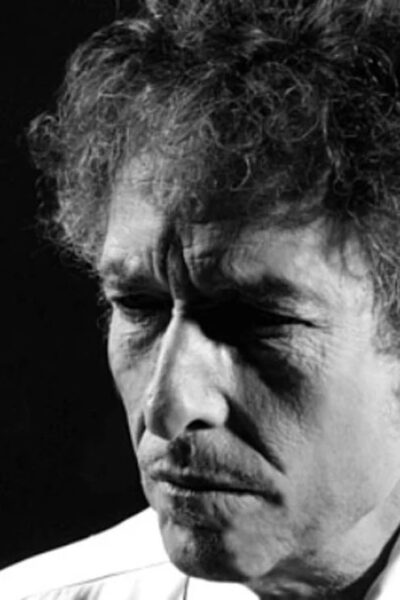
Is Bob Dylan’s music a Catholic thing?
More than one homilist has quoted his 1979 song Gotta Serve Somebody, especially against the argument that unbelievers are freer because they do not have to serve God. Dylan knew better: “It may be the devil, or it may be the Lord/ But you’re gonna have to serve somebody.”
In May, for Dylan’s 85th birthday—and the 40th anniversary of his own priestly ordination—Bishop Robert Barron recorded a video singing You’re Gonna Make Me Lonesome When You Go.
In June, Pope Leo XIV outdid Barron, citing Dylan in the foreword of an anthology on peace and disarmament. He quoted lyrics from 1963 that Dylan never recorded himself, Go Away You Bomb. That is serious Dylanology. “As the singer-songwriter and poet Bob Dylan wrote, addressing the atomic bomb figuratively in one of his poems: ‘I hate you because man created you, and man possesses and controls you,’” wrote Pope Leo.
Then there was Dylan with Saint John Paul the Great in Bologna, at the 1997 Italian Eucharistic Congress, which had the air of a World Youth Day. Invited to sing in the presence of the pope and some 300,000 young people, Dylan sang Knockin’ on Heaven’s Door and A Hard Rain’s Gonna Fall. After greeting the 77-year-old John Paul, he closed with Forever Young.
John Paul was no Dylanologist, but someone in the papal speechwriting workshop thought Dylan might have sung Blowing in the Wind.
“The answer to the questions of your life ‘is blowing in the wind’! It is true!”, said John Paul. “But not in the wind that carries everything away in empty whirlwinds, but in the wind that is the breath and voice of the Spirit. . . .How many roads must a man walk down before you call him a man? I answer you: one! There is only one way for man and it is Christ.”
Chimes of Freedom is about taking shelter from an evening storm, watching it from a doorway, probably that of a church. In the darkness of the sky, the blowing rain, the tearing hail, the noisy thunder and the lightning, Dylan writes “the sky cracked its poems in naked wonder/ That the clinging of the church bells blew far into the breeze.”
The storm represents all those beaten down by life, the lightning “flashing for the warriors whose strength is not to fight/ flashing for the refugees on the unarmed road of flight/ an’ for each an’ ev’ry underdog soldier in the night.”
The “bells of the lightning” “tolling for the rebel, tolling for the rake/ tolling for the luckless, the abandoned an’ forsaked/ tolling for the outcast, burnin’ constantly at stake.”
The storm roars for those the world forgets. Dylan echoes Luke 14:21, where the poor, the crippled, the lame and the blind are welcomed to the master’s banquet.
The “bells of lightning and its thunder” “striking for the gentle, striking for the kind/ striking for the guardians and protectors of the mind/. . .tolling for the tongues with no place to bring their thoughts/ tolling for the deaf an’ blind, tolling for the mute/ tolling for the mistreated, mateless mother, the mistitled prostitute/ for the misdemeanor outlaw, chased an’ cheated by pursuit.”
Then the lightning flashes, the “chimes of freedom”: a light shining in the darkness. Dylan invites us to behold, in the storm, “upon the chimes of freedom flashing.”
Springsteen called it “one of the greatest songs about human freedom ever written.” That is a bit extravagant, but it is a great song, and it expresses a profound human truth: that we were created for freedom. Long before Dylan, Pope Leo XIII called “freedom the highest of natural gifts.”
The desire remains in the heart amid so much that conspires against freedom. Freedom can seem like a brief flash of lightning across the long valley of tears.
A bright flash of human freedom was the Universal Declaration of Human Rights in 1948. For its fortieth anniversary, Amnesty International organized a world tour of concerts, with Springsteen, Sting, Tracy Chapman, Joan Baez, Bono and Roy Orbison. How to conclude, with so many stars? Everyone could agree on Dylan, so Chimes of Freedom was the finale.
During that summer tour, Springsteen gave a solo concert in East Berlin. The communist authorities allowed a Western rock star to come, hoping to placate their youth… and to co-opt the star.
When Springsteen arrived for his July 19, 1988 concert, he discovered that the East Germans had billed it as a “concert for Nicaragua” in support of the Sandinista regime. Springsteen insisted that the East Germans remove their posters and banners. They complied, lest Springsteen refuse to perform, but firmly ordered him not to speak about politics.
“I’m not for or against any government,” Springsteen said anyway. “I’ve come to play rock and roll for you, in the hope that one day all barriers will be torn down.”
The immense crowd of 300,000—the largest of Springsteen’s career—knew exactly which barriers he was talking about. He underscored the point by launching straight into Chimes of Freedom: “In the city’s melted furnace, unexpectedly we watched with faces hidden while the walls were tightening.”
The following year, the chimes of freedom rang out over the Berlin Wall.
The skies are darkening, and the freedom agenda of the late eighties is in retreat. The storm is gathering again. The chimes of freedom need to flash once more.
About the author
Fr. Raymond J. de Souza is a Canadian priest, Catholic commentator and Senior Fellow of Cardus.