


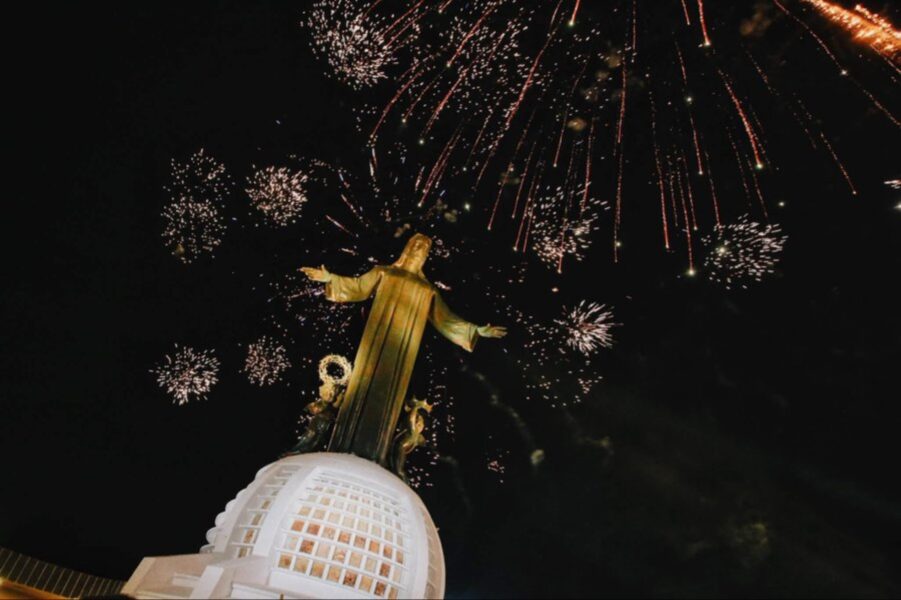
Guanajuato has commemorated in grand style the centenary of the Cristero uprising. This weekend, Cerro del Cubilete —the geographical heart of Mexico and the spiritual epicenter of the Cristero War— hosted the central events marking 100 years since the beginning of the Catholic resistance against the religious persecution unleashed by Plutarco Elías Calles. With a solemn Mass presided over by the Archbishop of León, Msgr. Jaime Calderón Calderón, and in the presence of the state governor, Libia Dennise García Muñoz Ledo, civil and ecclesiastical authorities paid tribute to the men and women who, a century ago, gave everything to the cry of «¡Viva Cristo Rey!».

A monumental arch for the Sanctuary of Christ the King
As part of the celebrations, the governor inaugurated the new Welcome Arch and rest area built on the ascent to the National Votive Sanctuary of Christ the King, a project costing more than 14 million pesos erected by the State Government specifically to commemorate the Cristero centenary. The arch, made of steel and rustic wood evoking the Cross of Christ and crowned with the inscription «¡Viva Cristo Rey!», is inspired by the entrance to the Expiatory Hermitage —where the first monument to Christ the King once stood, dynamited by order of the Calles regime— and marks the beginning of an 800-meter route to the Sanctuary, featuring a plaza, a cross, benches, and informational plaques for the more than three million pilgrims who ascend the Cubilete each year. The monument also debuted new LED lighting, which will make the colossal Christ the King visible at night in the Bajío region.
The rector of the Sanctuary, Father Manuel Sandoval Álvarez, summarized the meaning of the work: «a monument to preserve historical memory, reconciliation, and religious freedom».
«The freedoms we enjoy today we owe to the Cristero resistance»
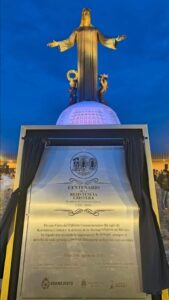
Not even the downpour that forced the official ceremony to be moved from the plaza into the temple —«a prank by Our Lord», joked the mayor of Silao, Melanie Murillo— dampened the day. From the presbytery of Christ the King, the governor spoke words that a century ago would have been unthinkable coming from a Mexican ruler: «Today we remember those who defended their faith a hundred years ago. Let us never forget that the freedoms we enjoy today we owe to the men and women of the Cristero resistance». Msgr. Calderón, for his part, recalled that «a secular State does not need to combat religion to reaffirm its autonomy» and that no society is free «if its differences end up becoming a cause for exclusion and violence». At the end of the speeches, the commemorative plaque for the 100 years of the Cristeros was placed inside the temple. Also in attendance were family members and descendants of the Cristero fighters, the three branches of state government, and the National Guards of Christ the King.
Guanajuato, Cristero land
The events at the Cubilete crown a year of commemorations throughout the state. Pénjamo —birthplace of Luis Navarro Origel, one of the first to rise up— unveiled commemorative plaques and held a horseback procession in memory of the protagonists of the uprising, while Abasolo inaugurated the first plaque of the Historical Route of the Cristero War, a regional circuit that will pass through the settings of the epic. One hundred years later, the land that watered so many martyrs with its blood —canonized by Saint John Paul II in the year 2000— celebrates without hesitation those who defended the freedom of the Church when doing so cost them their lives.
To delve deeper: those wishing to thoroughly explore the Cristero epic can do so with The Cristero Counterrevolution. The history of the Catholics who rose up against the persecution. Mexico 1926-1929, by Father Javier Olivera Ravasi, published by Homo Legens and also available on Legens.app. With a foreword by the Benedictine Santiago Cantera, the Argentine priest —doctor in Philosophy and History— goes beyond the recounting of events to present the Cristero War as it was: the clash between two worldviews, the Catholic and Hispanic one versus the revolutionary, Masonic, and secularist one, in the wake of the Vendée or Carlism. Drawing on abundant primary sources, Olivera Ravasi lets martyrs and persecutors speak, and rescues figures such as the child saint José Sánchez del Río and General Gorostieta. An essential work to discover, without the weight of official propaganda, the history of the men and women who died crying out «¡Viva Cristo Rey y Santa María de Guadalupe!».