


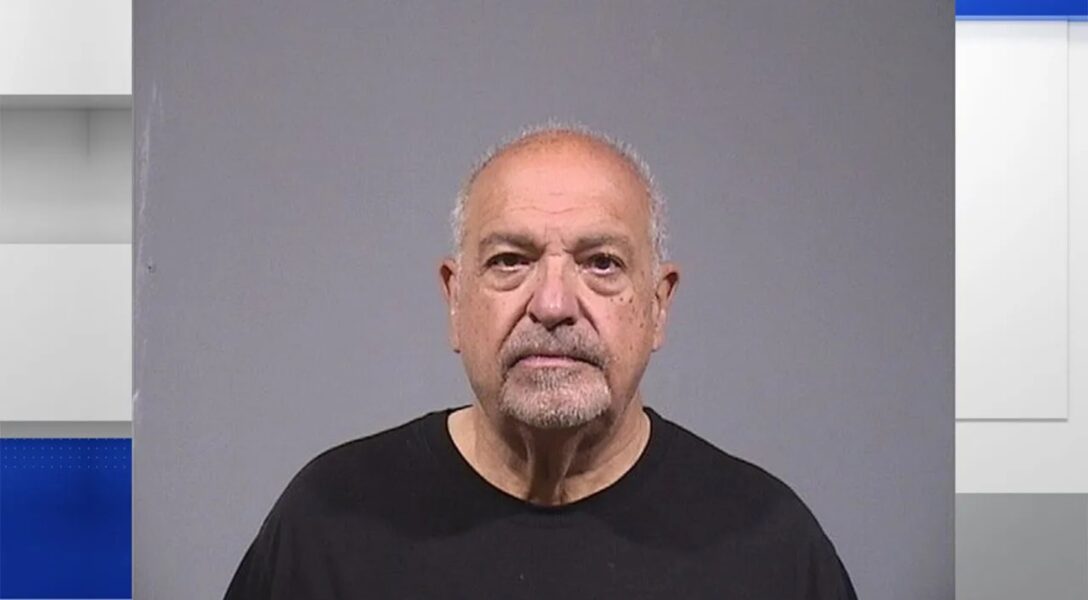
A Maronite chorepiscopus, rector for more than two decades of the main Lebanese Marian shrine in the United States and a figure appreciated in traditional Mass circles, has been removed from his post after being charged with public indecency and procuring. According to the Warren (Ohio) police, he was caught in broad daylight in a public park while a registered sex offender performed a sexual act on him. The case, still in the judicial phase, is also an uncomfortable warning: liturgical sensibility does not immunize against sin or scandal.
The facts, according to the police report covered by local media in the Youngstown valley (WFMJ, The Vindicator, Tribune Chronicle, WKBN), occurred on July 31 in Perkins Park, a public park in Warren, Ohio. Around five-thirty in the afternoon, a couple walking their dog alerted the police that two men were engaging in a sexual act outdoors, next to the baseball fields. One of them, kneeling on a black mat, was performing oral sex on the other, who stood smoking a cigar. According to the complaint, one of the two even offered money to the couple to stay and watch.
The kneeling man was identified as Kenneth Kopp, 53, a level III registered sex offender—the highest in Ohio—sentenced in 2011 to ten years in prison after pleading guilty to two counts of raping a minor. Officers found him in his car in his underwear, with wigs, female breast prostheses, and three drug pipes, and arrested him on the spot. The other man, who denied knowing Kopp, was allowed to leave that afternoon. He was Chorepiscopus Anthony Spinosa, 75, rector since 2002 of the Basilica and National Shrine of Our Lady of Lebanon in North Jackson.
From the altar to the municipal court
On August 3, the Warren municipal prosecutor filed charges against Spinosa—procuring (procuring or mediating for a sexual act, first-degree misdemeanor) and public indecency (second-degree misdemeanor)—and issued an arrest warrant. On August 13, the exact tenth anniversary of his consecration as chorepiscopus, Spinosa was booked into the Trumbull County jail. The next day he pleaded not guilty before the municipal court and was released on $2,000 bail, with the explicit condition of not approaching Perkins Park. His lawyer has requested that the prosecutor turn over all evidence, including any available video. Both Spinosa and Kopp—who has also pleaded not guilty—will appear again on September 14.
The canonical reaction was not long in coming. On August 18, Msgr. A. Elias Zaidan, bishop of the Maronite Eparchy of Our Lady of Lebanon of Los Angeles, made public a letter removing Spinosa from his ministerial assignment “with immediate effect” and appointing Fr. Michael Shami as temporary administrator of the basilica and shrine. Until the courts rule, the presumption of innocence applies; but the bishop’s swift and public precautionary measure contrasts favorably with the episcopal silences to which we have become so accustomed on this side of the Atlantic.
A shrine beloved by traditionalists
What gives this case a particular edge is the profile of the accused. Spinosa, ordained in 1983 and elevated to chorepiscopus—a dignity proper to the Eastern Churches, intermediate between the presbyterate and the episcopate—in 2016, was no ordinary cleric. The shrine he led, a replica of the one in Harissa and the only Maronite basilica dedicated to the Virgin outside Lebanon, has been a place of annual pilgrimage on the Assumption for thousands of Latin, Byzantine, and Maronite faithful since 1965.
And under his rectorship, the shrine became a reference point for the faithful attached to the traditional liturgy of the Roman rite. The friends of the Traditional Mass in Cleveland called him in 2016 “a true friend of the Traditional Latin Mass” when announcing his elevation to chorepiscopus. He himself promoted and announced solemn Tridentine Masses at the Assumption pilgrimage, sung Requiem Masses with catafalque and Gregorian chant, and conferences on Fatima with a solemn traditional Mass. He also figured among the speakers at the Catholic Identity Conference, the annual congress of American traditionalist Catholicism.
Tradition is not a free pass
If the charges are confirmed, we would be looking at the age-old sodomite cruising, with the aggravating factors of exhibitionism and the company of a convicted rapist of a minor, carried out by a cleric who had spent four decades ascending the altar. It is true that this pattern of double life and moral disorder is far more widespread—and more documented, and more covered up—in progressive ecclesiastical circles, where it is often not even experienced as a contradiction. But being traditional does not exempt one from scandal.
For that very reason, vigilance and denunciation cannot be selective. Public facts that cause scandal demand a public word on all fronts, including—especially—when the one who has fallen is “one of ours”; otherwise it would be the same “wash the dishes at home” that has done so much damage to the Church. A calm judgment on the facts, never on the soul of the accused, for whose conversion we must pray. And the old warning of St. Paul, which no one should think himself exempt from hearing: “Let him who thinks he stands take heed lest he fall” (1 Cor 10:12).
On September 14, the feast of the Exaltation of the Holy Cross, Spinosa will again sit before the judge. May civil justice do its work, and may canonical justice do its own.