


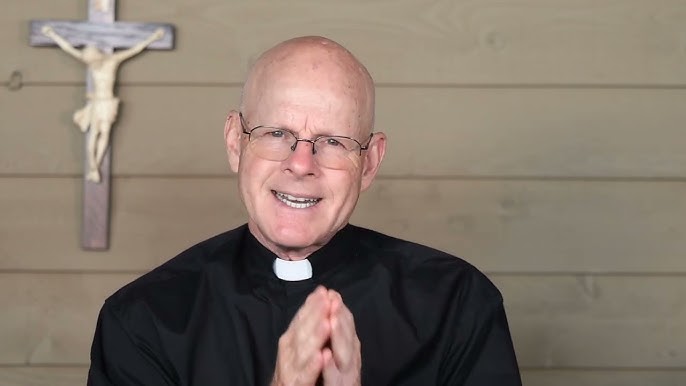
Monsignor Stephen Rossetti, removed in June by Cardinal Robert McElroy as exorcist of the Archdiocese of Washington, will resume his ministry of prayer and deliverance through the St. Michael Center for Spiritual Renewal, an organization based within the territory of the archdiocese itself. The priest has announced a new online deliverance prayer session for September 28, while remaining in canonical good standing in his home diocese of Syracuse, in the state of New York.
The resumption of activity does not mean that Rossetti has regained his role as exorcist of Washington. The priest maintains, however, that he retains priestly faculties in several dioceses and faculties as an exorcist in two others, in addition to assuring that he has the support of his own bishop to continue developing this apostolate.
Rossetti claims to have the support of his bishop
In a video published on July 13, Rossetti explained his situation after the decision made by McElroy. According to him, he maintains “faculties as a priest” in several dioceses and “faculties as an exorcist in a couple of dioceses.”
He also stated that his own bishop —apparently referring to Douglas Lucia, bishop of Syracuse— supports the continuity of his ministry. “My own bishop has encouraged and supported me to continue this ministry,” he said.
Rossetti continues as a priest in canonical good standing in Syracuse. McElroy’s decision specifically affected his role as exorcist of the Archdiocese of Washington and did not involve a suspension of his priestly ministry.
The St. Michael Center for Spiritual Renewal, for its part, maintains its headquarters within the territory of the Archdiocese of Washington and is now preparing to publicly resume its activities.
Deliverance prayer and exorcism are not the same
The activity announced by Rossetti must be distinguished from the major exorcism expressly regulated by the Church. The fact that he is once again leading deliverance prayer sessions does not, therefore, mean that he has been reinstated as exorcist of Washington.
Canon 1172 of the Code of Canon Law establishes that no one may legitimately perform exorcisms on possessed persons without having obtained from the local ordinary a “special and express” license. This authorization must be granted specifically to a priest who meets the conditions of piety, knowledge, prudence, and integrity of life required by the Church.
Deliverance prayers have a different scope and consist fundamentally in asking God for the deliverance or healing of a person in the face of certain difficulties or possible spiritual influences. Depending on their nature, this type of prayer is not reserved exclusively to the exorcist.
McElroy removed Rossetti after the controversy over UFOs and demons
McElroy removed Rossetti as exorcist of Washington after the priest published a video addressing the possible existence of extraterrestrials and suggesting that some phenomena attributed to UFOs could actually have a demonic origin.
After the decision became known, Rossetti publicly responded by expressing his obedience to the Church. “I ask forgiveness for any way in which I have not been faithful to the teachings of the Magisterium of the Church,” he stated on June 3.
The priest later insisted on the need to “remain in the barque” of the Church and described obedience to its teachings as “fundamental.”
McElroy later offered a different explanation regarding the reasons for his decision. The cardinal stated that the removal “had nothing to do with the UFO issue,” but rather with his conception of exorcism as a ministry that traditionally must be exercised in a reserved manner.
“The traditional role of an exorcist is very private,” the cardinal noted, who also described this task as a “sacred” ministry.