


By Daniel Guernsey
The state of Florida is threatening to withdraw more than a billion dollars in school choice funds from Catholic schools because they refuse to admit unvaccinated children, in compliance with the policy of the Florida Catholic Conference.
The Florida attorney general’s notice to the Conference urges it to respect the conscience rights of Florida citizens who do not wish to administer to their children vaccines derived from aborted fetal tissue. The notice demands that the religious basis for denying conscience exemptions be clarified by yesterday (August 7).
The Florida Catholic Conference has maintained that, since the bishops of the state consider any link between vaccines and abortion to be extremely remote and insignificant, the vaccines are morally acceptable. Since there is no reason for anyone to object to vaccines according to Catholic doctrine, Catholic schools should not grant religious exemptions.
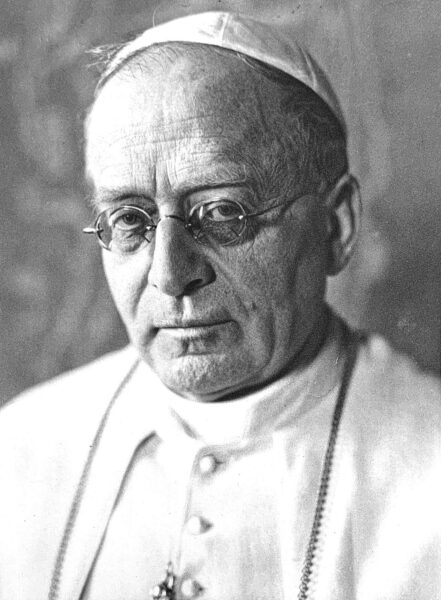
Although this situation is complex, the Catholic tradition has a conceptual framework that can help resolve it. Pius XI’s 1929 encyclical Divini Illius Magistri (“That Divine Teacher”) offers an enlightening summary. It identifies three necessary societies: the family, the State, and the Church. Each possesses its own rights and responsibilities.
The family, by natural and divine right, has the primary responsibility and the most intimate care of the child, including education and health, although the family may not violate natural or divine law.
The State has the right and duty to assist the family in accessing services that it cannot reasonably procure for itself, such as comprehensive education and basic public health and safety.
The Church possesses the divine right and duty to watch over the spiritual and moral well-being of all humanity, as well as to offer definitive guidance in moral and religious matters.
In applying the rights and duties of each society in this case, we remain faithful to the ancient notion that having the right to do something does not necessarily make it the right thing to do:
First, parents have the right and responsibility to oversee their children’s immunizations. The State must provide basic access and medical guidance, and the Church must offer moral guidance to inform parents; however, coercion usurps the role of parents.
Second, the State has the right and responsibility to provide funding so that its citizens may attend the schools of their choice and to safeguard public health. It must act with moral rectitude in exercising these powers. The State may levy taxes for this purpose, as well as establish the definitions and standards necessary to promote such functions.
In the case of Florida, the State may determine that citizens must be allowed vaccine exemptions, and it may define and interpret them. Some legal experts claim that the law usually defines religious or conscience exemptions in broad terms. It need not be limited to a specific doctrinal clause or formal point, but may include a general religious motivation linked to an issue. A citizen should not need a ruling from a religious authority to object to vaccines on religious grounds.
The State of Florida has decided that exemptions must be granted to those citizens who do not wish, under any circumstances, to introduce into their children’s bodies vaccines linked to abortion, however distant that relationship may be. This falls within the rights and duties of the State.
And third, the Church has the right to speak definitively on matters of morality. It also has the right to refuse admission to Catholic schools for those who do not share its religious or moral precepts.
In this case, the Church has made two relevant and binding moral claims. First, there is no moral prohibition against the use of the required vaccines, since the link to abortion is extremely remote. Second, “vaccination is not, as a rule, a moral obligation and therefore must be voluntary” (Declaration of the Vatican’s Dicastery for the Doctrine of the Faith, 2020). The Church, therefore, teaches that vaccines are neither obligatory nor prohibited.
Florida’s vaccine exemption does not appear to conflict with Catholic teaching, provided that the Catholic requesting the exemption appeals to individual conscience and not to Catholic doctrine. The Vatican also suggests that it is not immoral for Catholic schools to accept students whose parents request a religious exemption defined by the State. In fact, several Catholic schools and dioceses across the country already accept such religious exemptions.
The argument against admitting the unvaccinated must then focus on the right of the religious school to decide its own practical admission criteria, without state interference. However, just as the school has rights, it must not violate the natural rights of parents or those of conscience. Here we return to the notion that having the right to do something does not necessarily make it the right thing to do.
Assuming the role of vaccine bully does not give the Church a good image. The world has changed radically since the Florida Catholic Conference first drafted its vaccination protocols. It would be prudent to draft a new set of rules.
The entire COVID vaccination mandate fiasco has significantly affected young parents. They have lost trust in the government, in schools, and even in the Church. Institutions seeking to regain that trust should reject heavy-handed tactics. They should not force young families to choose between the spiritual and physical health of a child.
Catholic schools need to make room for our young families. Let us allow parents to disagree with us on the issue of proximity to abortion. This gives rise to a morally licit exemption and helps them navigate a much more complex post-COVID vaccination world, with us by their side and not in their way.
Today, young families are not so much anti-vaccine as cautious about them. They live in an era of personalized medicine, fear of toxicity, and a real fear of side effects. They care deeply about what enters their children’s bodies. They have deep safety concerns, but are flooded with conflicting advice. They need time, space, and our support… and we need them in our schools. It seems like a providential combination.
About the author
Dan Guernsey, Ed.D., is a senior fellow at The Cardinal Newman Society, a university professor of education, and has been a Catholic school principal for 17 years, most recently in a Florida diocese.