


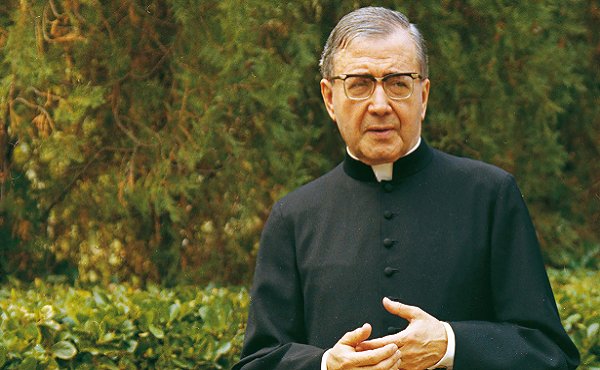
Today there is no Marquis of Peralta. The title that Josemaría Escrivá de Balaguer rehabilitated in 1968, enjoyed without using it for four years and then ceded to his brother Santiago, was extinguished by the most humiliating route known to Spanish noble law: indifference. When Santiago Escrivá died in 1994, his children did not bother to request the letter of succession, the legal deadline expired and the marquisate returned to the nothingness from which, according to its critics, it should never have emerged. The money it cost—because it did cost money, and not a little—was in vain.
It is best to begin at the beginning, which is not 1968 but 1738. That year Emperor Charles VI, the defeated archduke of the War of Succession, granted the Marquisate of Peralta to Juan Tomás de Peralta y Franco de Medina, a Jerez-born Austracist exiled in Milan. It was a title of the Holy Roman Empire, transmissible only through the male line, and its last effective holder was the Costa Rican diplomat Manuel María de Peralta y Alfaro, who obtained it in 1883 by pontifical rehabilitation from Leo XIII and died in Paris in 1930 without issue. There, strictly speaking, ended the history of the Marquisate of Peralta.
Thirty-eight years later another began. On 24 January 1968, Monsignor Escrivá, founder of Opus Dei, submitted an application for rehabilitation to the Ministry of Justice. The dossier, prepared by the Zaragoza genealogist Adolfo Castillo Genzor, maintained that the title had been granted on 4 March 1718—not in 1738—by the Archduke Charles as pretender to the Spanish Crown, and confirmed by Ferdinand VI in 1758. The nuance of the date is not erudition: it is the heart of the matter. Ricardo de la Cierva, following the Costa Rican genealogist Ricardo Fernández Peralta, concluded that the year had been deliberately altered so that the grant would appear prior to the Treaty of Vienna of 1725 and the imperial title would thus be transformed into a Spanish title, transmissible through the female line and therefore within reach of an applicant who was neither surnamed Peralta nor descended in the male line from the authentic Peraltas, whose heirs lived in Costa Rica. Franco signed Decree 1851/1968 on 24 July. Six months of processing: a speed that De la Cierva described as unusual and which the decree itself qualified with the standard formula, “without prejudice to any third party of better right.”
And here money enters. Rehabilitation is, of the three routes of access to a noble title, the most expensive: it pays the highest rate of the special tax. Escrivá paid his share in 1968, and the 1972 dossier records that the letter of succession in favour of Santiago was only issued, on 17 November of that year, “after payment of taxes.” The marquisate was therefore paid twice to the Spanish Treasury in four years. The official biography by Vázquez de Prada calls all this a “heroic decision,” motivated by filial gratitude: to compensate Santiago for the family patrimony consumed in the early years of the Work. Miguel Fisac and De la Cierva himself suggested another hypothesis, never proven: that the founder was seeking the noble pedigree required by the Order of Malta, to which Álvaro del Portillo already belonged. In Malta, in any case, he never entered. And a detail that the hagiography omits: when Josemaría requested Peralta, Santiago applied for the Barony of San Felipe for himself. That petition did not prosper. In the Escrivá household, in 1968, titles were being requested in duplicate.
There remains the final irony, which is the best. In the Work, numeraries made their wills in favour of the Work: it was established practice, and the founder’s own royalties eventually came, in time, under the control of societies within his orbit. The only temporal good that Escrivá withdrew from that destiny was, precisely, the marquisate: he ceded it by deed, in life, to his blood family. He was perhaps the only member of Opus Dei who did not leave to the Work the only thing that was entirely his own. And the family, which received free of charge what had cost the founder a dossier, controversy and two tax settlements, allowed it to lapse without moving a single paper. The State kept the money; the Peraltas of Costa Rica, the right; and the Escrivás, not even the title.