


All the nights that stretched too long in my youth ended with the same character. He would leave any bar past four, shirt untucked and suddenly tender from brandy, and set about hugging whatever he found: the bartender, the stranger, the lamppost. He declared everyone present his brother with a hug as damp as a freshly landed hake, swore that people were wonderful, that the world was wonderful, that he loved us all very much, and no one argued with him because arguing meant prolonging the night. The lamppost-hugger was not the worst part of the party: the clock was. When he appeared handing out love wholesale, you understood that the night had gone on too long and it was time to think about going home.
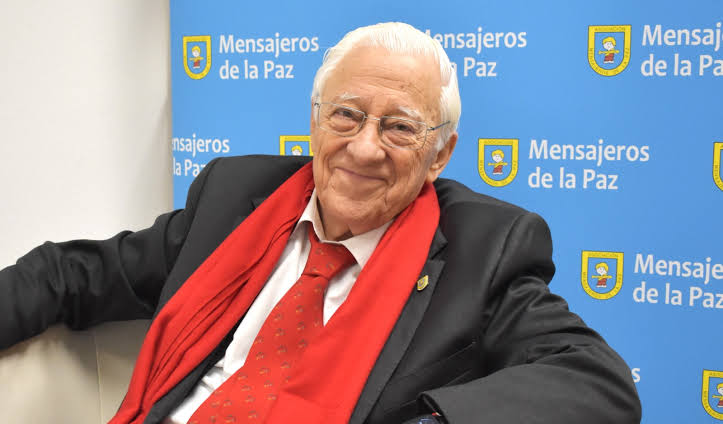
On Monday he appeared again, wearing a clerical collar and a laSexta microphone, at the southern border. Father Ángel arrived in Ceuta the day after Leo XIV asked in the Angelus for peace, stability and justice for the city, met with Juan Vivas, visited the CETI and told the cameras that it pained his heart greatly, that he preferred to see the good side and that the migrants gathered outside the centre “are saints.” He even gave the grounds for the decree, which was that we, in their place, “would do any barbarity,” while they waited calmly, without disturbances, to see if they could get in. Thus was established a canonisation procedure without a devil, without a postulator and without miracles: a saint is anyone who queues without breaking anything.
But the calendar was unlucky for the saints. The day before, in the same city, there had been rioters chanting the shahada, and there is no record that the priest paid them a visit. Local authorities estimated that during the crisis up to 80,000 people had entered from Morocco, of whom between 3,000 and 5,000 remained in Ceuta. The CETI, with 500 places, was housing more than 700, and another thousand were waiting outside. The city was caring for 862 unaccompanied foreign minors against 29 recognised places, and the National Court had requested a report to determine whether the mass entry had been a coordinated operation. Of the mafias, of Rabat, of the elementary duty to guard a border, the visitor said not a word. He did cite the Pope, but only halfway, with mercy and justice in front and the right not to have to migrate—which Leo XIV has been preaching for months—forgotten in the pocket of his clergyman.
One recognised the mechanism at once, because it had been seen many times at dawn. Father Ángel may have handed out more soup than anyone, just as the lamppost-hugger may have bought more rounds than anyone else, but love wholesale is not charity: it is incontinence. The effusive man at five in the morning does not love you; he needs witnesses for his tenderness, and that is why he hugs better the more people are watching. For decades this priest has been hugging in front of cameras, from the Tarajal of 2024 to any studio where there was a drama with good lighting, and the cameras were always his lamppost. Declaring the migrants saints en masse—moved by the thousands like pieces on someone else’s board—was another way of not looking at them, just as the bar-hugger squeezes you without remembering your name. And the people of Ceuta, who kept the party going and swept up the broken glass, were left to hear that the night was beautiful.
In the end, the lamppost-hugger of my youth was never the problem with the party. He was the warning. His effusion marked the exact hour when the revelry stopped being fun and all that remained was the sticky floor, the melted ice and the half-lowered shutters. On Monday, watching that elderly man in a clerical collar swear before the cameras that they were all saints while the city counted minors by the hundreds and waited for the police report, one felt the old five-in-the-morning pang, the physical certainty that what was not needed there was tenderness: what was needed was for the night to end. This one has been going on for fifty years, with its studio priests and its love by the bushel, and the closing bell has just rung at the bar. It is time to go home.