


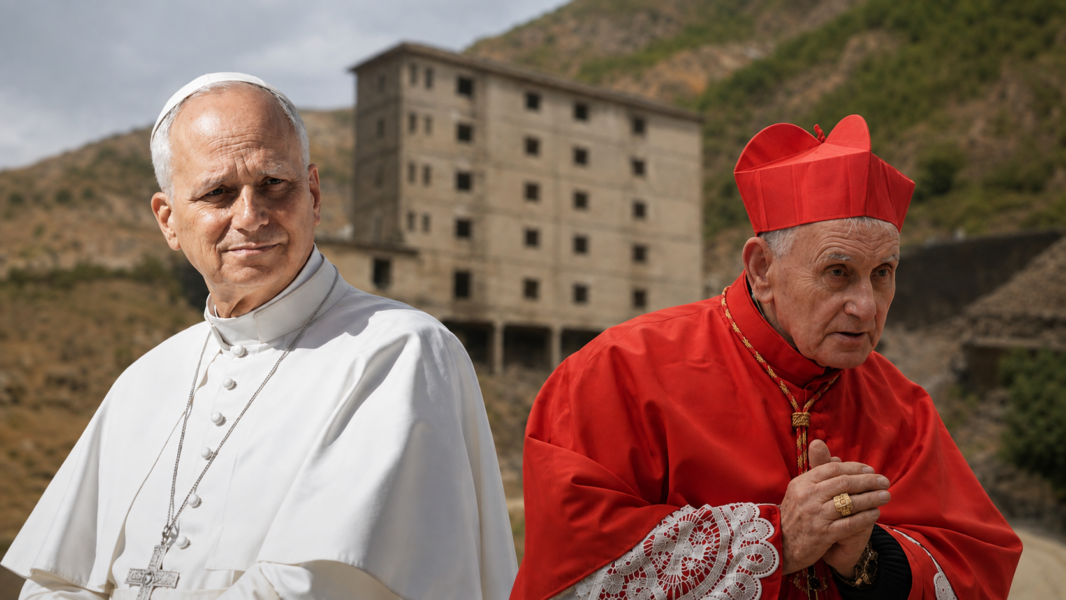
Pope Leo XIV addressed a message to Albanian Cardinal Ernest Simoni on the occasion of the Mass he presided over on Friday, July 31, at the former Spaç prison camp, where he served a significant part of his 18-year sentence during the communist persecution. In the text, the Pope recalled the testimony of those who suffered in that place and stated that “no chain is strong enough to imprison a conscience enlightened by the Gospel.”
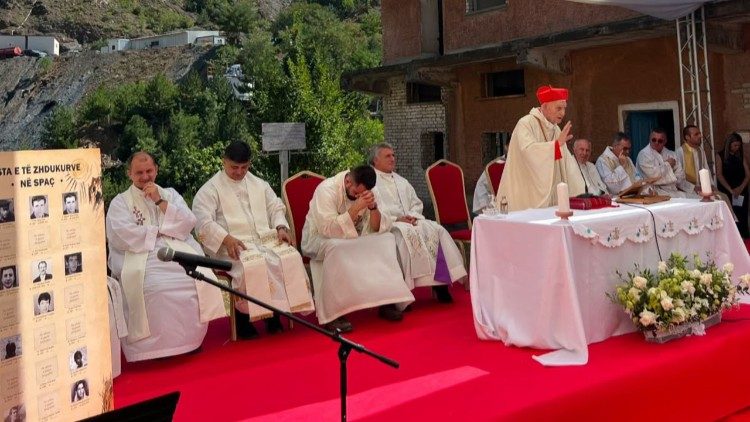
The message, dated July 30 and read at the end of the celebration, accompanied Simoni’s return to the camp where he had been subjected to forced labor and where, despite the risk of being discovered, he secretly celebrated Mass, heard confessions, and distributed Communion.
“With deep emotion, I spiritually join Your Eminence and all those gathered at the former Spaç prison camp, returning after so many years to celebrate the Eucharist, the Sacrifice of Christ that transformed the Cross from a sign of death into a promise of life,” wrote Pope Leo XIV.
Ernest Simoni’s Return to Spaç
Simoni, 97, returned to the camp to celebrate the Eucharist in memory of those who suffered or died there during the Albanian communist regime. The cardinal had been sentenced to death as an “enemy of the people,” although the sentence was later commuted to imprisonment and forced labor in various detention centers.
During his captivity, he continued to exercise his priestly ministry in secret. “During my imprisonment, risking my life each time, I celebrated Mass in Latin from memory, just as I heard confessions and distributed Communion in secret,” he recalled.
To prepare the Eucharist, he used a dough made from flour cooked on improvised stoves and pressed grapes. “If they had found me, they would have hanged me immediately,” he explained. During the celebration in Spaç, he also displayed the helmet he was forced to wear when descending into the mines.
“One of the Most Painful Pages” of Albania
In his message, Pope Leo XIV described Spaç as a place “etched in the memory of the Albanian people” and as one of the most painful chapters in its history. There, he noted, “many bore the heavy cross of injustice,” while “the blood of those who suffered and died in those mountains irrigated that land, turning it into a silent testimony of fidelity, courage, and hope.”
The Pontiff also recalled the prayers of those who remained imprisoned in the camp and the faces of those, marked by labor and deprivation, who entrusted their final hope to the Lord.
“How many prayers must have risen to Heaven from that place! How many invocations whispered in the heart! How many faces, marked by labor and deprivation, entrusted their last hope to the Lord!” he wrote.
A Conscience Enlightened by the Gospel
Reflecting on the memory of the prisoners, Pope Leo XIV affirmed that “no chain is strong enough to imprison a conscience enlightened by the Gospel, no night is long enough to prevent the dawn that the Lord prepares for His children, and no prison is deep enough to separate man from the love of God.”
The Pope also joined in prayer for those who suffered and died in Spaç, many of whom were buried in unmarked graves, and asked that their memory remain alive as a warning to new generations.
According to him, that memory should serve as “a constant reminder of the inviolable dignity of the human person, the value of freedom, and the commitment to peace.”
Pope Leo XIV concluded by entrusting Simoni and all participants in the celebration to the intercession of the Blessed Virgin Mary, whom he invoked as “Mother of Hope,” and imparted the apostolic blessing.