


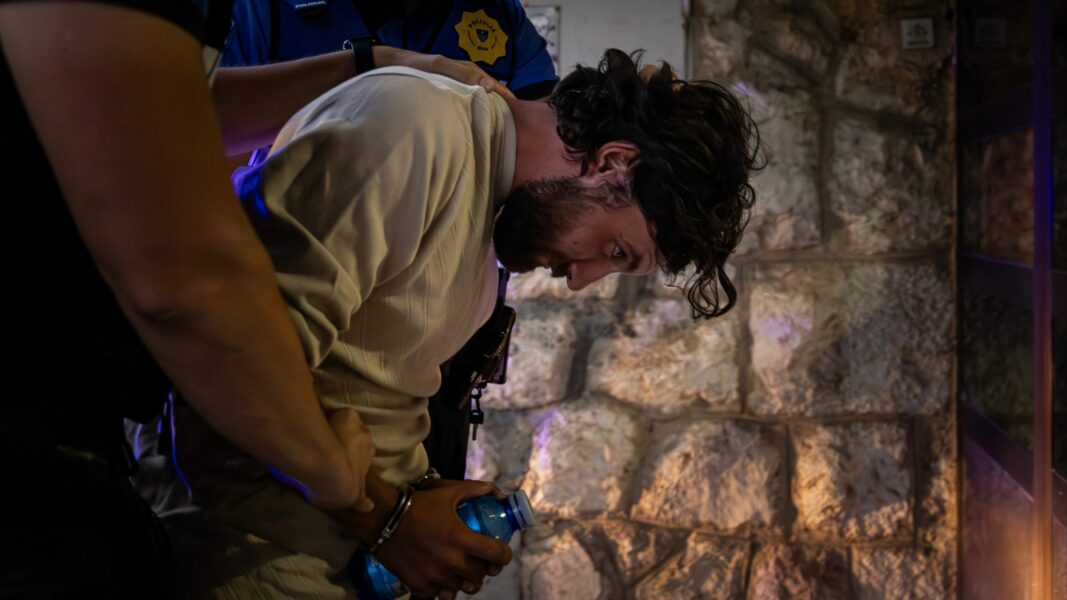
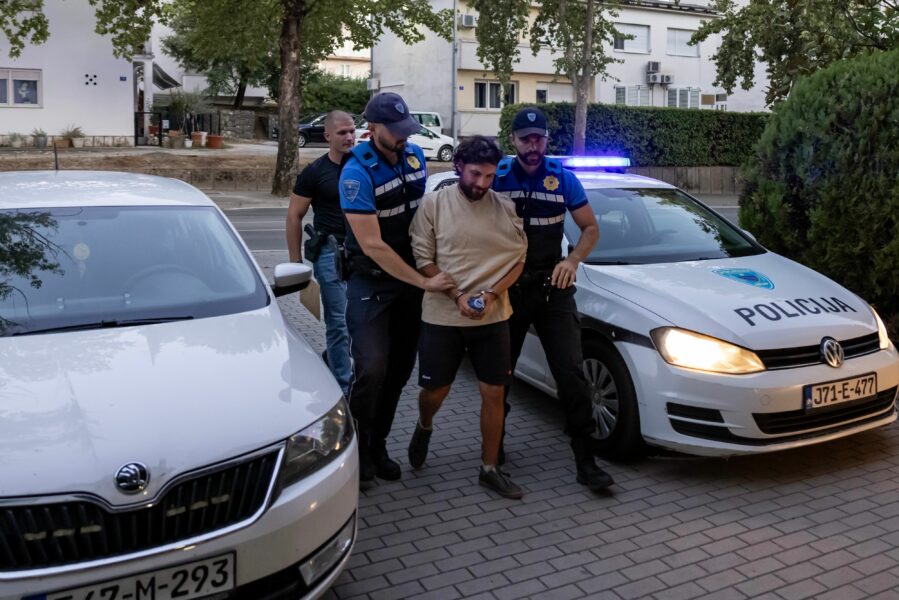
Early Tuesday morning, a man set fire to the outdoor altar of St. James the Apostle Church in Medjugorje and defaced several images of the Virgin with black paint. He also left messages against the alleged visionaries and other inscriptions whose meaning authorities are still investigating. The attack shocked the Marian shrine and triggered an intense police operation that ended with the arrest of a Polish citizen.
Nine years ago, Bartłomiej Włodzimierz Krakowiak walked some 1,300 kilometers from Warsaw to Medjugorje, convinced that the Virgin had changed his life. He wrote a book about his pilgrimage, gave testimony of his conversion in parishes and schools across Poland, and even appeared in a film about his return to the faith. Today, although Bosnian authorities have not yet officially confirmed his identity, numerous Polish media outlets identify this man as the main suspect in the vandalism attack on the shrine.
The Prosecutor’s Office of Bosnia and Herzegovina has taken over the investigation and will request pretrial detention for the 31-year-old Polish citizen arrested for setting fire to the outdoor altar of St. James the Apostle Church and defacing several images of the Virgin in Medjugorje. A senior official from the Public Prosecutor’s Office confirmed this to the Croatian agency Hina, noting that the suspect will be brought before the prosecutor, who will now lead the proceedings.
The investigation initially focuses on the alleged crime of damage or destruction of religious buildings, defined in Article 145.b of the Criminal Code of Bosnia and Herzegovina, punishable by six months to five years in prison.
The escape ended on the way to the Croatian border
After the attack, the suspect left Medjugorje and headed toward Černo, a town near Ljubuški and the border with Croatia. His search mobilized police officers from two cantons, firefighters, members of the Mountain Rescue Service (GSS), and local residents.
The escape ended thanks to the intervention of Ivan Vučić, a security guard who recognized the suspect from images released during the manhunt.
In statements to the newspaper Dnevni avaz, Vučić explained that he was driving when he saw a man matching the photographs published by the police. He stopped the car and began to pursue him.
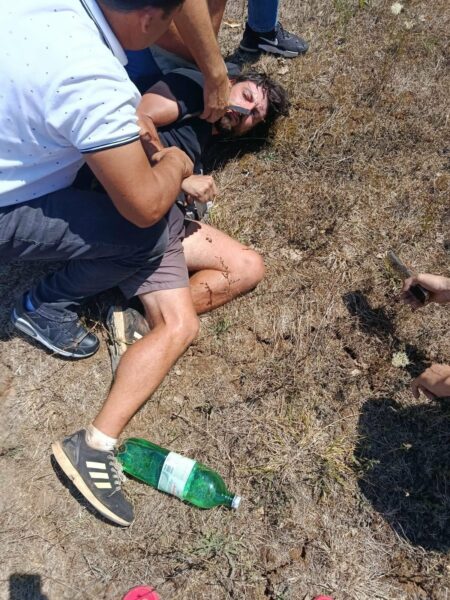
“I had to throw myself on him to restrain him. He was violent and tried to break free, but I had to use force to calm him down,” he recounted. According to his testimony, he even thought the fugitive might be armed, but decided to intervene anyway. Shortly afterward, officers arrived and took charge of the detainee.
A former Medjugorje pilgrim
Krakowiak has been known since 2017 in several Polish Catholic media outlets for his testimony of conversion, closely linked to Medjugorje.
As he told the portal Opoka at the time, he decided to make a pilgrimage to the shrine after being diagnosed with depression. After praying for help, he opened Google Maps and felt he had to go specifically to Medjugorje.
With little money in his pocket, he set out on a 1,300-kilometer walk from Warsaw, which he completed in 57 days. During the journey, he posted daily updates on Facebook under the title Z buta do Maryi (“On Foot to Mary”), a page that attracted thousands of followers.
After completing the pilgrimage, he published a book with the same title and began giving testimonies in parishes, schools, prisons, and rehabilitation centers. In 2024, he also appeared in the Polish film Powołany 2, where he recounted how he had overcome a deep personal crisis through faith.
In one of those interviews, he stated: “I believe that Mary appears to the visionaries. No one has to confirm it for me.”
An attack targeting the main symbols of the shrine
The evidence known so far suggests that the attack was not an act of indiscriminate vandalism, but a deliberate action against some of Medjugorje’s most emblematic sites.
The first call to the police came at 4:30 a.m., when the defacement of the image of the Virgin located on Podbrdo, the Hill of Apparitions, was discovered.
Half an hour later, a second alert was received reporting a fire at the outdoor altar of St. James the Apostle Church, where the main liturgical ceremonies of the shrine are held.
Security cameras recorded the perpetrator moving through the grounds with fuel containers before setting the altar on fire.
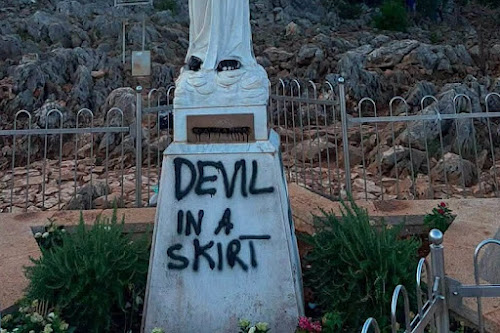
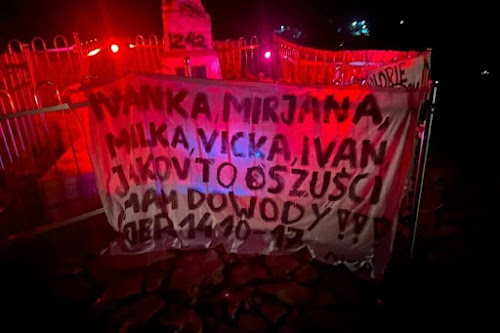
Several messages written in English and Polish were found next to the damaged images. On one of the statues, the phrase “Devil in skirt” could be read.
Meanwhile, a banner labeled the six alleged visionaries of Medjugorje as “frauds.”
Medjugorje responded with prayer and reparation
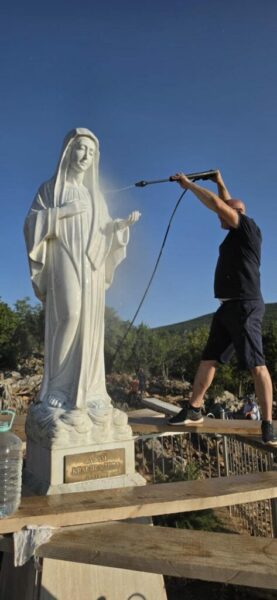
While the investigation progressed and the search for the suspect kept the population on edge, members of the Community of the Cenacle and volunteers at the shrine worked from early morning to clean the defaced images and the burned altar, removing the black paint and restoring the prayer sites for pilgrims.
St. James the Apostle Parish decided to maintain the full liturgical schedule as planned. That same afternoon, the rosary and Eucharistic adoration were celebrated, along with a prayer of reparation for the desecration suffered by the shrine.
In a statement released after the events, the Medjugorje Parish Office invited the faithful to respond “with prayer, fasting, and forgiveness,” also asking them to pray for the conversion of the person responsible for the attack.
Just days before the start of Mladifest, the International Youth Festival that will bring together tens of thousands of pilgrims from around the world, the shrine has already resumed its normal activities. Meanwhile, the suspect will appear before the Prosecutor’s Office of Bosnia and Herzegovina in the coming hours, which will decide on the request for pretrial detention while the investigation continues to determine the motive behind the attack.