


Primacy, State of Necessity, and Schism in the Debate on the Episcopal Consecrations of the SSPX in 1988 and 2026
“Even the devil deserves a defense.” The expression summarizes an elementary demand of justice: audiatur et altera pars, let the other side also be heard.
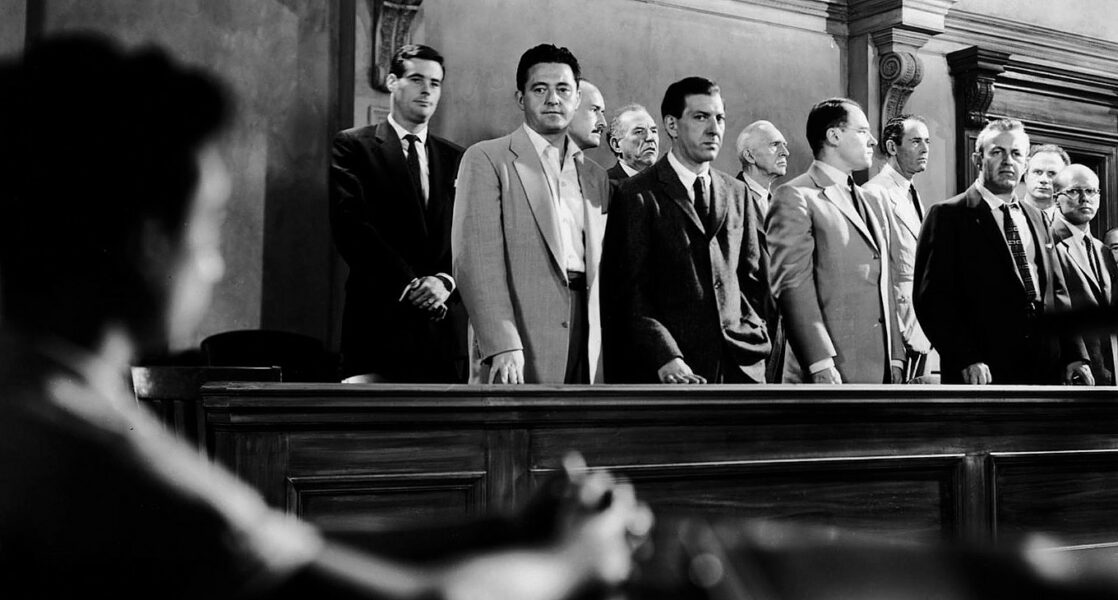
It is likewise the lesson of Twelve Angry Men. In the celebrated work, twelve jurors must decide on the guilt of a young man accused of murder. Eleven are ready to condemn him almost immediately; only one asks to discuss the evidence. He does not claim that the accused is innocent, but that his guilt has not yet been sufficiently proven. By forcing the others to review testimonies that seemed conclusive, he uncovers contradictions, prejudices, and reasonable doubts.
Something similar occurs with the Priestly Fraternity of Saint Pius X. The gravity of the accusations demands more than merely repeating them. The episcopal consecrations of 1988 and 2026 raise difficult problems concerning primacy, the episcopate, obedience, necessity, hierarchical communion, and canonical imputability. At stake are duties and goods of the utmost seriousness: obedience to the Roman Pontiff and the hierarchical unity of the Church, on the one hand; the preservation of the faith, the priesthood, the liturgy, and sacramental life, on the other. Affirming the importance of some does not permit treating the others as apparent or secondary.
State of the Question
A significant part of the literature opposing the consecrations comes from the same liturgical and doctrinal tradition as Archbishop Marcel Lefebvre. Some of its principal representatives did not view his struggle from the outside: they stood with him, were ordained by him, and for years shared his diagnosis of the ecclesial crisis.
In 1987, Fr. Louis-Marie de Blignières, founder of the Fraternity of Saint Vincent Ferrer, published his Réflexions sur l’épiscopat «autonome». He had been ordained a priest by Archbishop Lefebvre in 1977 and acknowledged the existence of an extraordinarily grave crisis in the Church. His rupture did not stem from denying that crisis, but from the conviction that the response envisaged by Archbishop Lefebvre crossed a limit imposed by the divine constitution of the Church.
Fr. de Blignières maintained that the episcopate is essentially ordered to the governance of the Church and to hierarchical communion. Therefore, consecrating against the will of the Pope would not merely be transmitting the episcopal order illicitly, but appropriating a function linked by divine right to the primacy. He later developed this thesis in La communion hiérarchique des évêques est-elle de droit divin? and Les sacres de la Fraternité Saint-Pie X: une usurpation de juridiction.
At the beginning of 1989 appeared Du sacre épiscopal contre la volonté du Pape, a collective essay directed by Fr. Josef Bisig. He too was no stranger to Écône: he had been ordained by Archbishop Lefebvre in 1977, belonged to the SSPX, and had served on its General Council.
After the 1988 consecrations, Bisig was one of the twelve SSPX priests who left the Fraternity and, with the approval of the Holy See, founded the Priestly Fraternity of Saint Peter, of which he became the first superior general. Those priests came from Archbishop Lefebvre’s work and largely shared his doctrinal and liturgical convictions, but judged that they could not accompany him in the consecrations. The essay directed by Bisig argued that designating and consecrating bishops against the Pope usurped a prerogative of his by divine right and harmed the constitutive unity of the Church.
This line of argument reappeared in 2026. Claves, the apostolic platform of the FSSP in France, published “Des sacres légitimes?”, signed by Theologus, a group of theologians. In the same milieu were circulated the new studies of Fr. de Blignières and the conference of Fr. Hilaire Vernier, FSSP, “Droit divin et sacres contre la volonté du pape.” Fr. Vernier maintains that conferring the episcopate against the pontifical will would be contrary to divine law, even if no jurisdiction were intended to be transmitted.
In Spanish, Federico Highton has presented in El error lefebvrista a general refutation of the ecclesiology attributed to the SSPX. Other recent interventions have described the Fraternity as a parallel hierarchy, a formally schismatic organization, or even a Protestant structure.
There is also academic research favorable, at least in its initial conclusions. In 1995, Fr. Gerald E. Murray, a priest of the Archdiocese of New York and unaffiliated with the SSPX, presented at the Pontifical Gregorian University his licentiate thesis The Canonical Status of the Lay Faithful Associated with the Late Archbishop Marcel Lefebvre and the Society of St. Pius X: Are They Excommunicated as Schismatics?
Murray argued that canons 1321, 1323, and 1324 raised a serious doubt about incurring the 1988 excommunication: Archbishop Lefebvre’s conviction regarding the state of necessity could prevent the latae sententiae penalty, even if his judgment had been objectively erroneous. Although the author later modified his position, his research demonstrates that the penal question admitted serious canonical discussion.
The defense of the SSPX also draws on the statements and studies of Archbishop Lefebvre, Bishop Bernard Tissier de Mallerais, and Fathers Ramón Anglés, Peter Scott, and Jean-Michel Gleize. The latter has responded to the essay directed by Bisig and to the objections of Theologus, Vernier, and de Blignières.
The controversy does not simply pit traditionalists against modernists. It has divided priests formed in the same principles, some of them ordained by the same bishop. Some feared that the consecrations would mark the beginning of a parallel hierarchy; others judged that they were necessary to preserve gravely threatened ecclesial goods: the integral transmission of the faith, the formation and continuity of the Catholic priesthood, the preservation of the traditional liturgy, and the sacramental care of the faithful attached to it.
That men formed in the same tradition reached opposite conclusions does not prove that both are true. It shows that the disagreement cannot always be explained by the rejection of the primacy on one side or by the incomprehension of the crisis on the other. The difficulty lies in determining what Catholic fidelity demanded when two evils judged to be extremely grave seemed inevitable and each possible response threatened a good that no one had the right to disregard.
The Scope of the Sanctions
The Holy See declared in 1988 that Archbishop Lefebvre, Archbishop Antônio de Castro Mayer, and the four consecrated bishops had incurred excommunication. Saint John Paul II described the consecrations as a schismatic act in Ecclesia Dei adflicta. Benedict XVI in 2009 remitted the excommunications of the four surviving bishops, without thereby declaring that they had never been incurred. In 2026, after the new consecrations, Rome again declared the gravest sanctions and extended the qualification of schism to the SSPX and its members.
These decisions cannot be omitted or treated as nonexistent. They produce juridical effects as long as they remain in force and constitute the gravest objection against the position of the SSPX. But neither are they dogmatic definitions, infallible judgments, or irreformable decisions. They apply penal discipline to concrete persons and facts, which requires evaluating historical circumstances, intentions, imputability, objective or putative necessity, and the correspondence between the conduct carried out and the crimes typified.
For this reason they may be examined critically without denying the authority that promulgated them. It is possible that some assessment, concrete application, or personal extension of their effects may prove unjust. This possibility does not demonstrate that the sanctions actually are unjust, but it obliges one to study the reasons of the condemned party before considering the controversy closed.
The Real Question
The primacy of jurisdiction of the Roman Pontiff is of divine right. His power is supreme, full, ordinary, and immediate. No bishop may attribute to himself a diocese, an office, a canonical mission, or ordinary jurisdiction. Obedience to the legitimate commands of the Pope normally constitutes a grave duty.
Moral tradition, however, recognizes extraordinary situations that must be judged by necessity, epikeia, and, more broadly, gnome. The precise question is whether these categories can reach an episcopal consecration expressly forbidden by the Pope.
It is not enough to reply that pontifical authority is of divine right. It must be shown that such a consecration is, by its moral object, intrinsically evil and absolutely unjustifiable, even in the face of extreme necessity.
The episcopate is essentially ordered to the governance of the Church, but that ordering is not simply identified with the actual possession of jurisdiction. The power of order, the episcopal capacity to govern, the canonical mission, the office, and the assignment of subjects are related but distinct realities.
Illicitly consecrating a bishop does not necessarily equate to conferring a diocese upon him or proclaiming an independent jurisdiction. It is not the same to claim the right to constitute a hierarchy apart from the Pope as to recognize pontifical competence and maintain—rightly or wrongly—that an extreme necessity exceptionally permits transmitting the episcopal order without conferring office or ordinary jurisdiction.
This distinction does not prove the lawfulness of the consecrations, but it prevents immediately identifying them with the founding of another Church.
Here appears the double difficulty. The SSPX must explain why the alleged necessity could justify disobedience in a matter so closely linked to the hierarchical constitution of the Church and how the primacy and the limits of the exception are preserved. Its opponents must demonstrate that the bond of the episcopate with the Pope makes every consecration against his will an act intrinsically illicit by divine right, even when no office, canonical mission, or ordinary jurisdiction is claimed. Neither of these burdens is satisfied by the mere affirmation of the principle each side considers threatened.
A Possible Defense
The defense could begin by maintaining that the intrinsic unlawfulness, by divine right and without possible exception, of every episcopal consecration against a pontifical prohibition has not been demonstrated. The canonical infraction and material disobedience are evident; but their complete moral qualification, their possible schismatic character, and the incurring of penalties require examining the alleged necessity, the intention, the proportionality, and the imputability.
Necessity cannot be turned into a formula that justifies everything. The gravity of the danger, the insufficiency of ordinary means, the proportion of the remedy, and the limits of the exception must be proven. The existence of its own tribunals, the breadth attributed to supplied jurisdiction, the prolongation of the exceptional situation, and certain expressions about the “conciliar Church” present difficulties that require specific study.
Nor can 1988 and 2026 be confused. The age and health of Archbishop Lefebvre, the May 1988 protocol, the guarantees then offered, and the situation of the traditional communities belong to the first case. The subsequent liturgical restrictions, the dimensions reached by the SSPX, the state of its bishops, and the current possibilities of a canonical solution belong to the second. The possible justification of one does not automatically determine that of the other.
Authority also has responsibilities. It is not enough to ask what Archbishop Lefebvre should have done or what the SSPX should have done. One must ask what Rome should have done in the face of the goods that those parties claimed to see threatened. The doctrinal and liturgical crisis, the practical persecution of the traditional Mass, the instability of the guarantees offered, and the unequal treatment given to different forms of dissent form part of the problem.
The final judgment must distinguish several levels. Objective necessity could justify the act; necessity prudently estimated as putative could exclude or diminish guilt; culpable error could mitigate the penalty without making the conduct lawful; and the will to constitute an independent hierarchy would introduce a problem of a much graver nature. Confusing these levels prevents a just evaluation of both the actions and the sanctions.
The perplexity of the case does not make all options lawful nor suspend moral truth. It arises from the extraordinary difficulty of applying certain principles to disputed facts and complex theological relations. One may conclude that one of the parties was mistaken; one cannot pretend that a serious difficulty never existed because, once the condemnation was issued, the solution seems evident.
There is, therefore, a point that should be recognizable to all: Catholics who accept the same dogmas about the Church and the primacy have profoundly disagreed about their application in these circumstances. This recognition does not oblige one to equate their positions or to renounce doctrinal judgment. It allows one to consider that those who erred may have done so in attempting to protect genuinely ecclesial goods, and not because they wished to destroy the unity they professed to defend.
That complexity should favor an ecclesial solution rather than the indefinite prolongation of condemnations. The SSPX has repeatedly affirmed that it does not intend to constitute a parallel Church, that its bishops lack ordinary jurisdiction, that its actions respond to an exceptional situation, and that it recognizes the supreme authority of the Roman Pontiff. One may debate whether its conduct is entirely consistent with such affirmations.
The best practical refutation of the state of necessity consists in removing the conditions that reasonably permit invoking it. If there is a true will for reconciliation, it should be possible to find a formula that simultaneously safeguards the pontifical primacy and the ecclesial goods for which the SSPX claims to have resisted.
The dissenting juror in Twelve Angry Men does not begin by saying: “I know the accused is innocent.” He says only: “I am not convinced that his guilt has been proven.” That is also the position of these pages.
Even the devil deserves a defense. With greater reason do Catholics deserve it whose conduct has for decades divided priests, theologians, and canonists sincerely attached to the Church and to the primacy of the Roman Pontiff. Recognizing the difficulty of the case does not resolve the controversy, but it prevents turning it into a caricature and opens the way toward a reconciliation still possible.
Note: Articles published as Tribuna express the opinion of their authors and do not necessarily represent the editorial line of Infovaticana, which offers this space as a forum for reflection and dialogue.