


By David P. Deavel
The excommunications issued against the six bishops involved in the consecrations of the Priestly Fraternity of Saint Pius X are easy to defend. Pope John Paul told the SSPX not to consecrate any more bishops. They did. He is the supreme authority in the Church. They are not. This is not a question of papal ruminations or recommendations on political matters. It is a question about the nature of the Church. And no «crisis» can justify disobedience to a direct order from the supreme authority of the Church in a directly ecclesial matter.
Roma locuta, causa finita est, as Saint Augustine said.
I do not think I am the only one among Catholics struggling for fidelity to the Church who sees the leaders of the SSPX as unreasonable and undeniably un-Catholic in their actions, despite some laudable goals. That said, an authoritative decision for Catholics to follow does not constitute a new springtime in the Church.
Whether the crisis in the Church created a kind of «necessity» that justified the episcopal consecrations against the will of the Holy Father is a distinct question from whether there is a crisis in the Church. Whether the bishops or even the Pope like to speak in these terms, the fact is that the crisis in the Church accelerated after the Second Vatican Council and remains a reality.
Looking abroad, we American Catholics can say that the Church is in much better shape here than in most of the rest of the world. But we too are in serious decline, despite recent improvements in the orthodoxy of young priests and the increase in the number of converts. The Pew Research Center’s ratio of 8.4 people leaving the Church for every one who enters records that crisis graphically.
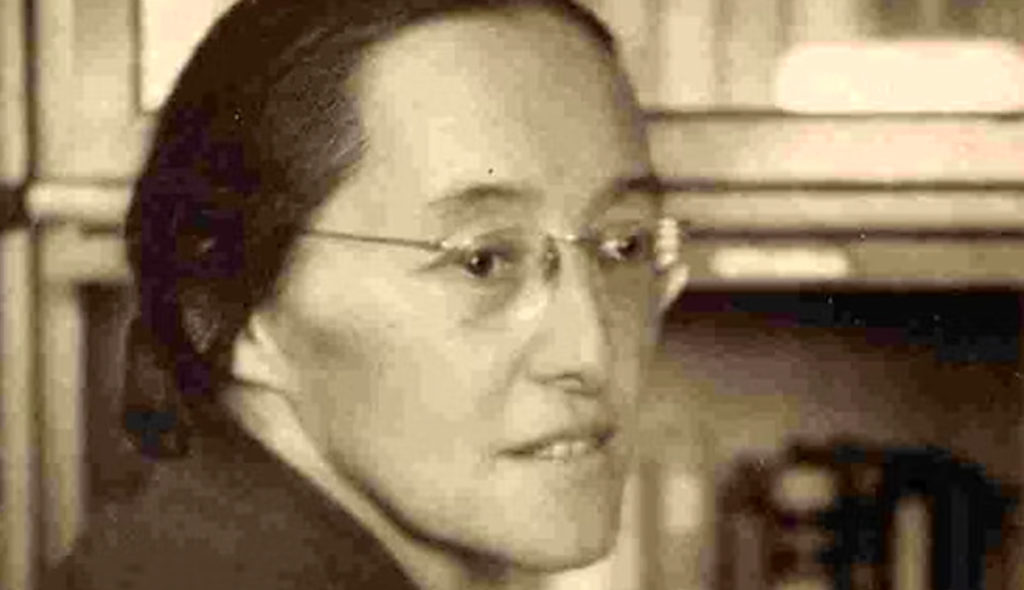
How do we face this ongoing crisis? The obvious answer is to keep our heads in the game through prayer and the pursuit of a life of charity in the strength of the sacraments. However, as the rational creatures we are, there are thinkers who can help us make sense of our circumstances. Ida Friederike Görres (1901-1971) has become one of my go-to authors for trying to think things through with the mind of Christ.
Although largely overshadowed after the Council, this half-Austrian, half-Japanese, German-speaking Catholic was extraordinarily popular and respected during her lifetime by notable figures such as then-Father Joseph Ratzinger, who delivered the homily at her funeral Mass. Catholics can be grateful to Jennifer Bryson of the Ethics and Public Policy Center in Washington for her ongoing work translating Görres’s works over the past several years.
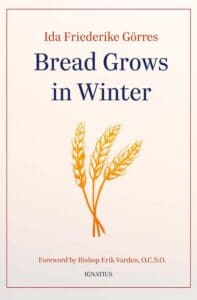
Among the recently translated works is Bread Grows in Winter (Ignatius, 2025), a collection of lectures given in 1969 and 1970, at the height of the first wave of the post-conciliar crisis that we still suffer, despite the efforts of Popes John Paul II and Benedict XVI.
In his preface to the first English edition of the book, Bishop Erik Varden testifies to having carried with him a German copy of the work, purchased in a «junk shop,» during his travels in the early years of his episcopal ministry. «In trying to figure out how to exercise ministry, I found in Görres a sure guide who unfailingly called me to focus on the essentials.»
What Varden sees in Görres is an ability to «comprehend great tensions within herself» and to avoid one-sided approaches to theology and the life of the Church.
The first chapter, «Our Image of Christ: A Letter,» begins by comparing the image of Christ to that of a mountain visible from countless angles and under various kinds of light and shadow. For her, theology and dogma are the «maps» by which we approach that mountain. Like Newman and his friend Ratzinger, Görres understands that even the infallible propositions the Church gives us do not exhaust Catholic truth.
It is only the mystical Church in its entirety, «the great entity, the mysterious living being, rooted in the days of the Apostles and that will experience the Day of Judgment,» that can see the full vision; and the part of the Church on earth that discerns its contours and details does so over extended periods of time.
This explanation of how the Church progressively clarifies its vision of the details of Revelation is deeply in tune with the great Saint John Henry Newman. So too is Görres’s understanding that the Church’s progress is not a straight line. In each age one part of the vision of Christ is emphasized, often to a heretical extreme, and the Church must struggle to recover the whole, advancing «in zigzags and spirals.»
Even in our own age, Görres points out, there is theological wheat among the tares. Therefore, Catholics who defend the truth must be aware that it is hidden even amid one-sided and ultimately erroneous presentations of the faith. We must have serenity regarding the Lord’s ability to draw straight doctrinal lines from crooked theological proposals.
Görres displays that serenity in a serene yet forceful treatment of true doctrinal development, the nature and spirituality required of theology, and the question of priestly celibacy, among other topics of interest, in this valuable volume.
In two chapters, «Demolition Troops in the Church» and «Trusting the Church,» she shows her ability both to make forceful diagnoses of the Church’s gloomy present and to maintain an unshakable faith in the inevitable victory of the eternal.
She identifies the crisis as a trahison des clercs (betrayal of the intellectuals/clergy), which has many fathers, many of them theologians and many called «Father.» Priests who attempt, in the name of «maturity,» to «destroy» the Catholic spiritual anchor «with an axe and a hammer,» she writes, practice «a form of genuine soul-murder… a spiritual genocide.»
Bishops and even popes seem guilty of encouraging or being paralyzed before such madness. Is it any wonder, she asks, that people drift away or are tormented by fear?
Görres ultimately comforts readers by pointing prophetically to «Christ, the Sun,» who «touches» the Church «again and fills it once more with an increasing light.»
Wise words for difficult times.
About the Author
Dr. David P. Deavel, associate professor of Theology at the University of St. Thomas-Houston, has been named chair of the Department of Theology. He assumes this leadership role at a time when the department is charting a path by implementing a new curriculum for its master’s program in Historical Theology, and continues to work with St. Mary Seminary to form priests, deacons, and laity who will serve Christ and His Church with minds and hearts prepared.