


By Robert Royal
I don’t usually comment on movies, nor, to tell the truth, do I usually worry much about them. I leave that to those who do care and are much better at it (see: Brad Miner). Most films seem to me to have a greater cultural impact than they deserve. I can’t deny that they have replaced the kind of fiction that once shaped middle-class culture. So my lack of interest is a failing, in a way. But in a culture like ours, from which Christianity is increasingly excluded, when a film like Christopher Nolan’s newly released Odyssey generates such a stir in midsummer—about a book nearly 3,000 years old—it’s worth considering what’s happening with some of our oldest cultural foundations.
So, given my teenage obsessions with Greek and Latin, and current cinematic enthusiasms, I made an early trip to the movies this weekend.
It’s easy to pick holes in cinematic versions of the classics. Troy, with Brad Pitt as Achilles, took enormous liberties (a word too weak, really) with Homer, but in my judgment it was worth seeing and even rewatching on its own merits. There’s a substantial subset of Tolkien readers who can’t stand Peter Jackson’s trilogy or what they consider all its works and pomps (I’m not one of them and visit it often). Fortunately, Dante’s Comedy is absolutely unfilmable, though some reckless directors have tried.
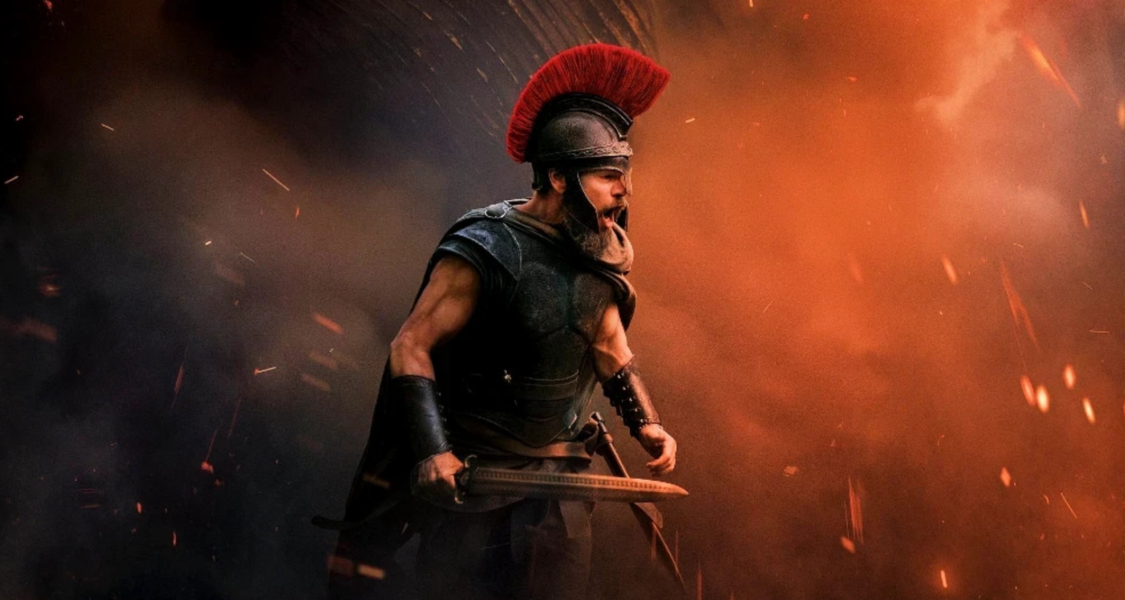
Nolan has already been attacked for his mangling of several episodes, the change in the story arc, the obvious anachronisms, and the non-traditional casting (a Black Helen of Troy and a “trans” Sinon?). Major flaws, to be sure, but he admitted he wanted to create something that spoke to the audience, and that it was perhaps calculated to sell. And as they already said in ancient Greece, “Even Homer nods.” In the end, his Odyssey deserves a look, though it would be an abuse to call it Homer.
Besides, even in literary terms, there has been much to object to in most later versions of Homer. The eighteenth-century classical scholar Richard Bentley, reviewing the translation by the great Alexander Pope (an English Catholic), noted: “It is a very pretty poem, Mr. Pope, but you must not call it Homer.” That’s what almost anyone who has struggled with Homer’s Greek feels about the translations.
Recent translators—Lattimore, Fagles, Fitzgerald—are readable, but not so pretty. The much-promoted, postmodern, feminist-influenced version by Emily Wilson (Odysseus is sometimes presented as a villain) does not impress this writer. It begins:
Tell me about a complicated man.
Muse, tell me how he wandered and was lost
when he had destroyed the sacred city of Troy.
Ah yes, the Greek man, regarded as a hero for millennia, was “complicated” and destroyed a sacred city. The distortions she makes of key elements of the story—Nolan seems to have followed her on several points—betray Homer, about which I’ll say more below.
A joke used to circulate in classics departments about the insoluble question of the “authorship” of the Iliad and the Odyssey: “Homer didn’t write them; another poet of the same name did.”
What can’t be disputed is that the “author” knew how to tell a story (Nolan does too). In the ancient world, the Iliad was said to be the vigorous, martial work of Homer’s youth. In old age he had softened and produced the magical, mystical episodes of the Odyssey. Modern readers tend to prefer the latter over the former, which probably reflects how little we appreciate armed defenders who make a peaceful life possible, and how much we prefer simply to be entertained.
Even so, those old epic poems speak to us, even decades after our educators made the fatal, perhaps destructive decision not to teach texts like the Bible, Homer, the Greek and Roman philosophers, the Church Fathers, and many other foundations of our civilization.
Among their deeply human themes, the ancient epics are also notably concerned with “the gods” and the afterlife, as well as their interactions and importance for this world. Circe tells Odysseus he must go to the land of the Cimmerians, at the edge of the world, perform certain rites, and in particular shed blood to summon the souls of the dead and learn how to return home (portrayed chillingly in the film). In Virgil’s Aeneid, Aeneas must enter the underworld with the Sibyl of Cumae to learn—in conversation with the dead, particularly the shade of his father—about his destiny: to found a new city and home, Rome.
Nolan’s Odyssey is not Homer and does not attempt to be. It is powerful in its own way. But the most radical difference between Homer and Nolan is that the Odyssey ends, definitively, with Odysseus at home with his wife and his kingdom restored. Patrick Deneen of Notre Dame argues in his book American Odyssey (published this week) that Homer’s ending signals how the private sphere (marriage and family) anchors the public one. We have already seen how separating the two is a disaster at both ends.
By contrast, at the end, Nolan’s Penelope and Odysseus leave their son Telemachus in charge and set off on a kind of romantic adventure around the world.
It is a shocking and imagined change—rejected in the past. Dante’s Ulysses (his Latin name) is in Hell, precisely because, after returning home, Dante imagined he became a “false counselor” by appealing to a false “virtue” to persuade his men to set out again. He confesses:
neither tenderness for my son, nor pity
for my old father, nor the due love
for Penelope, which would have made her glad,
could overcome in me the desire
I had to gain experience of the world
and of human vices and virtues…
«Brothers,» I said…
…do not deny
the experience, following
the Sun, of the world without people.
Consider your seed:
you were not made to live like brutes,
but to pursue virtue and knowledge.
(Inf. XXVI)
Dante’s Ulysses seems to defend excessive curiosity well; Nolan’s couple sets off on a retirement cruise, with bad consequences likely on the horizon.
In fact, in Nolan’s account (via Emily Wilson, it seems), Odysseus’s cunning was really a betrayal of Zeus’s moral order: the Trojan Horse—his trick to win the war after ten years of fighting—was presented as a peace offering to the Trojans, but was used treacherously, against ancient etiquette, to carry out mutilation and destruction. Odysseus tells Penelope that his moral violation will bring about the fall of his civilization, which will rise again, at some point. And it will flourish, until men once again forget the lessons about disobeying the divine order.
And what is even more surprising, Nolan’s Calypso reverses the central thread of Homer’s story by saying that Odysseus suffered from something like a very un-archaic post-traumatic stress—and that he really did not want to return home—until he surrendered to the will of Zeus.
Nolan describes himself as a non-practicing Catholic, and several evident contemporary and Christian elements have been adapted to an archaic, pre-Christian world in this powerful film, which is not Homer, but hints at many things that are. It is worth seeing and reflecting on. But read the original.
About the author:
Robert Royal is editor-in-chief of The Catholic Thing and president of the Faith & Reason Institute in Washington, D.C. His most recent books are The Martyrs of the New Millennium: The Global Persecution of Christians in the Twenty-First Century, Columbus and the Crisis of the West and A Deeper Vision: The Catholic Intellectual Tradition in the Twentieth Century.