


By Francis X. Maier
The historian Henry Adams once described politics as “the systematic organization of hatreds,” and that often seems to be where we are in these last days before our nation’s 250th birthday. As a Wall Street Journal column noted earlier this week, the chronic Democratic hatred of Donald Trump, together with Trump’s own many “real and imagined sins,” gave the left permission to go off the rails, with the result that “radical, dangerous, and merely stupid [ideas] are not only permissible but obligatory” on the Democratic Party’s growing left flank.
Our need to escape the constant political hysteria of the moment is one reason we bury ourselves in entertainment. We would all like to find a safe, quiet place to live, even if its name is Wonderland.
Unfortunately, as Christians we cannot simply ignore politics. We are supposed to be leaven in the world. Therefore, we cannot simply retreat to the hills the way St. Benedict did. Living our faith in the real world means we need to help build a better society. And in 2026, that is harder than ever. What a Christian understands by “the common good” and “human dignity,” and what a non-believer understands by exactly the same words, can be very different. The issue of abortion is far from the only relevant example.
Three simple principles guide Christian political thought. First, we must serve the common good: the true common good, which is not the same as providing “the greatest number of things for the greatest number of people.” Second, we must defend the dignity of the individual person. And third, we must do these things in the right order of priority.
For example, people cannot demand respect for their desires and behaviors if those things cripple the general welfare. Likewise, we cannot serve the common good by degrading one another or exploiting people, especially the weak, the poor, and the innocent.
And while many social problems need our attention—things like hunger, health care, and just immigration policies—no issue is more fundamental to human dignity than the right to life. Without the right to life, all other human rights are simply pious sentiments dressed in idealistic language.
These principles should be obvious. But in the course of my adult life, the entire landscape of American culture has changed dramatically. Americans who self-identify as atheist, agnostic, or having no religious affiliation rose from 16 percent of the population in 2007 to 29 percent in 2026.
And that has serious implications, because religious freedom—one of the cornerstones of the American Founding we celebrate this week—cannot be a concern for people who have no religious faith. In fact, outright hatred of Christian believers is on the rise in this country.
My point is this. The nation we think we live in is not the one we actually live in now. Our civil institutions and our vocabulary may look the same, but the realities of power are different.
Without God, man always ends up in some form of idolatry. When God leaves the stage, the State expands to take His place. And God has been leaving the stage of our public life—or, all too often, being pushed off the stage—for decades.
To borrow some thoughts from the archbishop emeritus of Philadelphia, we would do well to read two things:
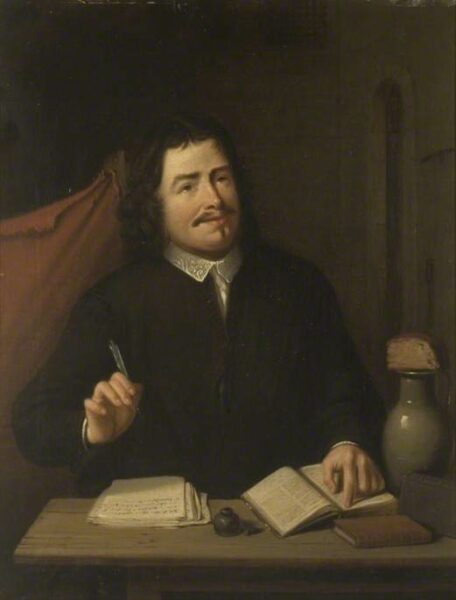
Neither is the Declaration of Independence. Neither is the Constitution. Neither has anything obviously to do with politics. The first is John Bunyan’s novel, The Pilgrim’s Progress. And the second is Nathaniel Hawthorne’s short story, “The Celestial Railroad”.
Bunyan’s book was written in 1678 and is one of the great religious allegories of the world. More copies of The Pilgrim’s Progress have been printed than of any other book in history except the Bible. It embodies the primitive hunger for God of the Puritans who inspired America’s first settlers and shaped the roots of our country.
Hawthorne’s story, written in 1843, is a very different piece. It is one of the great satires of American literature. Hawthorne himself was a descendant of Puritans, and he takes Bunyan’s pious allegory—the journey of man on the road back Home, to Heaven—and retells it through the lens of America’s worst faults: our appetite for comfort, easy answers, shortcuts, quick fixes, material success, and false religious piety.
One could argue that this is where we find ourselves now. Aleksandr Solzhenitsyn once said that “prosperity breeds idiots,” and it is hard to argue with his logic when today’s Lavazza coffee commercials (to take just one of many examples) claim that “pleasure makes us human.”
We live in a deeply materialistic, consumerist culture. I love my country. I love its extraordinary achievements and its best ideals. But as the United States turns 250, we could all use a little humility, austerity, and personal repentance, along with the grandiloquence and celebration.
Happily, we have good reasons to keep hope.
Despite the turmoil that too often seems to fill our headlines, human beings want and need to love. Anger eats at the heart of the world and, ultimately, we cannot bear it. God made us for better things. That is why we all have a longing for beauty. That is why we all hunger for intimacy, for friendship with others, and for the fruitfulness of new life.
The love we show in our choices and actions matters because our personal witness shapes others and, through others, God reforms the world. Benedict XVI described the work of Christian political engagement as an expression of charity and justice; in other words, as an expression of love for our nation, our community, and the people around us. And so it is.
So here is the lesson: the most powerful “political” act we can perform in this or any year, election or not, is to live as if we really believed what we claim to believe as Christians. If we do that simple, radical thing, then the world will begin to change; not quickly, not dramatically, but deeply, one soul and one community at a time. And in the end, that is what we will be judged on.
About the Author
Francis X. Maier is a senior fellow for Catholic studies at the Ethics and Public Policy Center. He is the author of True Confessions: Voices of Faith from a Life in the Church.