


By Fr. Paul D. Scalia
How much is something worth? In economics, it’s relative. Prices fluctuate. Markets rise and fall. Something is worth what someone is willing to pay for it. In the 1980s, my vinyl records were worth a lot. With the arrival of CDs, they were worth almost nothing. Then, when vinyl came back into fashion, they gained new value.
The problem is that we apply that same economic and relativistic thinking to other areas. We do not recognize the intrinsic value of anything. That is why our leaders do not treat their offices as worthy of respect. Instead of submitting to the authority of the office, they manipulate it for their own ends. In our culture of death, even people are valued only for what they provide us or for what they contribute to society. We think that way about ourselves, finding our worth in how much we earn, achieve, or how many accolades we receive. We treat marriage and family as if they are valuable for the goods they bring us—like a benefit for the spouses, perhaps—but not as something intrinsically worthy of sacrifice and perseverance.
Worse still, we apply that same consumerist mindset to God. He has value insofar as He helps me. As a priest, one of the most disheartening things is when people say, “God is really important in my life.” Really important. You know, like my dog and my yoga instructor. It’s a phrase that reveals how we relativize the value of God.
So, how much is God worth? Three times in today’s Gospel (Matthew 10:37-42), our Lord uses the phrase worthy of me. It is striking. He uses it to place His value above that of family: Whoever loves father or mother more… whoever loves son or daughter more than me is not worthy of me. And even above our own lives: whoever does not take up his cross and follow me is not worthy of me. Therefore, His worth transcends the most important things in this world. It is not only intrinsic, but infinite.
Jesus’ words shock us for these reasons. But even more so because we have a very diminished notion of value in general. In a culture that relativizes the value of everything, it is a jolt to the system to hear that God is worth losing parents, children, and our own lives.
What our Lord says here is a claim that only God can make. It is a powerful reminder of His transcendence and of His right to our total devotion and love. We are always tempted to bring God down to our level, to tame His transcendence, and to place Him among the many things we “value.” We never get rid of Him, of course, because God is really important in our lives. But in light of Jesus’ words in the Gospel, we must renew our minds and recognize the absolute value of God.
And how much are you worth? Only God is entirely good and worthy of all love. That is a shock to our relativistic mindset. But even more astonishing is that He makes us sharers in His eternal worth. He creates us in His image and likeness. The life of every human person has intrinsic value—not because of what it produces or does—but because God has given each of us a share in His dignity.
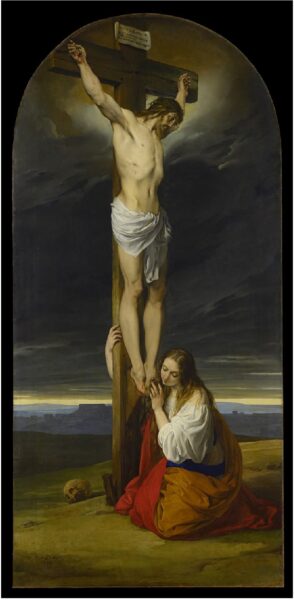
Interestingly, we can approach this from an economic mindset: you are worth what God is willing to pay for you. You are worth the death of the Son of God. He not only gave you a share in His dignity at Creation, but also a share in His own life at Baptism. We demonstrate the value of God by preferring nothing to Him. He demonstrates our value by dying for us.
The Christian life is therefore grounded in the appropriate, just, and worthy response to what God has done. It is not an effort to make ourselves worthy or to earn our own dignity. It is about recognizing that He has revealed our worth by dying for us. Now we must live in a manner worthy of the calling we have received (cf. Ephesians 4:1).
A central element of this is worship (in English worship, a word that comes from the Old English worth-ship). It means to ascribe value to something or, better, to recognize its value; to esteem something—or Someone—above all else, not for any benefit we might gain, but simply because He is good and deserving of all our love and adoration. We must worship God, not merely value Him. This points to the marriage supper of the Lamb and to our participation in it at Mass. Worthy is the Lamb!, the saints proclaim in Heaven (Revelation 5:12). At Mass here below, we join in that acclamation.
Our worship also fulfills what Jesus adds in this passage: Whoever finds his life will lose it, and whoever loses his life for my sake will find it. We usually take these words in their moral and spiritual sense. They are often reduced to “You have to believe in something greater than yourself.” But we should understand them first as a statement about worship, about recognizing the infinite and transcendent value of God.
When we seek God only for the benefit He brings us, we miss the point. We lose our life. But when we forget ourselves and proclaim Him as worthy of all worship and praise, then we find our true worth. We find our life. It is by proclaiming that the Lamb is worthy that we live out our true worth.
About the Author
Fr. Paul D. Scalia is a priest of the Diocese of Arlington, Virginia, where he serves as Episcopal Vicar for Clergy and Pastor of Saint James in Falls Church. He is the author of That Nothing May Be Lost: Reflections on Catholic Doctrine and Devotion and editor of Sermons in Times of Crisis: Twelve Homilies to Stir Your Soul.