


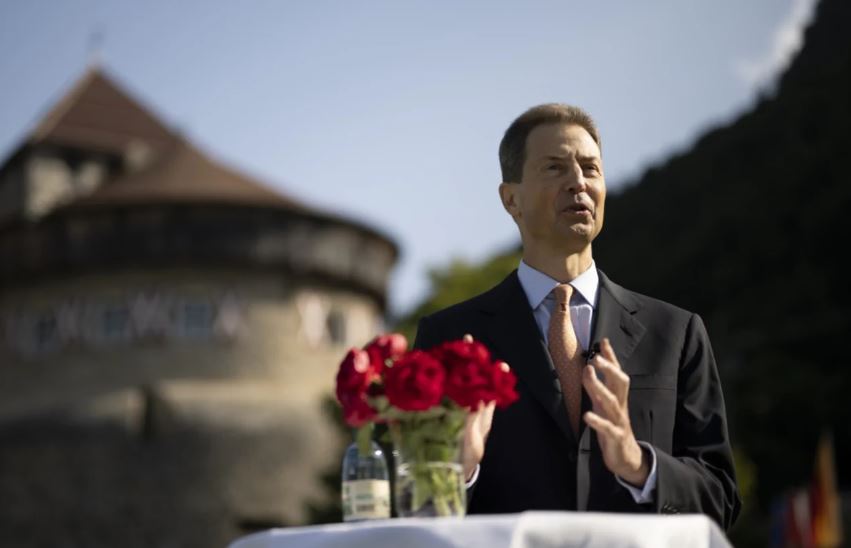
While several small European states with a Catholic tradition face growing pressure to adapt their laws to the dominant pro-abortion agenda in the West, Liechtenstein once again becomes an uncomfortable exception. A new initiative seeks to introduce unrestricted abortion during the first twelve weeks of pregnancy, but Hereditary Prince Alois has already announced that he is prepared to veto it even if it gains support at the ballot box.
The issue goes far beyond a simple legislative reform. What is at stake is whether one of the few European countries that still recognizes significant legal protection for the child before birth will ultimately accept the same logic that has prevailed in much of the continent: that human life may cease to be protected when it becomes inconvenient, unwanted, or dependent on the will of others.
The last Catholic strongholds under pressure
Liechtenstein is not the only European microstate under pressure. In recent years, countries with strong Andorra or Monaco have faced intense debates on the decriminalization of abortion and on the role their historic institutions must still play in defending life.
However, the case of Liechtenstein has its own distinctiveness. Not only does it maintain more restrictive legislation than the vast majority of European countries, but it also preserves an institution that has practically disappeared in today’s Europe: a political authority willing to publicly bear the cost of defending the unborn.
The new initiative, called the “Deadline Solution for Liechtenstein,” aims to introduce a model similar to the one in force in Switzerland, allowing unrestricted abortion during the first twelve weeks of gestation. Its promoters argue that the Principality must align with European standards and recognize what they consider a woman’s right.
But for those opposing the reform, the question is much simpler: no supposed right can be based on the deliberate elimination of an innocent human life.
Prince Alois raises his voice again
This week, Hereditary Prince Alois announced that he would veto the proposal if it were approved. According to him, the initiative does not adequately guarantee “the fundamental legal good of the protection of life.”
While most political leaders avoid any questioning of the dominant pro-abortion ideology, the heir to the throne of Liechtenstein has decided to publicly remind everyone that the first duty of a State is to protect human life, especially when it cannot defend itself.
The precedent set in 2011
This is not the first time Liechtenstein has faced this battle.
In 2011, citizens were already called to vote on an almost identical initiative aimed at introducing unrestricted abortion up to the twelfth week. At that time, Prince Alois also announced that he would use his right of veto if the proposal were approved.
Ultimately, the project was rejected by 52.3% of voters.
Fifteen years later, the situation is repeating itself. The difference is that the European context has become even more hostile toward any attempt to defend life before birth.
The great absentee from the debate: the child who will die
As is usual in abortion debates, much of the discussion revolves around the rights, desires, and interests of adults.
Talk centers on self-determination, freedom of choice, and reproductive rights. Much less frequently is mention made of the only person who would lose absolutely everything as a result of the reform: the child living in the mother’s womb.
The initiative does not merely seek to amend an article of the Criminal Code. What it proposes is that the State cease protecting a certain category of human beings during the first weeks of their existence.
However, biological development does not transform a non-human being into a human being. The twelve-week-old child is the same individual who, months later, will be born, grow, and develop their life. The only thing that changes is their degree of development and their level of dependence.
A battle that transcends Liechtenstein’s borders
What is being debated today in this small Alpine country goes far beyond its borders.
In a Europe where abortion has ceased to be presented as an exception and has progressively become a right protected and promoted by public authorities, Liechtenstein continues to recall an uncomfortable truth for the dominant culture: that human rights are truly universal only if they also include the smallest, weakest, and most defenseless human being.
That is why the battle ahead does not simply pit supporters and opponents of a legal reform against each other. In reality, it pits two radically different conceptions of human dignity against each other: one that holds that every life deserves protection simply by virtue of existing, and another that conditions that right on the will, convenience, or desire of those who have power over it.
Liechtenstein will once again have to decide which side it wants to stand on.