


By Randall Smith
Some people wonder: why stay in this life if the next life is so wonderful? In fact, why did God send us into this world if His ultimate goal for us is union with Him? Why not just take us straight there? Why send us here, risking that things might go wrong? It’s as if God were saying, “I’m putting you in this fragile ethical situation where you’ll be almost entirely outmatched, and although I want you to succeed, if you mess everything up, you’re lost. Good luck!”
Everything about the Christian faith tells us that this is not what God is doing. So why are we in this world when we are destined for the next? Perhaps a little thought experiment will help.
Suppose there is a loving Creator who freely wishes to share that love with some creatures, a God who, as Pope Benedict XVI said, “created the universe to enter into a love story with humanity.”
How would He do it?
Love must be freely received and freely given. Therefore, God cannot keep these creatures with Him, “under His wing,” so to speak, because that would not allow them any real freedom, just as children who remain always at home, even with very loving parents, do not have true freedom to become who they are meant to be.
So God’s creatures cannot remain always and only with and in Him; they must go out to develop in a place and in circumstances where they can learn to love freely.
It would have to be a place vast enough to keep their minds ever expanding, gradually preparing them for union with their transcendent Source. It would need to have enough resources to sustain these creatures, but not be perfect in every way. If it were, people would only choose God as a source of pleasant things, as if He were merely the divine “caretaker.”
That is not love; it is dependence. To learn to love as adults, they cannot be treated as children forever. That is why this Creator would have to place us outside and away from Him, in a certain sense. And He cannot make Himself visible at all times, lest we simply depend on Him constantly to fix our problems and pains and to provide for ourselves and others. If He does, we do not grow in love. We simply exist, like spoiled children.
To learn to be selfless lovers (which is the only real kind), these creatures would need to learn to put the needs of others before their own. But how would they do that if they were in a world without needs? Likewise, without struggle, there can be no true virtue. To develop virtue, people must be tested, “like gold tested in the fire.”
And if we are in a world with others like ourselves—as we must be if we are to learn to love (loving trees or dogs will not be enough because they are too submissive to our wills)—and if those others are as free as we are (free to love or not to love), then it is simply a fact that, occasionally, or perhaps quite often, they will choose not to love. They will choose to be selfish rather than selfless, to dominate others rather than to serve, and to take what they can get rather than to share.
What happens then?
You do not have to struggle much to love people who are perfect. Love is perfected by the challenge of loving people who are not perfect. Learning to deal with those who say NO to love and instead choose to dominate would be another important way of developing the love these creatures need.
It would also be especially important, since each of these creatures would need to learn, in dealing with others who say no to love, how to treat themselves when they make the same mistakes. A world in which there is freedom to love or not to love must have a love capable of dealing with those who say no.
To be prepared to love God, these creatures would need to face first smaller choices, then larger ones. They would need to be able to make mistakes and learn from them, learning step by step to embrace the yes to God’s love.
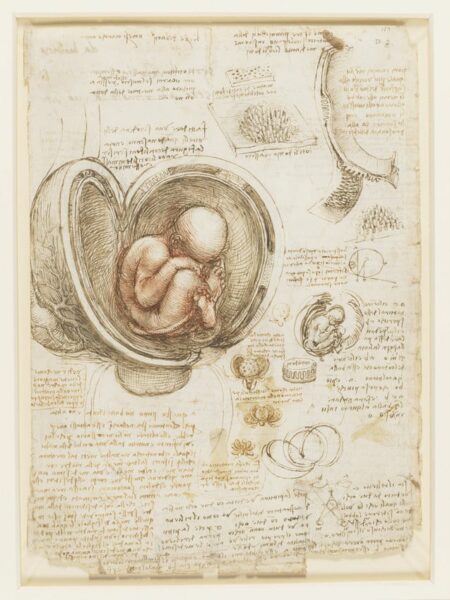
From this perspective, we might think of this life as a kind of “womb” that prepares us for the next, fuller life. But you cannot skip this period of “gestation” any more than a baby can skip its time in the mother’s womb.
And yet, if someone had approached you in the womb and tried to “sell” you the idea of being born (imagining for a moment that you had been a conscious, thinking being), you would probably have resisted, because (a) you would not know what life after birth would be like, and (b) even if you believed it existed, it would be so different from the life you had experienced that it might sound incredible or not entirely desirable.
Walking and running instead of floating in a pleasant, warm amniotic fluid? Doing paperwork? Solving complex math problems? Having to find a bathroom every time you need to go? And that whole “being born” thing into this “other world”—it sounds very unpleasant. You might decide it would make more sense simply to stay in the place you know.
The womb has its benefits, but it is only temporary. Real life lies beyond. If someone told you that in the womb, it would seem incredible. Would it have helped if it had been your mother who told you this? Even then it might seem incredible, but she—the one who carries you, the one willing to suffer to give you birth—should at least have some credibility.
But if this life is a womb that prepares us for union with the divine communion of love, then we had better use the time wisely, to be ready with a yes when the Bridegroom calls.
About the author
Randall Smith holds the J. Michael Miller Endowed Chair in Theology at the University of St. Thomas in Houston. His books include Bonaventure’s Journey of the Soul into God: Context and Commentary, From Here to Eternity: Reflections on Death, Immortality, and the Resurrection of the Body, Aquinas, Bonaventure, and the Scholastic Culture of Medieval Paris: Preaching, Prologues, and Biblical Commentary, Reading the Sermons of Thomas Aquinas: A Beginner’s Guide. His forthcoming book, Mapping Bonaventure’s Itinerarium: Context and Commentary, will be published by Emmaus Press this summer. His articles can be found here: http://t4.stthom.edu/users/smith/portfolio/