


By Casey Chalk
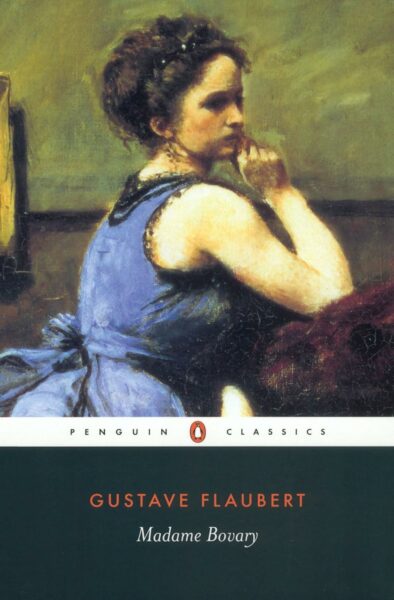
When the classic French novel Madame Bovary first appeared in 1856, public prosecutors branded the serialized novel obscene—outrage aux bonnes mœurs et à la religion (“an outrage to public morals and to religion”)—given the author Gustave Flaubert’s intimate portrayal of a bored bourgeois woman who becomes entangled in multiple extramarital affairs. As often happens in such cases, the subsequent trial against Flaubert only drew more public attention to the book, and after his acquittal the following year it became a bestseller. When it was translated into English two decades later, Madame Bovary became a worldwide phenomenon. The irony today is that Flaubert’s depiction of Bovary’s sensual adventures would barely merit a “teen-appropriate” rating.
The Catholic Church does not fare well in Flaubert’s celebrated masterpiece. One character describes uneducated lay Catholics as people who cling to “prejudices” and “traditional forms,” relying on their “novenas, and relics, and the parish priest… instead of considering it natural to go see the doctor or the pharmacist.”
Pious Catholic literature is described as “condescending,” “sentimental,” and “sickly sweet.” The local priest is portrayed as ignorant yet self-assured, unable to effectively defend the ancient religion against skeptics influenced by the Enlightenment.
Whatever Flaubert’s intentions may have been with the novel, literary critics in the century and a half since the publication of Madame Bovary have noted that the titular character is actually quite banal—a person who is morally and intellectually stunted and becomes increasingly ridiculous and unhinged the deeper she sinks into her sins.
She is the embodiment of the romantic: both her intellectual and moral life are completely detached from the people and the world around her. And in that sense, she closely resembles the immature, atomized, digitally addicted modern person.
We are all well aware of the effect of smartphones on human attention span and cognitive performance, a fact increasingly well documented by empirical research. Both smartphones and social media also distort our conception of reality and relationships toward the extreme or idealized, given their tendency toward filtered and curated self-presentation and algorithmic amplification.
It used to be common to speak with a stranger in public; now it is considered awkward and even potentially rude to interrupt someone glued to their device. There is even a word to describe ignoring other people in favor of smartphones: phubbing.
Then there are the emotional and intellectual dangers posed by artificial intelligence. A study recently published by the Institute for Family Studies and the Wheatley Institute at Brigham Young University found that one in seven young adults in committed relationships regularly communicates with AI as a romantic partner. Nearly a third of respondents had experimented with one of these romantic bots at least once.
Interpreting that data in light of an ongoing epidemic of pornography addiction, we are talking about generations of Americans whose conceptions of romance and intimacy are alarmingly detached from reality, centered on idealized fictions that infantilize and morally impoverish the user. Artificial romantic partners and pornographic videos satisfy one’s limited and (often) progressively depraved desires.
Those who succumb to these temptations are, without a doubt, ill-prepared not only for the challenges (and wonders) of true relational intimacy; they are also poorly conditioned for the spiritual life, which requires a capacity for contrition and contemplation.
All of this is evident in the character of Madame Bovary. As married life turns into monotony, she develops an obsession with sentimental novels that fosters a highly idealized conception of the world. This, in turn, leads her to hedonistically desire beauty, wealth, status, and unrestrained passion.
Flaubert poignantly portrays the instability this provokes: “She longed to travel; she longed to return to live in her convent. She wanted to die, and she wanted to live in Paris.” Over time, she is barely able to conceal her contempt for people or for her circumstances, and she develops the habit of provoking others unnecessarily.
In the course of her romantic adventures, Madame Bovary increasingly neglects her young daughter; the mother is simply too absorbed in herself, too given over to her impulses and capricious affections. Of her love affairs, Flaubert writes: “It was no longer love; it was more like perpetual seduction… she was the beloved of all novels, the heroine of all dramas, the vague she of all volumes of poetry.”
In her mind, Bovary is enacting some version of the fantasies she has read; in reality, she is ruining her soul and her marriage.
As time passes, Madame Bovary’s sexual affairs require additional sins. Lies are not only necessary to preserve the secrecy of her flirtations, but they become “an obsession, a pleasure.” She spends extravagantly on luxurious clothing and food during her weekly stays in the city where she meets her second lover.
She becomes enraged and singularly erratic. There is an addictive quality to her romantic affections, and she seems to go through periods of withdrawal when separated from her lovers. For her sins, her ultimate end (and that of her family) is misery.
We have been more than two decades into our great global experiment with social media. Our relationship with smartphones is nearly as old. The era of artificial intelligence has barely begun, and the initial effects on our souls and relationships are not promising.
We feel that these technologies are making us, like Madame Bovary, more impulsive and scattered, less focused, peaceful, and content. Worse still, we see all of this and yet often cannot prevent their intrusion into every element of daily life.
Our world is adopting the self-destructive qualities of Madame Bovary, as the Pope’s recent encyclical implicitly warns us. Impressionable youth, the most susceptible to the depression, anxiety, and self-worship engendered by modern technology, need both a lifestyle and a worldview that is, if not Luddite, at least suspicious of anything that separates us from others, from the natural world, and, most notably, from the divine.
Given the way industry leaders describe their envisioned future, we have every reason to be wary. “Touch grass.” “Go into your room, close the door, and pray to your Father” (Matthew 6:6). And read Madame Bovary. Because Flaubert knew something important.
About the Author
Casey Chalk is the author of The Obscurity of Scripture and The Persecuted. He is a contributor to Crisis Magazine, The American Conservative, and New Oxford Review. He holds degrees in history and education from the University of Virginia and a master’s degree in theology from Christendom College.