


By Francis X. Maier
Now in my late seventies and a veteran of 56 annual performance reviews by a beautiful and highly intelligent Catholic woman, I feel qualified to offer some reflections on the nature of an “acceptable Christian man,” in his married variant.
In no particular order, he must be: a fruitful provider; a good dad; amusing, within traditional moral parameters; and an endearing but stubbornly long-term construction project. This last trait is deceptively vital. It keeps the most gifted, shrewd, and impatient Christian wife engaged for the whole journey. The reason for this should be obvious. The perfect husband is always just a few (dozen) well-intentioned modifications away from perfection, if only he would listen.
Enough humor. In the real world, the Christian man needs, above all, to be faithful: faithful to his wife and children, faithful to his Church, and faithful to Jesus Christ. No exceptions. No excuses. No escape clauses. Fidelity matters. This is the most important.
There is more to becoming a man, of course. It is worth reviewing the relevant comments on the subject by a great Catholic pastor, Archbishop Emeritus of Philadelphia Charles Chaput. Note the 22 rules for the conduct of a Christian man that he borrows from Erasmus. Note also his reflection on the history and essence of Christian chivalry. His entire address is worth engraving on the male heart, but especially his closing thought: “The male condition, brothers, is a matter of biology. It simply happens. Manhood must be learned, earned, and taught.”
How does a young man achieve some of that? Let us begin with a few simple facts: mothers shape the early years of their sons’ lives. Wives anchor their husbands in reality and purpose. But in the end, men become better men through the example and friendship of other, better men.
Throughout my lifetime, American culture has recognized the dignity of women more fully than ever before and has created new avenues for their leadership in dramatic and novel ways. As a man with an extraordinary wife, daughter, and granddaughters, I can celebrate that with enthusiasm, setting aside anarchic sex and homage to the “rights” of prenatal infanticide.
But in the process, that same culture has often neglected and even deliberately degraded the formation of young men. And that has dire consequences. “Toxic masculinity” is not solved by effeminizing young males. The result of that mistake is a bumper crop of drones, Peter Pans, predators, pornography addicts, and lost boys; in other words, a shortage of good, selfless, and virtuous men equipped to provide and protect. That is the urgent problem we now face.
So how do we address it?
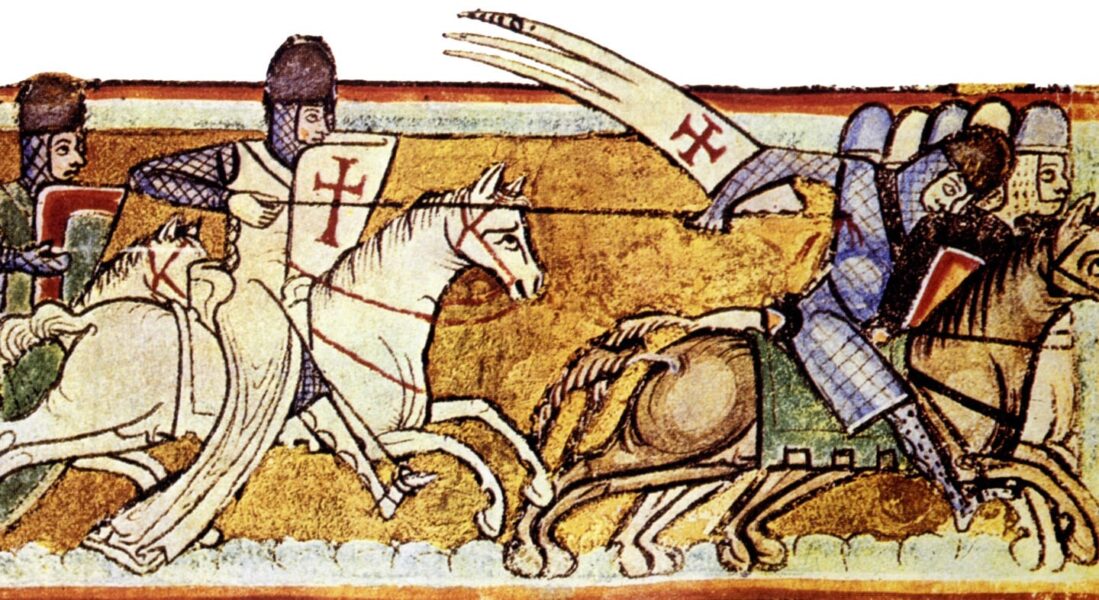
Exactly 900 years ago, a new religious order of fighting men took root in the Holy Land: the “Poor Fellow-Soldiers of Christ and of the Temple of Solomon.” History knows them better as the Knights Templar. The animating core of the Templars, as the archbishop stressed in his earlier remarks, was a singularly demanding form of love, an urgent need for the age: “to build a new order of new Christian men, skilled in arms, living as brothers, devoted to prayer, austerity, and chastity, and radically dedicated to the service of the Church and her people, especially the weak.”
He described the continuing value of the Templar spirit for today’s modern world, different (but not so different), in these words:
[Living] the Gospel involves a very real kind of spiritual warfare; a struggle against evil in ourselves and in the world around us. Our first weapons must always be generosity, patience, mercy, forgiveness, the eagerness to listen and understand others, a strong personal witness of faith, and speaking the truth unambiguously with love. For the Christian, violence is always a last and unwanted resort. It should be used only in self-defense or to defend others. But at the same time, justice and courage are also key Christian virtues. And I believe they have a special meaning in the life of the Christian man.
It so happens that the ideal of Christian chivalry has never really disappeared. It persists today in a variety of good Christian apostolates focused on rebuilding healthy evangelical manhood. And among the most promising (as befits) is one created specifically for high-school-aged young men: The Templars.
The apostolate describes itself and its mission this way:
“Templars – Knights of the Holy Temple” is a program of Unfinished, a Catholic 501(c)3 nonprofit organization led by many of the founding collaborators of Exodus 90. Templars is committed to forming young men in the faith, wisdom, and traditions of the Catholic Church. The program is a response to the current challenges facing men and aims to free them through the wisdom and teachings of the Church. Today, men—particularly young men—are influenced by loneliness, pornography, consumerism, and often the lack of a father figure. They are most vulnerable to the lies that pervert the Catholic understanding of manhood. Templars engages teenage boys at a transformative moment in their development, between the ages of 14 and 18, when they are most vulnerable and when their values are being formed. The relationships and activities in which they invest as brothers of the Templar Order forge a foundation for a life through Christ.
The Templars place special emphasis on service to the parish. Their executive director, Mark Pica, is a committed and eloquent young man. And their materials are excellent, notably Templars: A Pocket Guide to Christian Masculinity and Templars: Rule of the Order, both available here. The Templars enjoy the strong support of Bishop James Wall of Gallup, New Mexico, and of several pastors across the country.
“The male condition, brothers,” to repeat what a great pastor once said, “is a matter of biology. It simply happens. Manhood must be learned, earned, and taught.” The Templars is not the only path to recovering healthy Christian masculinity. But it is an impressive response to a growing need. It deserves our prayers, encouragement, and much wider attention from Catholics who care about the future of our Church.
About the Author
Francis X. Maier is a senior fellow in Catholic studies at the Ethics and Public Policy Center. He is the author of True Confessions: Voices of Faith from a Life in the Church.