


By Nick Palmer
There are things I did during my wife’s terminal illness that, if asked beforehand, I would have said I could never do. Not that I wouldn’t do them, but that I couldn’t. The distinction is important.
When the time came, I did them. Not heroically; there was nothing heroic about it. I did them because the fact of their necessity, fully accepted, left me no honest alternative. The decision space had collapsed. What seemed in the abstract like a wide field of options turned out, on the ground, to be a very short list.
On that list, when she wasn’t hospitalized, was waking up every forty-five minutes throughout the night to help her turn over. She couldn’t do it herself.
I thought about this recently while reading a citation for the Medal of Honor. The recipient, sometime later, said what many of them say: «I just did what anyone would have done.» This is usually taken as modesty. I no longer believe that’s what it’s about.
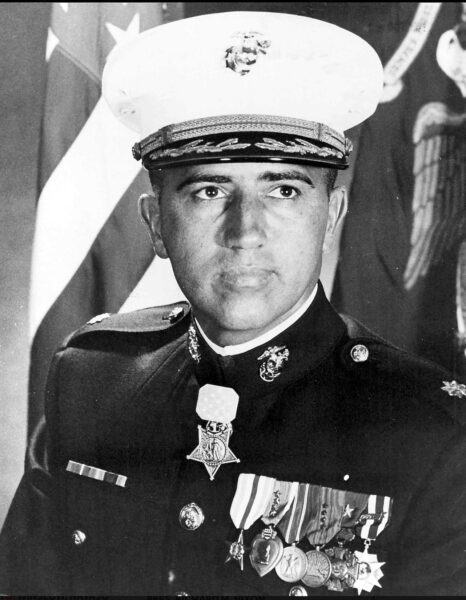
Consider what Major Jay Vargas faced over three days in Dai Do, Vietnam, in May 1968. He entered the second day already wounded from repositioning his unit under fire the day before. He led the assault anyway, crossing seven hundred meters of open rice fields under mortar, rocket, and artillery fire. Hit again by grenade fragments, he refused help, reorganized his perimeter, and held it through the night against repeated counterattacks.
On the third day, wounded for the third time, he saw his battalion commander fall with a severe injury. He crossed the fire-swept terrain, carried the man to cover, and returned to oversee the defense. His citation doesn’t record what he endured, but what he did each time a new challenge arose.
When men like Vargas say afterward that anyone would have done it, they are making a precise claim: that the facts, fully accepted, corner you. At every point in those three days, two of his three options were evasions: flee or collapse. One was not. Courage, in this account, is not a superhuman quality. It is the refusal to lie about what the situation requires.
Aristotle would recognize this. For him, courage is not the absence of fear. The brave man feels fear, as any sane person would with multiple shrapnel and bullet wounds. Courage is the right response to the situation as it really is. The coward and the man who flees do not lack feelings. They are evading the fact. The brave man is simply the one who does not.
This is a pattern, not an exception. The facts, genuinely accepted, narrow your options. Often to something binary. The diagnosis that can’t be undone. The child who needs to be fed. The friend you’ve seen fall.
In each case, there is a version of yourself that knew, in the abstract, that such things happen. But now, in a concrete moment, you must respond to the fact that it is happening. The second version has fewer options available than the first. That is not a loss. It is a form of clarity.
Fr. Luigi Giussani was an Italian priest who founded Communion and Liberation, one of the most significant Catholic renewal movements of the 20th century. Cardinal Joseph Ratzinger (later Pope Benedict XVI) celebrated the funeral mass for his friend in 2005 in Milan’s Duomo. His main intellectual achievement is a trilogy—The Religious Sense, The Origins of the Christian Claim, and Why the Church?—which argues that Christianity must be encountered as a living reality.
In the second volume, Giussani draws the distinction that brings our earlier examples into focus. All of human religious history, he argues, can be understood as man rising toward the mystery: imagining it, building systems to approach it, erecting what he calls bridges of a thousand arches between earth and heaven.
This is a noble effort. It is also, he says, an effort that by its nature cannot complete itself. The mystery, well understood, exceeds the reach of reason. The horizon recedes as you approach it.
But then something changes the question entirely. In the plain full of bridge builders appears a man who says: Stop. You will never build your way to the other side. I am the other side. Follow me.
This is not a philosophical proposal. It is not a doctrine to be evaluated or a moral system to be weighed. It is a claim: historical, particular, scandalous. Scandalous in the precise Greek sense of skandalon: a stumbling block that cannot simply be gone around.
Kierkegaard put it with his characteristic frankness: the lowest form of scandal is to leave the problem of Christ unsolved. That Christianity has been announced to you means you must take a position. He himself, or the fact that he existed, is the only decision that must be made in life.
Observe the structure. Once you have genuinely heard the claim—not processed as background noise, nor filed among interesting ideas—the decision space narrows.
Not to a comfortable range of weighed responses, but to a yes or a no. Acceptance or evasion. After the interruption, most of the bridge workers in Giussani’s parable returned to work on orders from their bosses. In doing so, they were not withholding judgment. They were issuing it.
This is what makes mere cultural Christianity—Christianity as simple inheritance, as atmosphere, as moral framework—something different from what Giussani describes.
It is possible to live within the forms of Christianity without ever really having accepted the Fact of Jesus Christ. To have heard the claim and left it, as Kierkegaard says, without a solution. That is not neutrality. It is a response.
The Medal of Honor recipient is right. Once you accept the fact in front of you, «most people» do what must be done. The most important question is whether you will accept it.
About the author
Nick Palmer is a business and organizational consultant living in Tampa, Florida. He holds a chemical engineering degree from Rensselaer Polytechnic Institute and an MBA from Harvard Business School.