


By Randall Smith
Civic education is all the rage right now. And for good reason. In a recent article in Commentary («A Republic, If You Can Teach It»), Robert Pondiscio reports the grim news that: «The results of the National Assessment of Educational Progress (NAEP) in history and civics make the dismal performance of the same students in reading and math seem robust by comparison… ‘the typical American student is staggeringly ignorant of his history and of his government,’ with only 20 percent reaching the ‘proficient’ level in civics and 31 percent below ‘basic.’ The NAEP history test results are even worse.»
Pondiscio’s article is a review of The Cradle of Citizenship by James Traub. Traub acknowledges that «the standards for history and civics, the curricular materials, the official pronouncements of school leaders, and indeed the entire atmosphere surrounding schools are shaped by progressive visions so pervasive that they are scarcely recognized as visions.» But he defends «action civics»: «an approach to civics favored by progressive educators that valorizes student participation in real-world political or community projects.»
According to Pondiscio, Traub believes that such experiences «offer students an authentic encounter with democratic participation.» Pondiscio responds that «action civics stumbles, like so many educational fads before it, because it assumes—incorrectly—that doing is a substitute for knowing«:
In practice, cultivating an activist impulse without deep background knowledge does not produce independent civic agency, but rather the appearance of it. Students learn how to act, but not how to judge; how to mobilize, but not how to understand. The result is not self-government, but a kind of civic ventriloquism: preparing young people to march energetically in someone else’s army, convinced all the while that they are acting on their own.
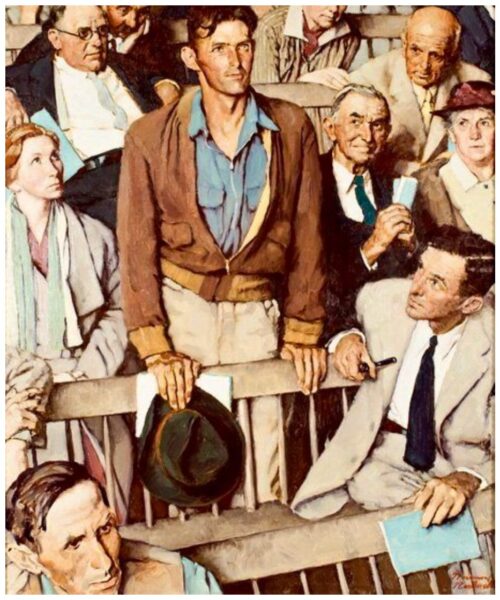
I have an alternative. This past semester, I assigned my students to attend a city council meeting, a county commissioners’ meeting, and a school board meeting. They were to sit and listen, then report and debate what they had seen. The results were instructive.
-
First, they had to figure out where those meetings were held.
-
Second, they had to get there on their own. They are adults; I wasn’t going to drive them. No car? Take the bus, like many people who live in the city do.
-
And third, they discovered that there were no long speeches. Speakers have no more than two minutes to make their case.
I expected that what my students found would be mostly chaos and madness, and that this would be somewhat discouraging to them. I was wrong. To their credit, my students found the good amid the confusion. And, also to their credit, they quickly realized that they didn’t know enough to make sensible suggestions about the issues being discussed.
The city council was debating closing a road to make way for a public works project. Some citizens complained that this would make it impossible for them to get to work. «What did you think?» I asked them. They admitted they didn’t know where that road was, why it was being closed, or whether it would cause insoluble problems for those people.
Other citizens complained about a homeless shelter whose opening was planned near their school. The mayor assured them it would be a «fantastic» center with «the best people» and «expert care,» so there was nothing to worry about. «Did that reassure them?» Not really, but they weren’t sure. They wanted to help the homeless. But a center right at the end of a school street? They understood why parents would be concerned. They also understood why people would take to the streets to protest in favor of the center («Don’t be heartless; we have to take care of the homeless!») and against it («It’s our children!»).
At the county commissioners’ meeting, they encountered another important topic: federalism. The commissioners were supposed to address the redistricting plan approved by the Texas legislature. But that redistricting plan was being challenged in court, so the commissioners’ meeting was canceled, even though there were other items on the agenda. This left my students sitting there waiting for the rest of the meeting until a police officer kicked them out.
The students had a clearer idea of things at the school board meetings because they themselves had been in school more recently—though not all had gone to public school—or had siblings still in it. And yet, the debates still largely escaped them. Should that retired teacher they didn’t know receive an award, or were those opposing it right? And was that issue worth thirty minutes of debate and discussion? What about the new testing regime being proposed? They knew nothing about it.
Now the key question: Would they go back now that they had gone once and seen what happens? Yes, they said, though it’s impossible to know for sure. What they realized was that, if they went, they would have to be well prepared if they wanted to have a positive impact. And they would have to condense all their wisdom into a two-minute speech.
As Catholics, we must be leaven in society. As St. Augustine taught, those who devote themselves to the City of God are often the best citizens, because their love for the Good is more powerful than their desire to dominate others. And as Catholics, we believe that the convictions of our faith can be defended by reason.
What I hoped my students would learn above all is that democracy—the true representative democracy, not just complaining in the streets—requires experience, knowledge, patience, and generosity of spirit. We all have our «big ideas» about how things should be done. We know how we would run things if we were in charge. But everyone else knows that too. Democracy is not about «getting my way»; it’s about joining others to find ways to serve the common good.
Since we no longer teach or encourage students to do this, it should not surprise us that it doesn’t happen often. I’m pretty sure that taking students to march in angry and petulant protests isn’t going to achieve it.
About the author
Randall B. Smith is a professor of Theology at the University of St. Thomas in Houston, Texas. His most recent book is «From Here to Eternity: Reflections on Death, Immortality, and the Resurrection of the Body«.