


By Michael Pakaluk
«Our foreign-born citizens must allow us to say that they have been imprudent and have committed some grave errors», thus writes an esteemed Catholic social philosopher on the issue of immigration. «It is an error to claim as a natural right what is in reality only a benefit. No nation is obliged to admit foreigners to all the rights and immunities of native citizens».
This revered author continues: «The nation has the natural right to preserve itself, and that which constitutes what it is—its national spirit, genius, usages, manners and customs—and, therefore, has the natural right to guard itself against any influx of foreigners that, in its judgment, is incompatible with the maintenance of its identity».
This Catholic of sound judgment then attacks the universal humanism that some call «globalism»: «For foreigners to claim as a natural right to be placed on an equal footing with native citizens is to completely misrepresent American republicanism, and to assert the abominable doctrine of the solidarity of peoples, maintained by the infamous revolutionaries of Europe, which is incompatible not only with all regular government, but with all national independence».
I won’t name him yet. Let’s see if you can guess his name while I say something more about him. He has always been someone willing to say what he considers true, not what is «political».
Just before publishing these words, he had been offered a distinguished chair at a newly founded Catholic university, in a country from which many of these «foreigners» were emigrating. But the religious leaders of that country, especially the Catholic bishops, were so disturbed by his sentiments that they insisted his invitation be withdrawn. In effect, he was canceled.
It is true that, to begin with, it was a strange invitation. Although he was a recognized social and political philosopher, and a theologian of broad scope, he was asked to lecture on a subject outside his specialty. I will reproduce part of the Rector’s invitation letter:
we feel that it is impossible for us to offer you any sufficient incentive to induce you to connect yourself personally with the institution, nor indeed are we yet in a position to make such an offer to anyone. But we have thought that we might still avail ourselves of the name and assistance of several eminent Catholics, in a way that may be feasible both for them and for us.
What I take the liberty of asking you is whether you would consent to accept the post of Extraordinary Lecturer for (say) a year.
The subject I would propose for your acceptance would be one of such interest and breadth that I often wonder it does not present itself more prominently in university establishments. We never omit a chair of astronomy, but how much more fertile as a subject of thought is the province of geography! Viewed under its different aspects, as physical, moral and political, it reaches a variety of profound philosophical speculations that will immediately suggest themselves to your mind. It treats of the very scene and field of all history; of the relation of that field to the character of nations, to social institutions and to forms of religion, of the migrations of tribes, the direction and course of conquests and empires, revolutions and the extension of commerce, and the future destinies of the human race. This is the subject I offer for your acceptance.
This social philosopher, little inclined to discourse on geography, was willing to reject such an invitation. He let some influential friends know this, after which the invitation was modified. The Rector sent a revised invitation:
I was disappointed that you did not see a way to assist us at the University in the manner I indicated. . . .It has occurred to me that you would not be inclined to accept the chair of Philosophy of Religion, or of the Evidences of Christianity, or of the Notes of the Church, especially viewed in reference to the needs of this age.
But then, as I said, the bishops objected; the Rector wrote again saying that the change in circumstances made it necessary for the series of lectures to be «postponed»; and our distinguished social and political philosopher responded:
The postponement you request would cause me no inconvenience whatever and is, in fact, what I desired and would have requested myself. . . .But my own belief is that it will better consult the interests of the University to make it clear that I am not to be connected with it in any form or manner.
The complete works of this thinker run to 20 volumes. He wrote even more than these contain, perhaps up to 6 million words in total.
He was a famous American convert, converted the year before Newman. He attacked Newman’s theory of the development of doctrine, alleging that it was the Protestant attitude of «private judgment» under another guise, because it placed theology before faith and made belief in the Church conditional on a theory about the history of the Church.
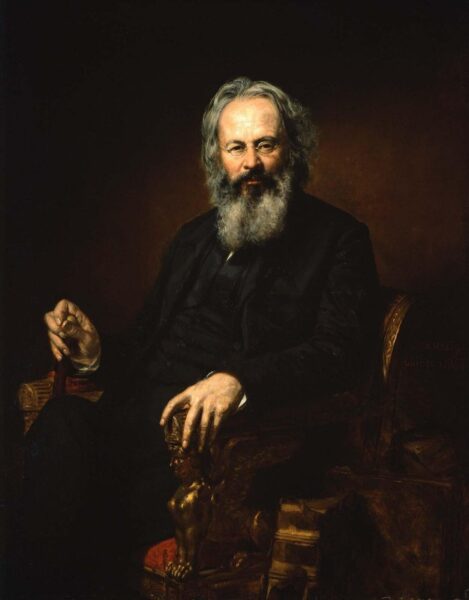
His name is Orestes Brownson, who died almost exactly 150 years ago, on April 17, 1876.
Brownson’s criticisms of unchecked immigration, which I quote above, belong to his essay «Native Americanism», published in Brownson’s Quarterly Review, vol. 2, 1854. The invitation quoted above is from St. John Henry Newman trying to persuade Brownson to come to the new Catholic university in Ireland. The «influential friends» who intervened to change the original invitation included, above all, a young Lord Acton.
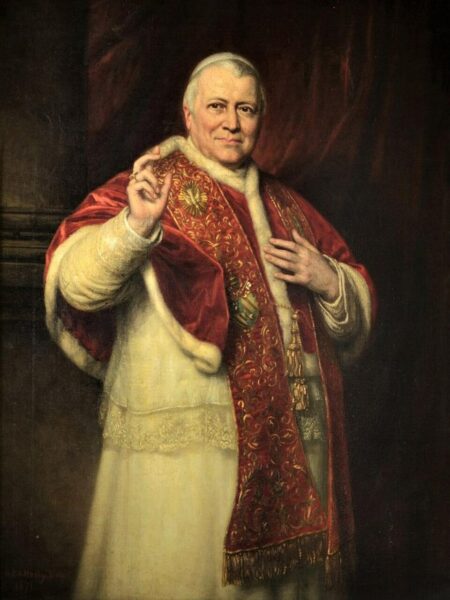
Perhaps this little glimpse into his life will inspire you to learn more about Brownson. Pius IX wrote to Brownson in a personal letter of 1854: «We pray to God, Father of mercies and of lights, with humble vows and prayers, that He appreciate and protect with His heavenly assistance those sentiments [of filial devotion, obedience and piety toward Us and toward this Holy See] which we trust will be perpetual in you».
About the author
Michael Pakaluk, an Aristotle scholar and Ordinarius of the Pontifical Academy of Saint Thomas Aquinas, is Professor of Political Economy at the Busch School of Business at the Catholic University of America. He lives in Hyattsville, Maryland, with his wife Catherine, also a professor at the Busch School, and their children. His collection of essays, The Shock of Holiness (Ignatius Press), is now available. His book on Christian friendship, The Company We Keep, is available from Scepter Press. He contributed to Natural Law: Five Views (Zondervan, last May), and his most recent book on the Gospels appeared in March with Regnery Gateway, Be Good Bankers: The Economic Interpretation of Matthew’s Gospel. You can follow him on Substack at Michael Pakaluk.