


In the framework of the centenary of the institution of the solemnity of Christ the King by the encyclical Quas Primas of Pius XI (1925), the bishop of Cuernavaca and president of the Mexican Episcopal Conference, Ramón Castro Castro, continues the series of catecheses “Witnesses of the Kingdom”. This season, broadcast through the official channels of the Mexican Episcopal Conference, recovers the memory of the Mexican martyrs as a proposal of concrete discipleship, in them is contemplated the truth that death does not have the last word and that life in Christ is stronger than any threat.
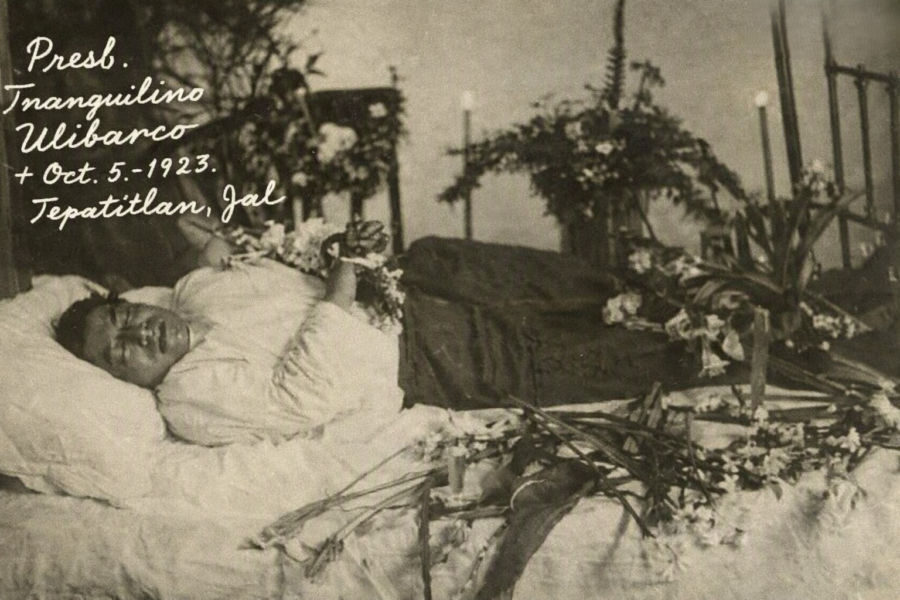
The most recent installment, titled “Strength in Trial”, focuses on Saint Tranquilino Ubiarco Robles (1899-1928). Castro Castro begins with the words of Jesus: “In the world you will have affliction, but take courage: I have overcome the world” (Jn 16,33). Christian strength, he insists, does not arise from hardness of character, but from the encounter with Christ crucified and risen. Tranquilino, born in Zapotlán el Grande (Jalisco), knew poverty and work from childhood. Ordained a priest, he exercised his ministry in Tepatitlán during one of the most dangerous moments of the persecution. He disguised himself as a muleteer, peasant, or laborer to visit the sick, celebrate the Eucharist, and administer the sacraments; he organized aid for the displaced. He did not seek death, but was willing to give it for Christ.
Arrested while preparing a wedding, in prison he comforted, confessed, and prayed with the prisoners instead of complaining. Before being executed, he asked who would be in charge of hanging him, not to accuse him, but to forgive him. He blessed the rope and, to a soldier who refused to participate, he repeated the words of the Master: “Today you will be with me in paradise”. He was twenty-nine years old. His strength, the bishop emphasizes, was born of love. Castro links this testimony with the teachings of Leo XIV on unarmed peace that begins by disarming the heart and with Magnifica Humanitas, which points to new contemporary trials: manipulation of information, digital slaveries, permanent noise, and loss of the capacity to listen to conscience.
In the face of these, the same fidelity of Tranquilino is needed: to remain in the truth and form conscience. Today’s trials find in this martyr the reminder that Christ does not abandon those who remain united to Him. The catechesis concludes with the invocation to Saint Mary of Guadalupe, Mother of the Martyrs, and the cry “Long live Christ the King! Long live Saint Mary of Guadalupe!”.
This installment is part of a series that, since July 2026, has already developed eighteen chapters. The season is presented as a continuation and deepening of the previous one, “Thy Kingdom Come”, also promoted by Castro in the same horizon of the centenary of Christ the King and of the Social Doctrine of the Church. While that one explored the Kingdom in social, family, and economic life, “Witnesses of the Kingdom” descends to the core of testimony, the martyr as witness, not as hero or soldier, but as one who has seen and bears witness with his life and his death.
The first installments trace the theological itinerary, the original meaning of martyrdom, the ecclesial memory that has guarded it since the martyrologies of the second century, and its concrete incarnation in a Mexican priest. Then the individual figures are unfolded, with titles that articulate virtues and current pastoral themes.
Among the documented chapters stand out:
- “What does it mean to be a martyr?”, which distinguishes Christian martyrdom—an act of perfect charity according to Saint Thomas, which gives life, forgives, and does not hate—from fanaticism or terrorism, citing Benedict XVI: the martyr is a man transformed by the love of God.
- The one dedicated to Saint Sabás Reyes Salazar, “martyr of perseverance,” vicar of Tototlán who, bound for three days without water or food and with his palms burned, was shot on April 12, 1927, without renouncing his people or his faith.
- “Called to be brave for Christ”, about Saint José Sánchez del Río (“Joselito”), the fourteen-year-old boy from Sahuayo, patron of youth, who with the soles of his feet flayed cried out “Long live Christ the King!” until the end.
- “The forgiveness that heals and liberates”, centered on Saint Toribio Romo González, martyr of forgiveness and patron of migrants, who offered his blood for the peace of the Church and died repeating “Father, forgive them.”
- “Prayer, strength of the witness”, about Saint Miguel de la Mora, protomartyr of Colima, who before the firing squad took out his rosary and prayed; his strength was born of interiority.
- “Interior peace that transforms the world”, about Saint José Isabel Flores Varela, a man of prayer and the Eucharist who, betrayed and tortured, maintained serenity until the end.
- “Hope: sure support in the storm”, about Saint David Uribe Velasco, who rejected a “Mexican church” separated from the Pope and preferred to be anointed with his own blood.
- “Evangelizing audacity”, about the Blessed Miguel Agustín Pro, the Jesuit who, with arms outstretched, cried out “Long live Christ the King!” and whose photographs ignited the faith.
- “To be a witness”, about the Blessed Anacleto González Flores, layman, lawyer, and catechist, patron of Mexican laity, model of peaceful resistance and formation of consciences.
- “Freedom to serve, freedom to love”, about Saint Luis Batis Sáinz and the laymen Manuel Morales, David Roldán, and Salvador Lara, who chose to remain together until heaven.
- “Marriage: vocation to perfect love”, about the Blessed Salvador Huerta Gutiérrez, a mechanic whose family was a domestic church.
- “The strength of God in weakness”, about the Blessed José Trinidad Rangel, a fragile and scrupulous priest whose holiness reveals that strength is not of iron, but of God.
- “Witnesses without shedding blood: the holiness of daily self-giving”, about Saint María de Jesús Sacramentado Venegas (Mother Naty), the first Mexican woman canonized, model of white martyrdom in daily service.
- And the most recent, “Strength in Trial”, about Tranquilino Ubiarco.
Other chapters address figures such as Justino Orona Madrigal (unconditional fidelity of the shepherd who did not flee) and delve into the lay, family, and everyday dimension of testimony. The series is not limited to the twenty-five canonized by John Paul II on May 21, 2000 (Saint Cristóbal Magallanes and companions); it incorporates blesseds and saints of daily self-giving, showing that testimony encompasses both red martyrdom and white martyrdom.
From a pastoral perspective, the series updates martyrdom to contemporary fragilities. Castro insists that final perseverance is not an achievement of the will, but a gift of one who abandons himself in God. In a context marked by polarization, violence, disinformation, and the “prisons without bars” of resentment, the martyrs offer concrete keys: forgiveness that liberates the one who gives it, prayer as a source of strength, fidelity to ecclesial communion, unarmed evangelizing audacity, and holiness in the ordinary. The repeated reference to Leo XIV and to Magnifica Humanitas underscores the urgency of forming consciences capable of listening amid digital noise and of safeguarding human relationships in the face of the logic of discard.
Historically, the series situates the events in the context of the application of the Calles Law and the Cristero War (1926-1929), when the cry “Long live Christ the King and Saint Mary of Guadalupe!” became a motto of resistance. It is not a matter of idealizing the conflict, but of recovering the testimony of those who, for the most part priests and laypeople who did not take up arms, gave their lives for religious freedom and fidelity to Christ. The emphasis on forgiveness of the executioners and on final serenity clearly distinguishes Christian martyrdom from any form of violence or fanaticism.
The current relevance is evident. In a Mexico that continues to face violence, disappearances, polarization, and challenges to religious freedom and conscience, the catechesis invites us to remain steadfast, to forgive, and to believe until the last moment. The family, the young person, the sick, and the worker find in these witnesses not unattainable models, but the confirmation that union with Christ is enough. The intercession of Saint Mary of Guadalupe, Mother of the Martyrs, and of Tranquilino Ubiarco closes the arc: “Thy Kingdom come”.