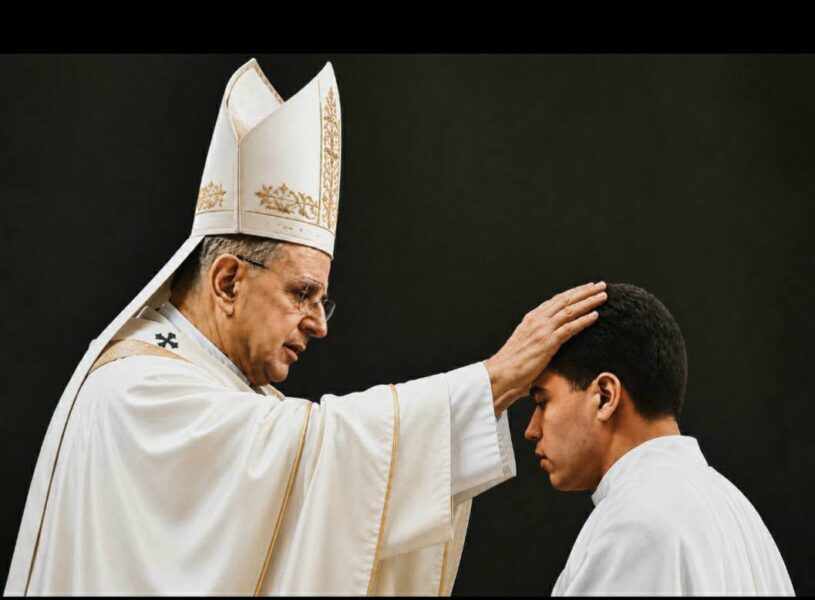
Every vocation to the priestly or religious life has a beginning. Through imitation or direct invitation from a priest, religious brother or sister to strengthen one’s life in following Christ and the Gospel, a young person accepts with fresh enthusiasm the option that will lead to following Christ through the priesthood or consecrated life. In different ways and under diverse circumstances, God calls until this choice is confirmed by the laying on of hands of the bishop, who shares the priesthood.
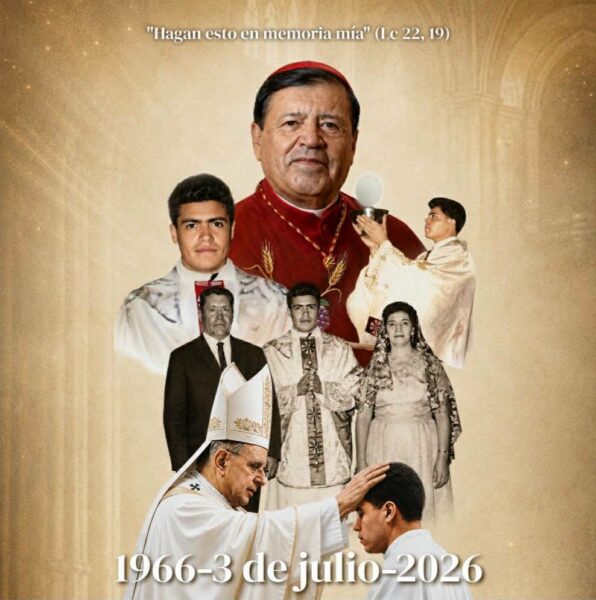
Sixty years ago, Norberto Rivera Carrera, Archbishop Emeritus of Mexico, was ordained in Rome by the laying on of hands of Saint Paul VI on July 3, 1966. He became a priest after the formation that began in his childhood. It may also be interesting to know who the priest was who invited Beto to enter the Seminary. That testimony was decisive in Rivera Carrera’s vocation, that of Father José Soledad de Jesús Torres Castañeda, born on March 29, 1918, in Río Grande, Zacatecas.
The vocation of that simple parish priest was like that of many priests of his time, refined by poverty and simplicity. His origins were humble, and like many vocations of his era, he entered the Seminary at a young age, at fifteen, distinguished by his piety and dedication to the duties of formation, which was interrupted by turbulent times of persecution. Torres Castañeda was ordained by the laying on of hands of the IV Archbishop of Durango, José María González y Valencia, cousin of the holy bishop Rafael Guízar y Valencia, on April 4, 1943.
When José Soledad was ordained, Norberto Rivera Carrera was barely a child about to turn two. Torres Castañeda’s first assignment was as assistant vicar in the parish of Gómez Palacio, Durango, where he served only one month. Then, in May 1943, he was named vicar of the parish of Río Grande, Zacatecas, his hometown, where he remained for nearly eight years, devoted and dedicated to the poor and needy.
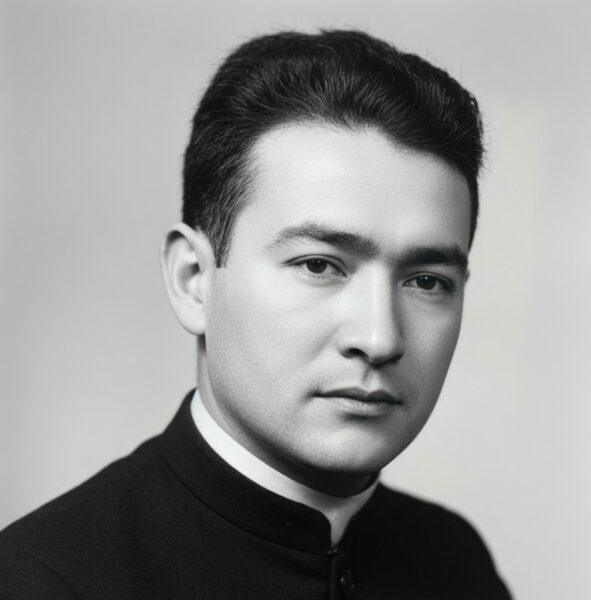
In February 1951 he was appointed parish priest of Santa Catarina Tepehuanes, Durango, the parish and municipal seat of the town of La Purísima, formerly known as El Venado, where the family of Norberto Rivera Carrera lived. His time in Tepehuanes was brief but decisive in the vocation of one of the boys who attended the Parish Apostolic School. In 1955, Father José Soledad de Jesús Torres Castañeda chose six boys from the chaplaincy of La Purísima Concepción to send them to the Conciliar Seminary of Durango. They were Rafael Gaytán, Lorenzo Herrera, Agustín and Ignacio Zepeda, and Arturo and Agustín Arámbula; Beto, young Norberto Rivera, was not in that first group; however, Lorenzo Herrera suffered an illness that prevented him from continuing with the young men who would go to the Seminary. Father José Soledad made a new selection and chose Norberto, who was thirteen years old.
On October 14, 1955, José Soledad de Jesús Torres received a new assignment as parish priest of Our Lady of Guadalupe in Gómez Palacio. His dynamism and dedication earned him the recognition of Saint John XXIII when he created the diocese of Ciudad Obregón and appointed him its first bishop. On February 25, 1960, he was raised to the fullness of the priesthood by the consecration performed by the Apostolic Delegate in Mexico, Cardinal Luigi Raimondi. The bishop’s first task was the organization of the Seminary, which would become one of the central pillars in the life of the newly established diocese.
However, tragic events would overshadow the life of this zealous shepherd. On March 25, 1967, after his disappearance was reported, the body of Bishop Torres Castañeda was found buried in a remote area of the municipality of El Salto, one hundred kilometers from the state capital. He had attended the first Mass of Father Rafael Gaytán in Tepehuanes. The corpse left no doubt that Bishop Torres had been murdered with premeditation, possibly motivated by revenge. Forensic examinations revealed that he had been tortured, showing blunt-force injuries that caused various lesions and death by strangulation.
The perpetrators of the crime belonged to a gang of individuals dedicated to armed robbery; however, Torres Castañeda disappeared in what is presumed to have been a planned kidnapping, as the assassins used official uniforms to abduct the prelate. Once captured, they confessed that the kidnapping of the bishop was part of their intention to form a powerful gang dedicated to terror, robberies, and kidnappings. Analysis of the case over time revealed that the bishop was not a victim by mistake, and although the executioners claimed they did not know his identity, the published confessions showed how they followed, hunted, and studied his movements until the abduction and murder of the prelate, a clear target that ended in his impious assassination.
At the time of the murder of the man who had been the promoter of his vocation, Norberto Rivera had been ordained for only eight months. After completing his priestly studies in dogmatic theology, he returned to Mexico, and his first assignment was as assistant vicar in the parish of the Lord of the Holy Cross in Río Grande, Zacatecas, of the Archdiocese of Durango, from 1966 to 1967, the hometown of Torres Castañeda. “There he received the news of the martyrdom of the man who had been his beloved parish priest in Tepehuanes and then first Bishop of Ciudad Obregón, Sonora, José Soledad de Jesús Torres Castañeda (1915-1967), who on Good Friday, March 24, 1967, was found dead on the road through the Sierra of Durango, half-buried headfirst in a two-meter hole full of mud, naked and strangled, after a twenty-day kidnapping… It fell to the newly ordained Norberto to negotiate with the famous singer Antonio Aguilar, who the next day was to perform at the charro ring in Río Grande, to suspend and change the date of the show out of respect and mourning for the assassination of Bishop Torres Castañeda, who was a native of that town, which was deeply shaken. Antonio Aguilar agreed to change the date of the performance and also donated the box-office proceeds to the Church.” (Puente Sacerdotal Magazine, No. 1, September 2006)
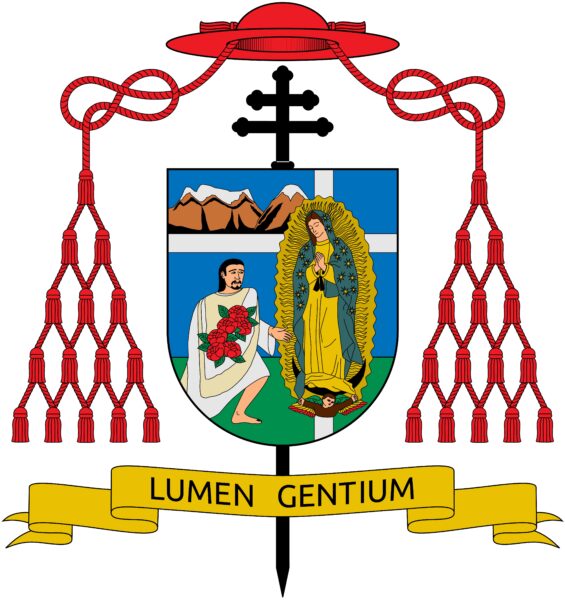
On July 3, 2016, while celebrating the 50th anniversary of Cardinal Norberto Rivera Carrera’s priesthood, the then dean of the Metropolitan Cathedral, Canon Francisco René Espinosa Estrada, delivered the opening message of congratulations, remembering absent persons. One of them was the parish priest of Tepehuanes, the first bishop of Ciudad Obregón, a man dedicated to the cause of the poor and whom many call the martyr who discerned the vocation of young Norberto, who, after that invitation in 1955, would become a successor of the apostles and Primate Archbishop of Mexico, coinciding happily with another anniversary: on June 29, 1951, seventy-five years ago, Pius XII granted the archbishops of Mexico the title of Primate, a concession that Norberto Rivera used with consistency and fidelity and which now, sixty years later, is a sign of the priesthood of Christ, who is the light of the nations, as the coat of arms of the Archbishop Emeritus of Mexico proclaims.