


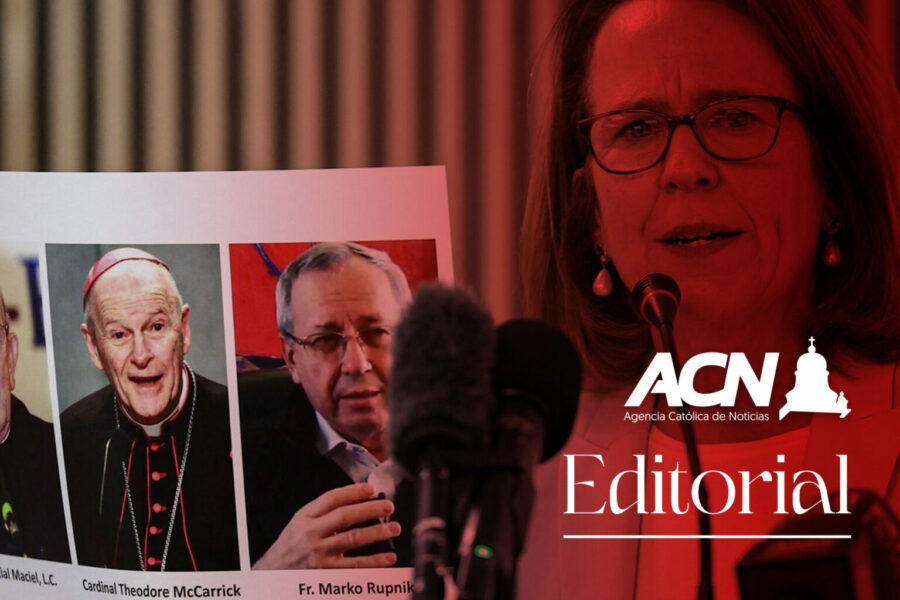
While Pope Leo XIV undertakes his pilgrimage to Uruguay, Argentina and Peru between November 6 and 17, 2026, his first apostolic journey to Latin America and one of the longest of his pontificate, pastoral expectations and hopes for regional unity collide with a reality that advocacy organizations continue to highlight, the scandal of clerical sexual abuse remains unresolved in the countries he will visit.
The Vatican has announced private meetings with survivors, a gesture of closeness that the pontiff himself has already practiced on other trips. However, the release of new databases just before his arrival revives the underlying question, Why, after years of complaints, commissions and promises of zero tolerance, do new cases continue to emerge?
In Peru, the organization BishopAccountability.org published on November 5 a database of 77 clergy members, priests, brothers, seminarians and consecrated laypeople, publicly accused of sexual abuse of minors. The list includes Cardinal Juan Luis Cipriani Thorne named in a 2018 complaint sent to Francis regarding incidents that occurred in 1983 and Luis Fernando Figari, founder of the Sodalicio de Vida Cristiana, whose dissolution the Vatican ordered after years of systematic scandals.
Of the 77, nine have been convicted in Peruvian courts and one in the United States; others have died or were acquitted in controversial proceedings. The organization, which already maintains similar databases for Argentina, Chile and other countries, urged Leo XIV to order Peruvian bishops and superiors to publish the names of those facing substantiated accusations, to establish a truth commission and to enshrine a zero-tolerance rule in canon law. Co-director Anne Barrett Doyle stressed that the list is only a fraction and that the Pope’s personal knowledge of the Peruvian Church, where he served as a missionary and bishop of Chiclayo, places him before a particular responsibility.
In Argentina the situation is no less serious. BishopAccountability.org documents nearly a hundred clergy members publicly accused; other journalistic investigations place the documented figure above 115. Among the most emblematic cases is that of the Instituto Antonio Próvolo in Mendoza where dozens of deaf children suffered abuse between 2005 and 2016; priests Horacio Corbacho and Nicola Corradi received sentences of 45 and 42 years and the nun Kumiko Kosaka was sentenced to 20 years in 2026. Julio César Grassi, convicted of abusing a minor in a home he himself founded, saw his imprisonment delayed by interventions linked to then-Cardinal Bergoglio. Former bishop Gustavo Zanchetta, close to Francis, was sentenced to four and a half years for abusing seminarians and obtained conditional release. Recent complaints have also surfaced, such as those against priest Alejandro Nicola in Córdoba for alleged abuse in a kindergarten and accusations of trafficking and labor exploitation that 43 women have leveled against structures of Opus Dei. The legacy of Francis as archbishop of Buenos Aires and president of the Episcopal Conference, marked by institutional silence and the absence of public lists, continues to weigh on the visit.
In both countries the patterns documented worldwide are repeated, transfers of accused individuals, opaque or nonexistent canonical processes, protection of institutional reputation over the protection of minors and a culture of silence that discourages victims. The persistence of new cases, even after the post-2019 reforms and the dissolution of the Sodalicio, indicates that the measures adopted have not dismantled the structural conditions that enable abuse.
The announcement of meetings with survivors is a necessary gesture, but insufficient if not accompanied by concrete decisions during or immediately after the trip. Leo XIV arrives in lands he knows well, especially Peru, and in the homeland of his predecessor. The task is to unravel and sever the keys, clericalism, hierarchical opacity, prioritization of institutional image and absence of public accountability that, despite decades of struggles and complaints, continue to allow more and more cases to emerge. Only clear, visible and structural action can begin to close a wound that words of closeness, by themselves, do not heal. And it means cutting into the wound. After thousands of cases, the Truth must prevail and, although painful, the reality of abuse continues to lacerate the body of Christ that is the Church.