


The Pope, Sudan, Ukraine and Russia.
At the Sunday Angelus he made an appeal for the tragic situation in Sudan: “A ceasefire and humanitarian corridors for El-Obeid. War only breeds war.” “Our weakness opens our eyes to the presence of God.” “War only breeds more war and causes immense suffering.” Speaking in English, the Pope recalled the tragic situation in Sudan, particularly in the city of El-Obeid, the epicenter of this forgotten African conflict that is causing an unprecedented global humanitarian emergency. “I renew my appeal to the authorities to guarantee humanitarian corridors for the civilian population. At the same time, I urge the international community to support efforts to achieve an immediate ceasefire. Let us pray to the Lord to sustain those who suffer, to convert the hearts of those who sow violence, and to grant the long-awaited peace.”
The Pope continued in Italian, commenting on the “painful news of innocent people killed and wounded in Ukraine and Russia” that has been arriving in recent days. “The tragic episodes continue; in fact, they are multiplying, causing ever more civilian victims, including children. I am close to the families of the victims, the wounded, and all those who suffer because of the ongoing conflict. In the face of so much pain, I renew my heartfelt appeal for respect for humanitarian law and for an end to attacks on civilian targets by both sides. It is time to stop the spiral of violence and make way for diplomacy and dialogue to pave the way to peace.”
The Pope offered as models several saints whose feasts are celebrated these days: “Yesterday, the great Saint Dominic, founder of the Order of Preachers; today, Saint Teresa Benedicta of the Cross, Edith Stein, the Carmelite nun murdered in Auschwitz and co-patroness of Europe; tomorrow, Saint Lawrence, deacon of the Church of Rome; the day after, Saint Clare of Assisi, who left a life of comfort to follow Jesus in poverty and humility, following the example of her fellow citizen, Saint Francis. Dear young people, let yourselves be inspired by these exemplary witnesses of the Gospel.”
Parolin and Pope Leo XIV’s visit to Mexico.
It is already known that one must keep everyone happy: “The visit to Mexico will take place, but the date has not yet been set.” It has not received much coverage in the regime’s press; in the small and insignificant diocesan publication there is a brief interview stating that the Pope will come to Mexico—when, how, or where is unknown, but Parolin assured that the possibility is on the table. “I know that the Holy Father has spoken about the possibility of a visit to Mexico. The date will be set later.”
Zuppi at Francesco Guccini’s secular funeral.
“One afternoon, speaking of the final farewell, Francesco said he would be happy with my presence, with everything necessary, and then added that, if the roles were reversed, he could be present at his farewell, in the Cathedral or anywhere else.” Zuppi began with a personal memory in his address at Francesco Guccini’s secular funeral in Pavana. “You described yourself as an ‘agnostic possibilist.’ The cardinal reviewed through his songs the great questions that accompanied Guccini—his relationship with time, love, politics, and spirituality. “Ideologies confuse, they hurt. You are right,” recalling the singer-songwriter’s intolerance of dogmas, prejudices, bullies, and Manichaeism. “We need giants, and those who please the Lord are not the great ones of this world, but those with great hearts, with much humanity, generous, who share and do not calculate, who give and do not possess.”
“You never stopped asking and listening. Whoever makes the human question their own always discovers the presence of God.” Zuppi, standing beside the coffin, recited a prayer and imparted a blessing, entrusting Francesco Guccini to that “infinite joy” where “every tear will be wiped away.”
Anniversary of the atomic bomb.
Eighty-one years after the explosion of “Fat Man,” the plutonium bomb dropped by the United States on August 9, 1945, the Japanese city remembered the victims of the last nuclear attack in history, turning the commemoration into a warning directed especially at the present: in a world where arsenals are growing again and nuclear powers are directly involved in major international crises, deterrence is not an absolute guarantee against nuclear war. The mayor: “Nuclear weapons are not a necessary evil, but the absolute evil.” “Humanity and nuclear weapons can never coexist.” Who could guarantee that their leader would not press the nuclear button? “The more states rely on deterrence for their security, the greater the risk that, sooner or later, that mechanism will fail.”
More than 12,000 nuclear warheads still exist worldwide, and the trend of arsenal reduction that has held for decades shows signs of reversal, while several countries are modernizing and strengthening their capabilities. Moreover, in May, the review conference of the Treaty on the Non-Proliferation of Nuclear Weapons (NPT) concluded for the third consecutive year without adopting a final document. This is a symptom of a vicious circle in which the accumulation of arsenals fuels mutual distrust, confrontation, and division, which in turn drives states to seek greater security through nuclear weapons.
Approximately 2,600 people attended the ceremony, including survivors, victims’ relatives, Prime Minister Sanae Takaichi, and representatives of 98 countries, including nuclear powers such as the United States and Russia. The names of 2,773 more people who died last year were added to the list of victims, bringing the total to 204,708. At 11:02 a.m., the exact time of the explosion, the city observed a minute of silence.
On August 9, 1945, the B-29 “Bockscar,” piloted by Major Charles Sweeney, reached Nagasaki after abandoning its primary target, Kokura, which was covered in clouds and smoke. The “Fat Man” bomb exploded about 500 meters above the Urakami district with an estimated yield of 21 kilotons. According to the city’s own figures, by the end of 1945, 73,884 people had died and another 74,909 were injured. Three days earlier, Hiroshima had been hit by the first atomic bomb used in war. Six days after Nagasaki, on August 15, Emperor Hirohito announced Japan’s surrender by radio.
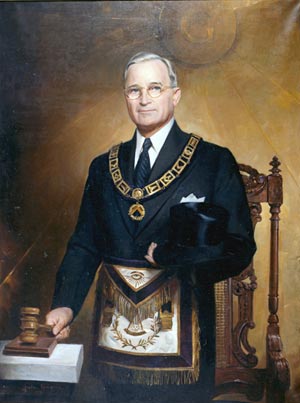
The commemoration takes on even greater importance because the generation of hibakusha, the survivors of the nuclear bombing, is disappearing. The average age of officially recognized survivors of Hiroshima and Nagasaki is around 87. “We are at a crucial moment when we can still hear their voices directly.” Our image today is of U.S. President Franklin D. Roosevelt, who gave the order to use the atomic bomb against two of Japan’s most Catholic cities. It shows him undoubtedly proud of his Masonic beliefs.
The funerals of the Freemasons.
The GOI website celebrated Battisti D’Amario as follows: “ The Grand Orient of Italy darkens its banners for the passage to the Eternal Orient of our dear brother, Master Bruno Battisti d’Amario. Grand Master Antonio Seminario and the members of the Council join in solidarity with the Leti brothers and express their deepest condolences to the family.” In the GOI’s public statement, Battisti D’Amario is described as “the founder of the Roman lodge named after Giuseppe Leti and composer of the official anthem of the Grand Orient of Italy, as well as having held high positions within the Order over the years.”
It is worth recalling that the excommunication penalties against Freemasons have never been lifted, not even in recent years, when a wave of benevolence from bishops and cardinals (the famous “dear brother Masons” of Cardinal Gianfranco Ravasi, who kicked off the festivities in Il Sole 24 Ore) has laid more than a red carpet for “sacred” dialogue with Freemasonry. Therefore, according to canon law, Battisti D’Amario would not have been entitled to a Christian funeral. Nothing personal, of course, but precisely because of his status as an excommunicated member of Freemasonry.
The parish priest’s first reaction: “To be honest, we didn’t even know he was a Freemason. I just found out from you,” “Clearly, given this situation, I will have to inform the rector of the Basilica, Monsignor Antonio Staglianò, because it surprises me greatly. At the very least, some restrictions must be imposed. I don’t think the funeral can be canceled, but at least we should ask the family not to allow Freemasons with their banners into the church.”
The rector Monsignor Staglianò, known for some of his forays into open dialogue with Freemasonry itself. Staglianò communicated the verdict of the Diocese of Rome: “I called Cardinal Baldassarre Reina, Vicar General of His Holiness for the Diocese of Rome and my immediate superior, and after consulting with the legal department of the Diocese of Rome, he had no choice but to deny authorization for the funeral Mass.” “We verified it, even speaking with his daughter, who unfortunately told us she knew nothing about this matter, but the father, as revealed by the GOI, was a high-ranking Freemason. Therefore, given the excommunication in question, this makes us uncomfortable, especially since we were completely unaware of all this.”
It is surprising how easily much of the Church has begun to superficially grant prestigious churches as venues for weddings and funerals of people who have never had anything to do with the faith, and who have often lived in open opposition to it, as demonstrated by membership in Freemasonry. This clearly shows that the era of dialogue, so indulgent toward the lodges, also risks becoming a dangerous boomerang, putting families and the Church itself in difficulty.
Rome is a lesson, and after the cancellation of the funeral, the Diocese of Ventimiglia-Sanremo also canceled a funeral that was to involve a Freemason. Mario Tarducci, Venerable Master of the local lodge, was to attend a Christian funeral this afternoon in Camporosso, but Bishop Suetta, upon learning after the funeral was scheduled of his membership in Freemasonry, canceled the ceremony, citing the Roman case. This is the press release from the Diocese: Following the death of Mr. Mario Tarducci, whose funeral was scheduled for today in Camporosso, the bishop learned—once the funeral was scheduled—both from a local newspaper and from public notices, of Mr. Tarducci’s affiliation and membership in a Masonic lodge, of which he was a venerable master. He spoke with the parish priest and the deceased’s family and requested instructions from his superiors on the matter, which, however, could not be obtained in such a short time. Faced with a similar case that arose at the same time in the Diocese of Rome, and which shares the same indications given there by the Vicar of His Holiness, Cardinal Reina, the Bishop, in accordance with canon 1184, has decided to order that the ecclesiastical funeral scheduled for today in the parish church of San Marco in Camporosso not be celebrated. For the good of the faithful, a note with the relevant legal and pastoral guidelines on ecclesiastical funerals will be published later.
“…whoever hates his life in this world will keep it for eternal life.”
Happy reading.